
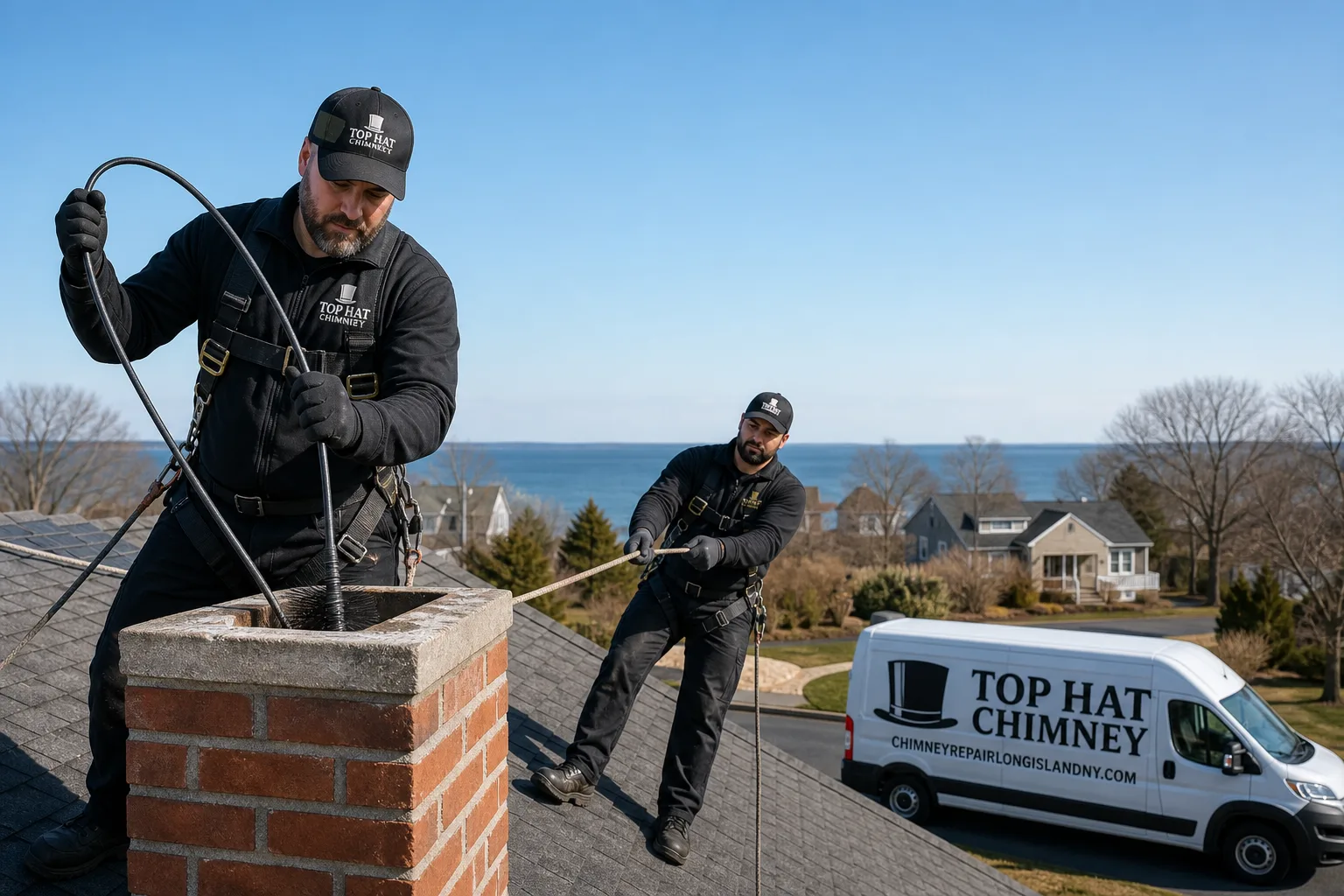
Level 1 sweep and inspection to the NFPA 211 annual standard - flue, crown, cap, and flashing checked and photographed
Chimney sweep logs do not sweep chimneys. They loosen some creosote - which then falls where a brush and vacuum still have to collect it.
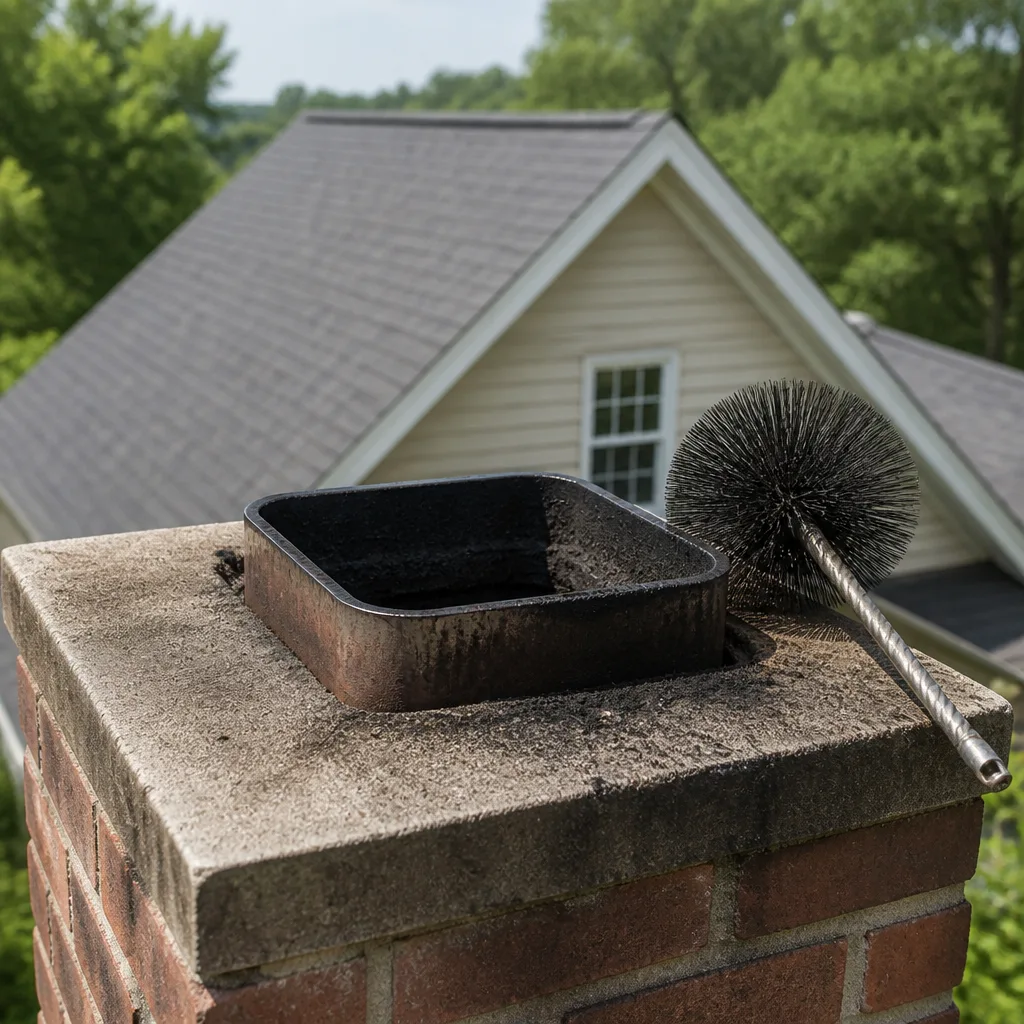
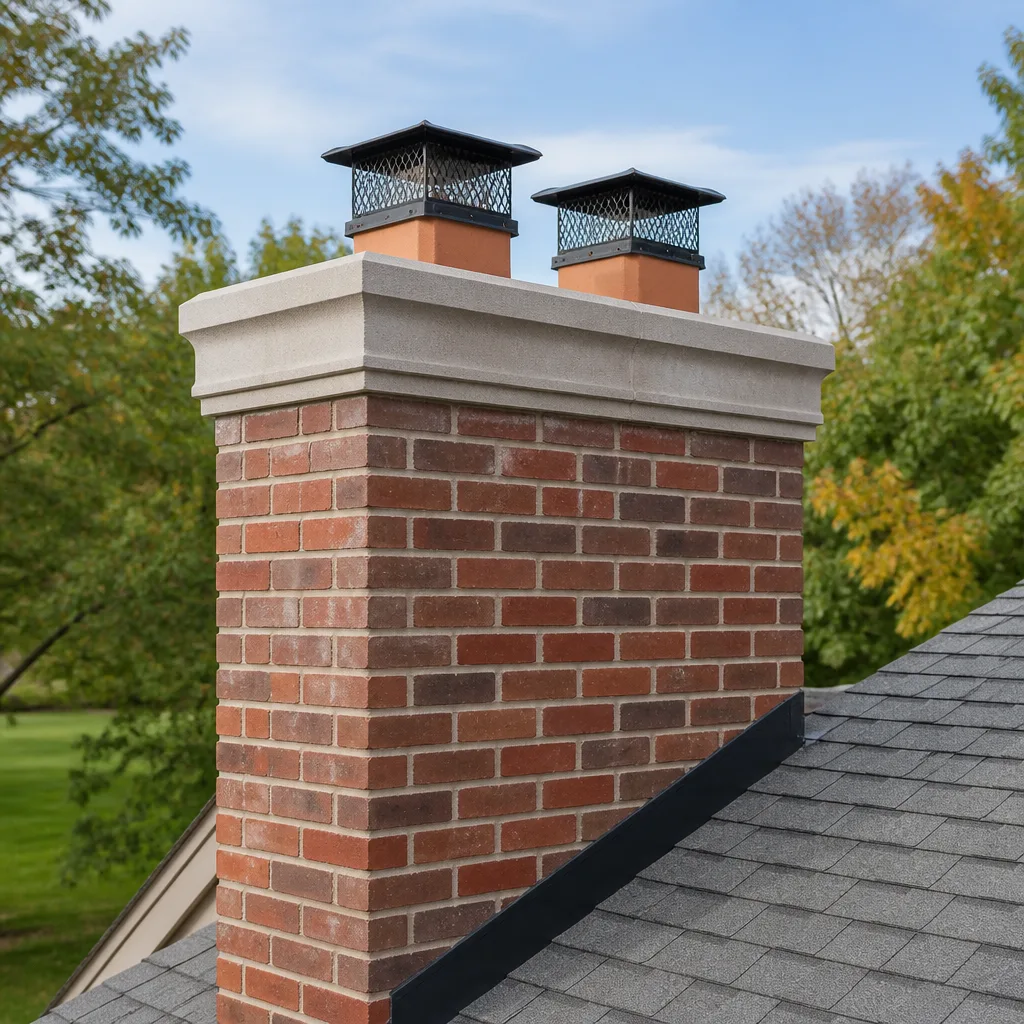
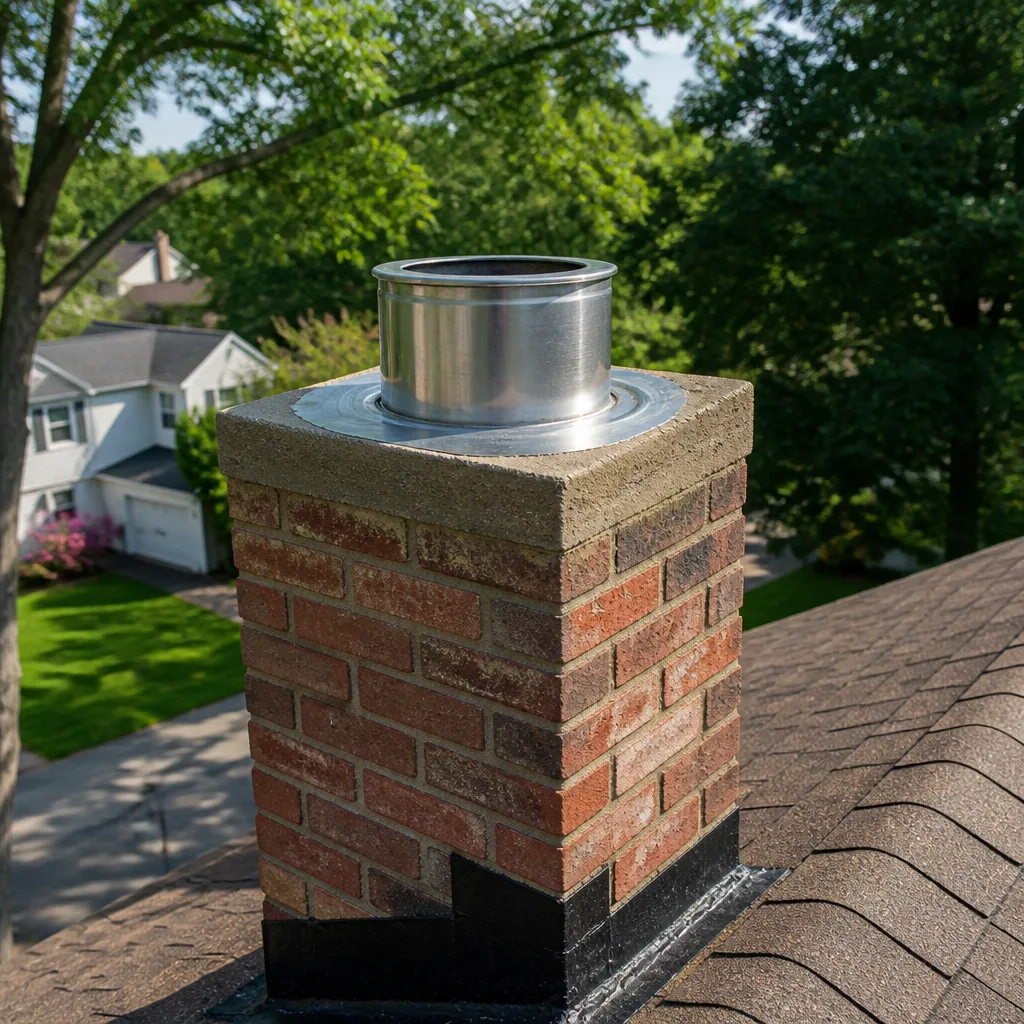
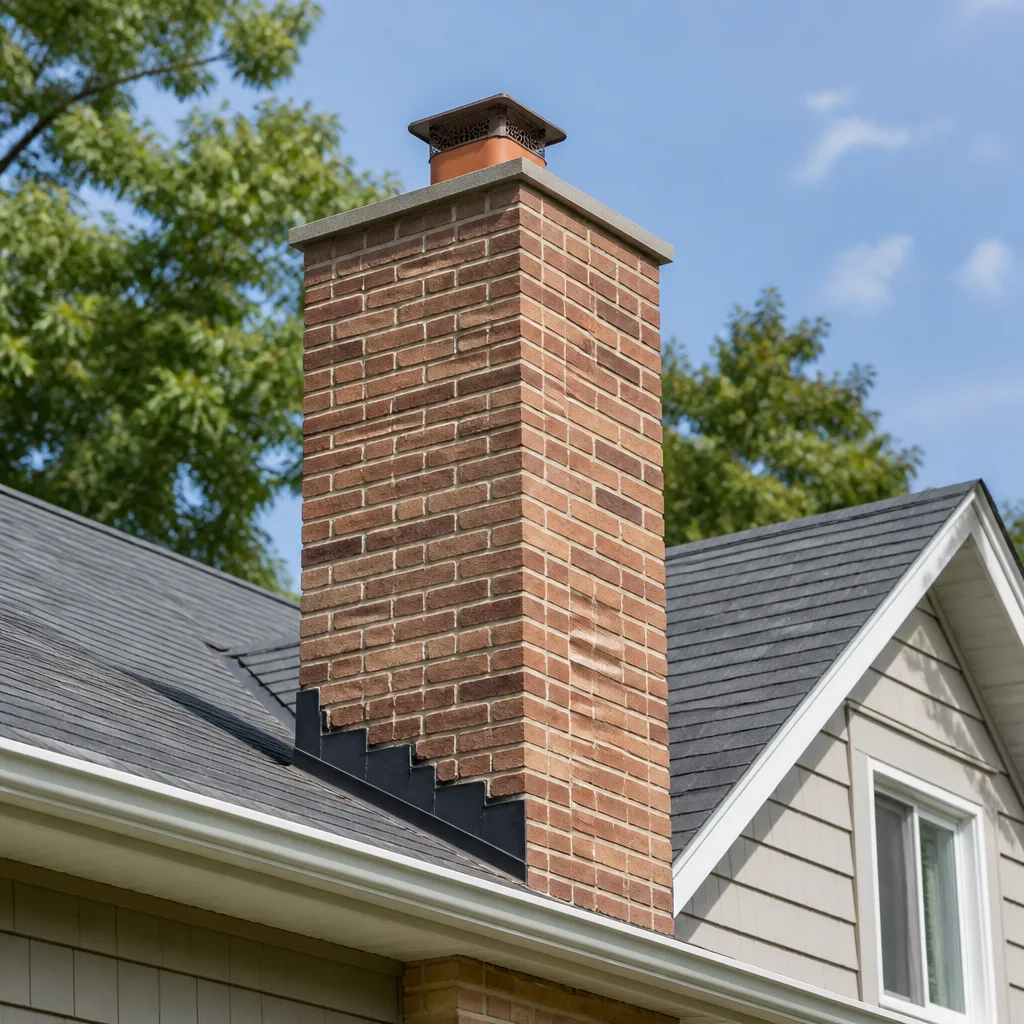
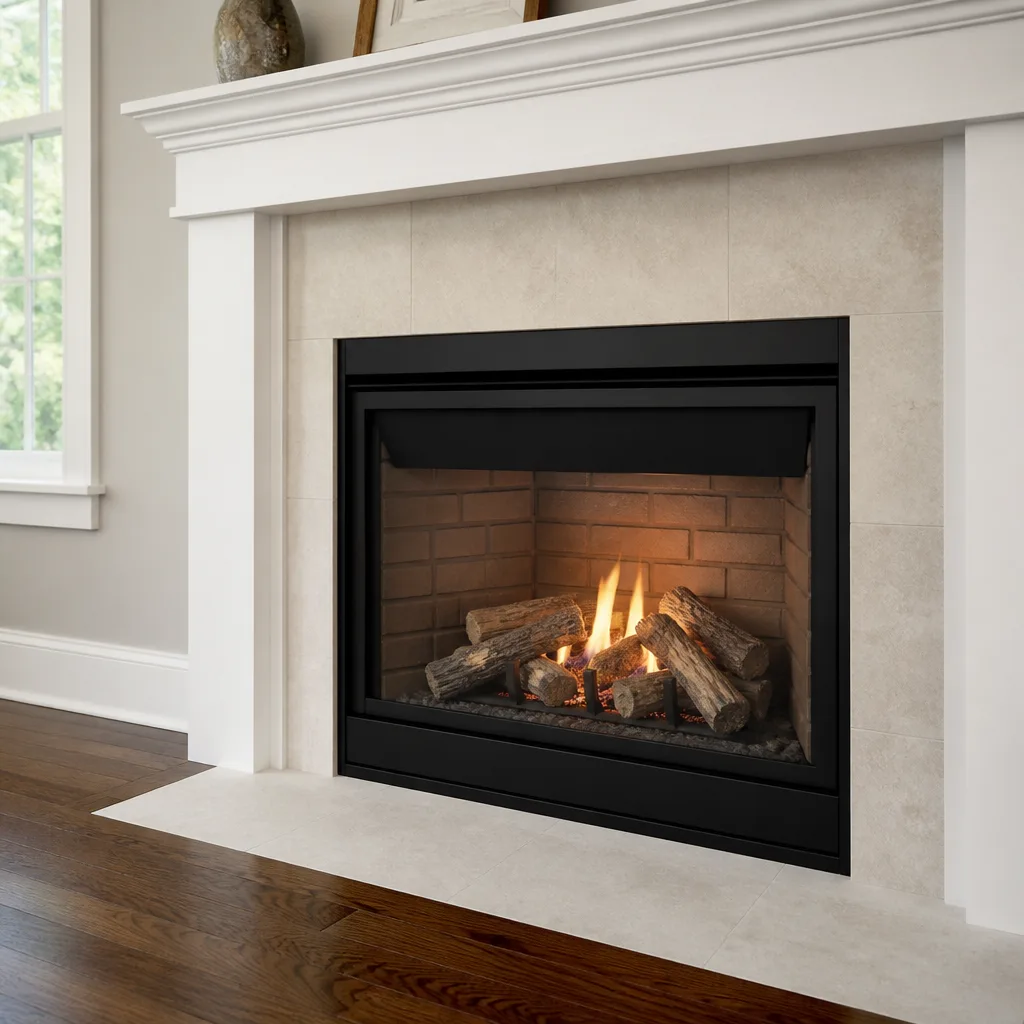
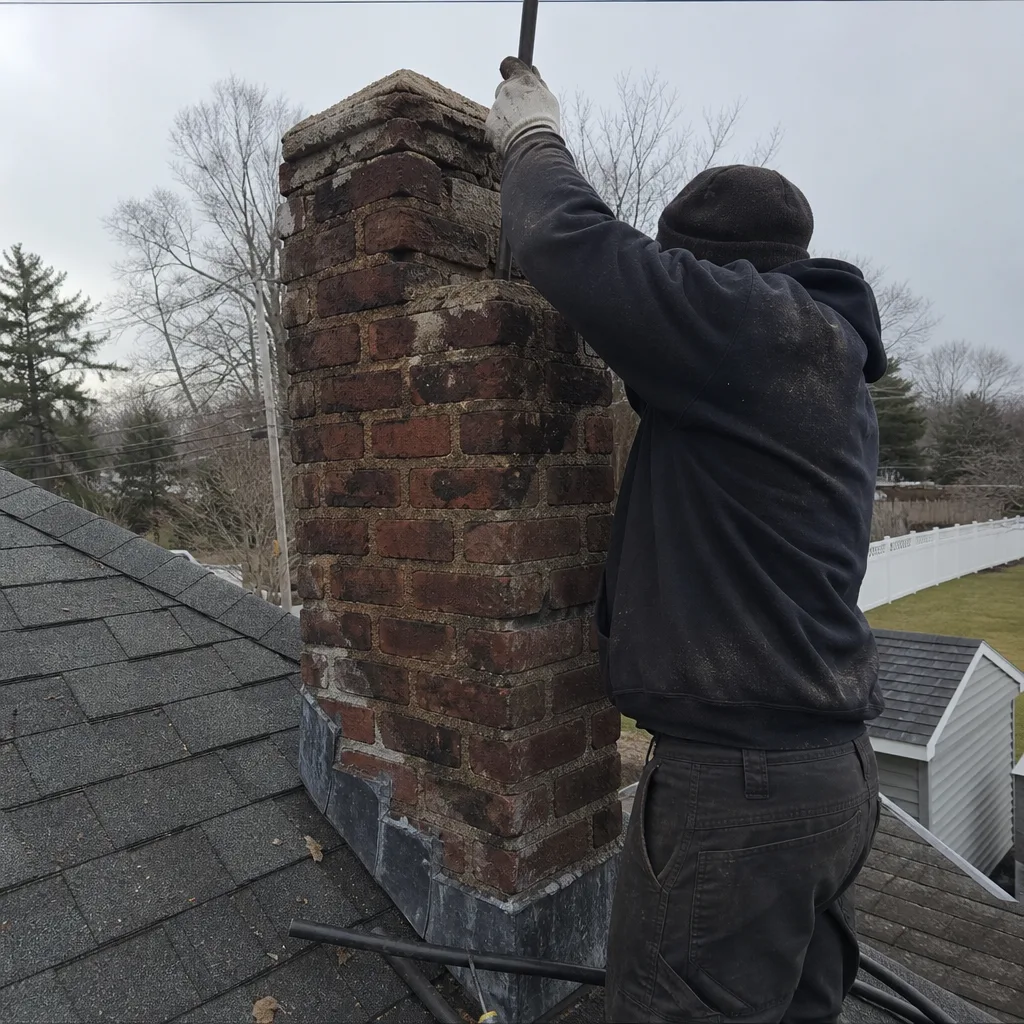 Before
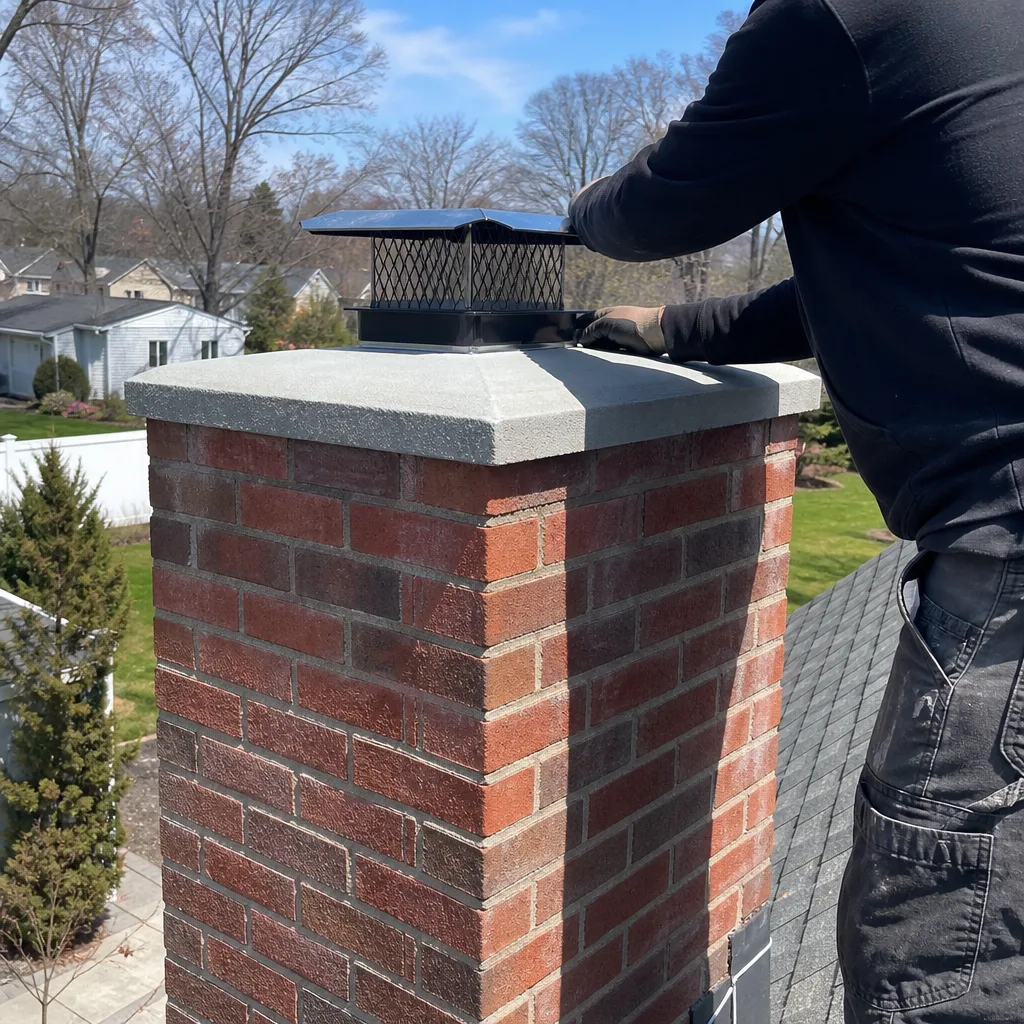 After
After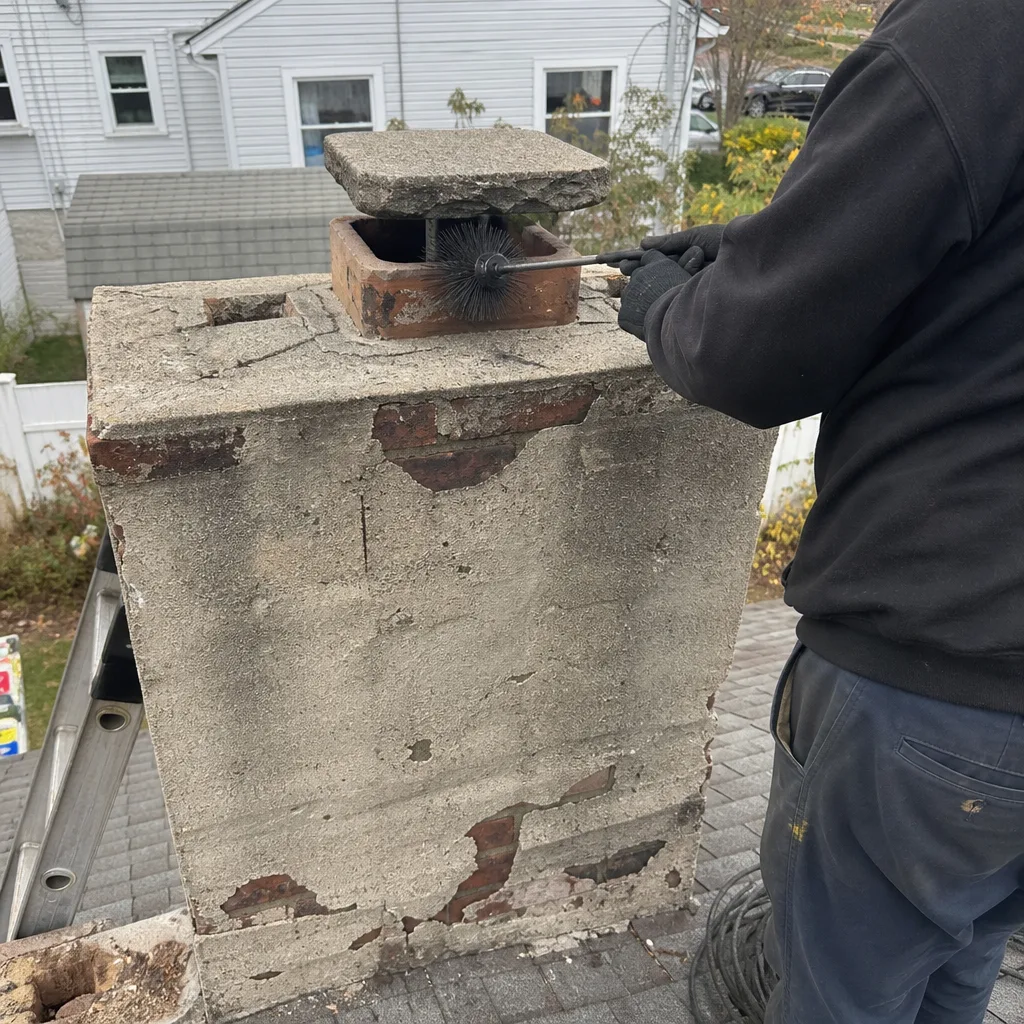 Before
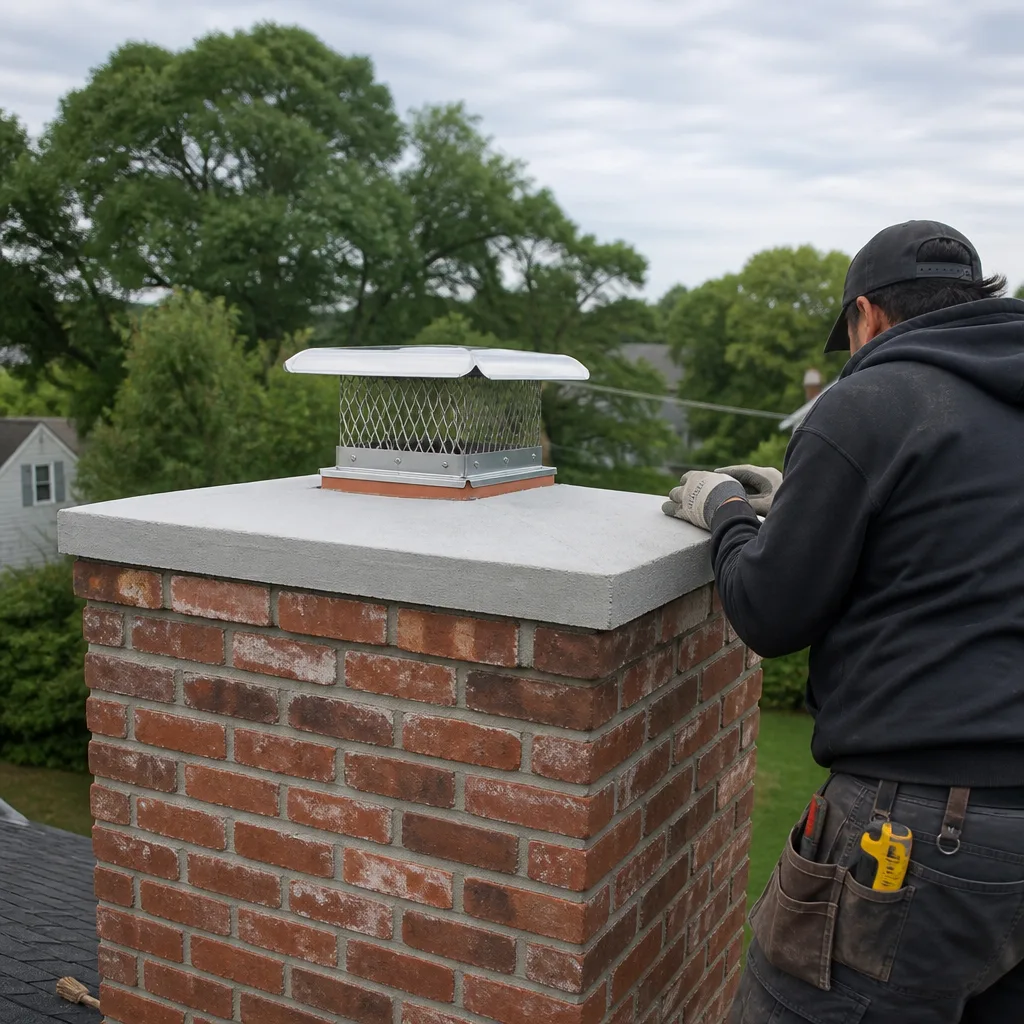 After
After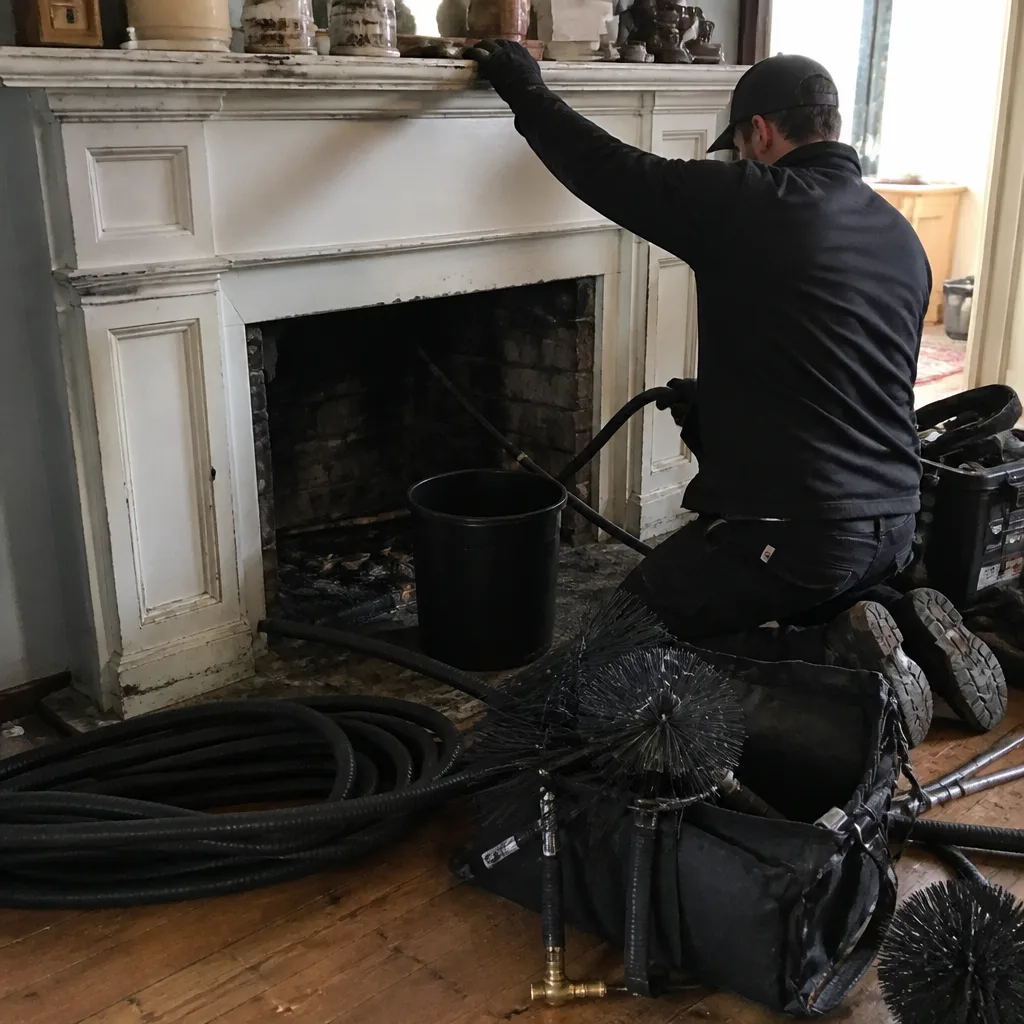 Before
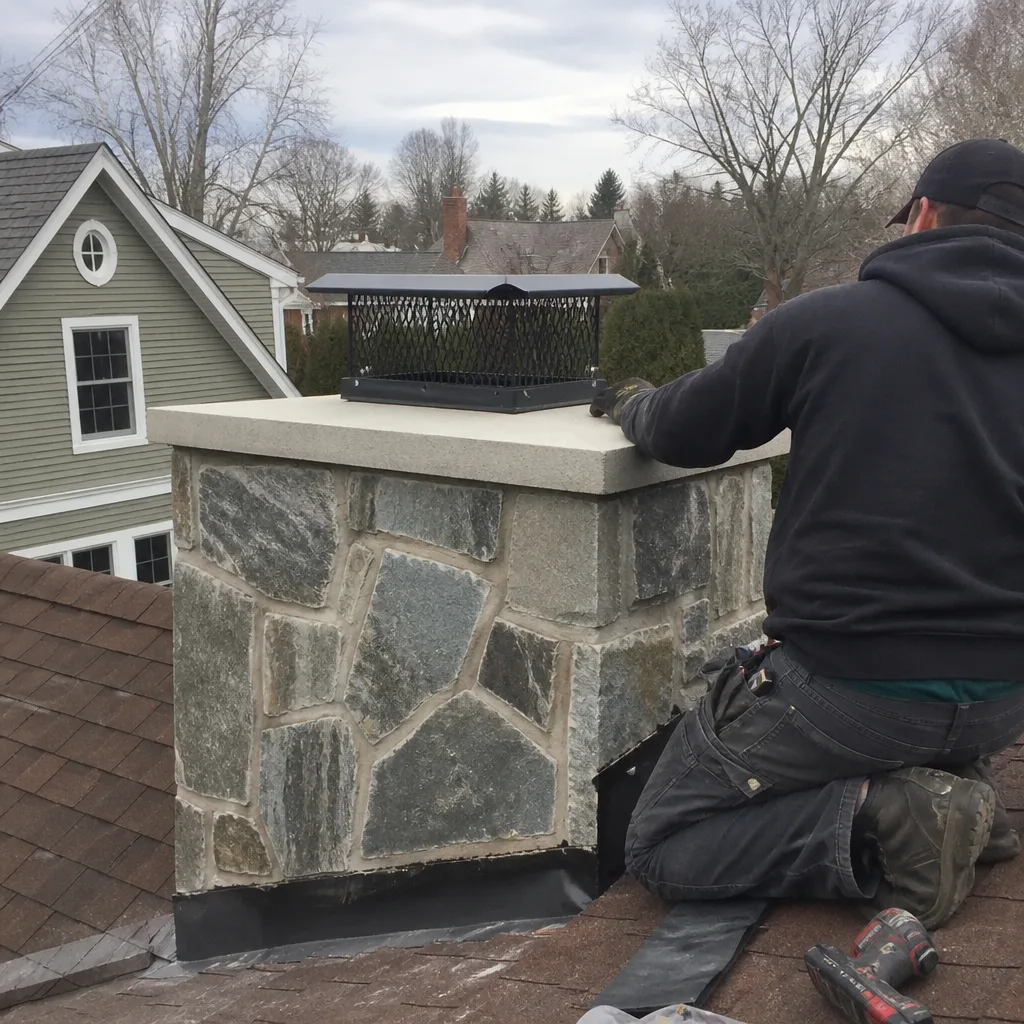 After
AfterFast, Reliable Chimney Repair Across Commack
Chimney repair in Commack usually means one thing: a mid-century masonry chimney that’s been quietly falling apart since the Nixon administration. Most homes here were built between 1955 and 1975, and their original clay tile liners are now 50 to 70 years old. That’s past the rated service life. If you’re seeing crumbling mortar, water stains on the ceiling near the fireplace, or a backdraft smell when the wind shifts, you’re looking at the normal failure pattern for this town’s housing stock. Wendell Pike and his crew at Top Hat Chimney have been inside enough of these chimneys to know exactly what they’ll find before they even set the ladder. Call (516) 968-5380 and we’ll schedule a repair visit with a real arrival window, not a four-hour maybe.
Why Top Hat Chimney Is Commack’s Preferred Chimney Repair Company
Wendell has been running Top Hat Chimney since 1999. That’s twenty-nine years of looking at the same tract-built chimneys that define Commack’s neighborhoods, from the Burr Farms area down through the south side streets. The company is locally owned and owner-operated, with a published address and license number. Wendell puts his name on the work, and he runs into you again at the hardware store on Saturday. That changes how the job gets done.
Every call to Top Hat Chimney gets answered by a live person, around the clock. It might be Wendell himself picking up. You get upfront pricing before a single tool comes off the truck. The number you hear on the phone is the number on the invoice. Every job carries the 90-Day Done Right Promise in writing, so if something isn’t right, one call brings the crew back at no additional cost. Commack homeowners who’ve been burned by bait-and-switch national chains tend to appreciate that.
We also work with brands Commack customers already trust: Gelco, Olympia Chimney, and Famco. No mystery parts, no off-brand substitutions. And if you’re inside our service county, there’s no trip charge. Seniors and veterans always get 10% off. Always have, always will.
Our Chimney Repair Services in Commack
Here’s the honest truth about Commack chimneys: they were built the same way, by the same handful of developers, using the same materials, block after block. That means Wendell and his crew know the failure points before they arrive. Here’s where the work usually lands.
Mortar Repointing
Freeze-thaw cycling across the 32°F line opens hairline mortar joints year after year. Long Island winters swing the temperature back and forth across freezing constantly, and that movement works mortar loose in Commack’s brick chimneys faster than you’d think. Repointing replaces the deteriorated joint material with fresh mortar matched to the original mix and tooling pattern. In Commack, a typical repointing job on the exposed chimney above the roofline runs $800 to $2,400 depending on how much scaffold access is needed and how far the joints have opened. It’s the single most common repair we do here, because the housing stock is all the same age and the mortar is all failing at the same time.

Spalling Brick Repair
Spalling is what happens when water gets into the brick face, freezes, and pops the outer layer off. It looks like the bricks are flaking or crumbling, and Commack sees plenty of it on chimneys that have taken decades of nor’easter-driven rain. The concern isn’t cosmetic. Once the brick face spalls, water penetrates deeper, and the structural integrity of the stack starts to go. Repairing spalled brick means removing and replacing the damaged units with matched brick and correct mortar. A focused spall repair on a Commack chimney typically runs $600 to $1,800, depending on how many brick faces are compromised and whether we’re working from the roof or need staging.

Chimney Waterproofing
Waterproofing is preventative, and it’s the repair Commack homeowners skip most often, usually to their regret. A proper masonry chimney is porous. It absorbs water like a sponge. Applying a vapor-permeable waterproofing treatment, the kind that lets the chimney breathe while blocking bulk water, can add years to an aging stack in this climate. For a typical single-flue Commack chimney, waterproofing runs $450 to $950. We use breathable treatments from Olympia Chimney. Silicone-based sealers and paint are the wrong tool for the job, and we won’t sell you one.

Flashing Repair
The flashing where the chimney meets the roof is the first thing to fail on a Long Island home, because it takes the full force of every storm. Wind-driven rain from nor’easters gets under compromised flashing and saturates the firebox, soaking the brickwork behind the scenes. The homeowner sees a ceiling stain two months later and blames the roof. It’s usually the chimney flashing. Repairing or replacing flashing around a Commack chimney runs $500 to $1,500, depending on access pitch, the type of flashing, and whether the roof shingles need to be worked around. We do the repair, then we show you the photo of what we did.
If you’re not sure which of these you need, that’s fine. That’s what camera inspections are for, and we’ll get to that below. But no work gets recommended until you see the footage yourself.

What happens when you call
- 1
A real person answersNo phone trees - you reach a local pro.
- 2
You get an upfront price rangeHonest numbers before anyone is dispatched.
- 3
A background-checked tech heads outLicensed & insured, dispatched right away.
- 4
You approve before work beginsNothing starts until you say go.
Trusted Brands We Service in Commack
The brands matter because chimneys in Commack were built to a specific mid-century standard, and the repair products need to match. Top Hat Chimney installs and services liners and components from Gelco, Olympia Chimney, and Famco, among others. These are the manufacturers whose specs line up with the 6-inch clay tile flues and original masonry construction common throughout Commack’s neighborhoods. Because we know what’s in these homes, we keep the common parts on hand, which means less waiting on a supplier when your fireplace is dead in January. There’s no upcharge for using a brand-name component instead of some generic substitute. The name on the part matters to the repair lasting, so we stock what actually works in this town.
Common Chimney Repair Problems We See in Commack Homes
- Undersized clay tile liners fail when the furnace changes. The original 6-inch clay liners in Commack’s 1950s and 60s homes were sized for oil-burning furnaces. When homeowners convert to gas, the venting requirements change, and those old liners often can’t handle modern appliances. The result is backdraft and condensation that accelerates tile spalling.
- Smoke chamber offset cracks from decades of thermal cycling. Where the firebox narrows into the flue, there’s an offset that takes the brunt of heat changes, from hot oil exhaust to cold winter air. After 50 or 60 years of that cycle, the offset cracks. Hot gases reach the brickwork, and the damage feeds on itself. Wendell can often predict the spalling pattern at the smoke chamber just from your street address, because the same developers built entire blocks with identical chimney construction.
- Nor’easter water intrusion saturates the firebox. Wind-driven rain gets past worn crown caps and flashing, soaking the brickwork from inside. In a chimney already weakened by age, that hidden water loop can lead to liner collapse before you ever see a stain on the ceiling.
- Freeze-thaw cycling opens hairline joints faster in Commack’s climate. Long Island winters are brutal on masonry because the temperature swings repeatedly across the freezing point. Water gets into tiny gaps, freezes, expands, and pries the joint wider. Every winter opens them a little more, until the chimney is taking on water after every rain.
Pricing for Chimney Repair in Commack, NY
Here’s the straight number: most chimney repairs in Commack fall between $500 and $2,400. A minor flashing patch at the low end. A full repointing job with scaffold access at the high end. Spalling brick repair lands in the $600 to $1,800 range. Waterproofing runs $450 to $950. These are the ranges for typical single-flue masonry chimneys on the ranches, colonials, and split-levels that dominate this town’s housing stock.
What moves the price up is access, height, and how far the deterioration has gone before you call us. A chimney that needs one face repointed is different from one where the mortar’s gone around all four sides and the crown needs rebuilding. Wendell gives you the exact quote before work starts, with no add-ons at the door. If you have a written estimate from another company, bring it in and we’ll give you a free second opinion. We’ll tell you if the work they quoted is actually needed, and we’ll do it on camera so you can see the proof for yourself. Call (516) 968-5380 for a free estimate on any chimney repair in Commack.
We Also Serve Cities Near Commack
Top Hat Chimney works throughout central Suffolk County. In addition to Chimney Repair in Commack, our crews regularly handle repair jobs in Smithtown, Brentwood, Huntington Station, and Huntington. Same upfront pricing, same 90-Day Done Right Promise, same live person on the phone. If you’re a few exits away, give us a call anyway. We’ll tell you straight up if we can get to you this week. For service in neighboring areas, our Chimney Repair team covers the same territory with the same standards.
Serving Commack, NY - Our Local Coverage Area
We’re based in the Commack area and know this community well. Use the map below to see our service coverage - if you’re nearby, we can almost certainly help.
FAQs - Chimney Repair in Commack
Because the original 6-inch clay tile liners were installed for oil-burning furnaces, not for modern gas appliances or wood inserts, and they’re now 50 to 70 years old. Cleaning removes creosote but it doesn’t fix cracked tiles, deteriorated mortar joints, or an undersized flue. Once the liner starts spalling, cleaning it doesn’t help, and continuing to use the fireplace or furnace can be unsafe. The fix is relining, either with a HeatShield resurfacing or a new stainless liner, and the camera footage will show you exactly why it’s needed before you spend a dollar. Call (516) 968-5380 and we’ll scope your flue and show you what’s going on inside.
A Level 1 inspection is what a sweep does during routine cleaning, looking at the accessible parts of the chimney. A Level 2 adds a video camera scan of the flue interior, which is where Commack’s older ranch homes hide their problems. On a ranch off Burr Road, we scoped a 1968 clay-tile flue and found second-degree creosote glazing the walls plus spalling at the smoke chamber offset where the liner had cracked from decades of oil-to-gas cycling. We showed the homeowner the camera feed, quoted a HeatShield resurfacing and crown repointing, and no liner replacement was needed once the visuals made the failure mode obvious. A Level 2 catches what a Level 1 can’t see, which in this town is often the difference between a $900 repair and a $4,000 one.
It depends on how far the spalling has gone. If the brick faces are flaking but the interior of the brick is still sound, repointing and replacing the damaged units can do the job. If the brick has lost more than about a third of its depth, or if the spalling extends deep into the structure, you need to consider a partial or full rebuild. A full rebuild in Commack typically runs $3,500 to $9,000 depending on height, access, and the brick match. Wendell will tell you which you need and, more importantly, show you the camera footage that proves it. No rebuild gets recommended without you seeing the inside of the chimney for yourself.
Converting from oil to gas changes the venting requirements for the appliance, and the original 6-inch clay liners in Commack’s mid-century homes often don’t meet current code for gas. Gas exhaust is cooler and wetter than oil exhaust, which leads to condensation inside the old clay tiles. That condensation eats away at the liner, accelerating spalling. In many cases, a conversion means the chimney needs relining with a properly sized stainless steel liner or a HeatShield resurfacing before the new appliance can be safely vented. This is exactly the situation where a homeowner gets told the chimney is “unsafe” without being shown why. We won’t do that. We’ll scope the flue, show you the condition of the existing liner, and tell you plainly whether it needs work before the furnace swap. Call (516) 968-5380 and we’ll walk you through the timing and the cost.
The smoke chamber offset is the angled transition where the wide firebox narrows down into the flue. In Commack’s 1950s through early 1970s homes, that offset was built with corbeled brick and a layer of mortar parging that takes the full thermal shock of every fire and every furnace cycle. Fifty to seventy years of expanding and contracting, plus the switch from oil to gas, and that parging cracks. Holes open up. Hot gases reach the brick behind it, and the deterioration spreads. It’s the single most common structural defect we find in Commack chimneys, and it’s hidden behind a cosmetic wall in most homes. The only way to see it is with a camera. We include that camera scan on every chimney we open up. Get a free estimate and see the footage: (516) 968-5380.
Written by Wendell Pike, Owner at Top Hat Chimney, serving Commack and surrounding Long Island communities since 1999.