
Last updated September 10, 2026
Level 1 sweep and inspection to the NFPA 211 annual standard - flue, crown, cap, and flashing checked and photographed
Chimney sweep logs do not sweep chimneys. They loosen some creosote - which then falls where a brush and vacuum still have to collect it.
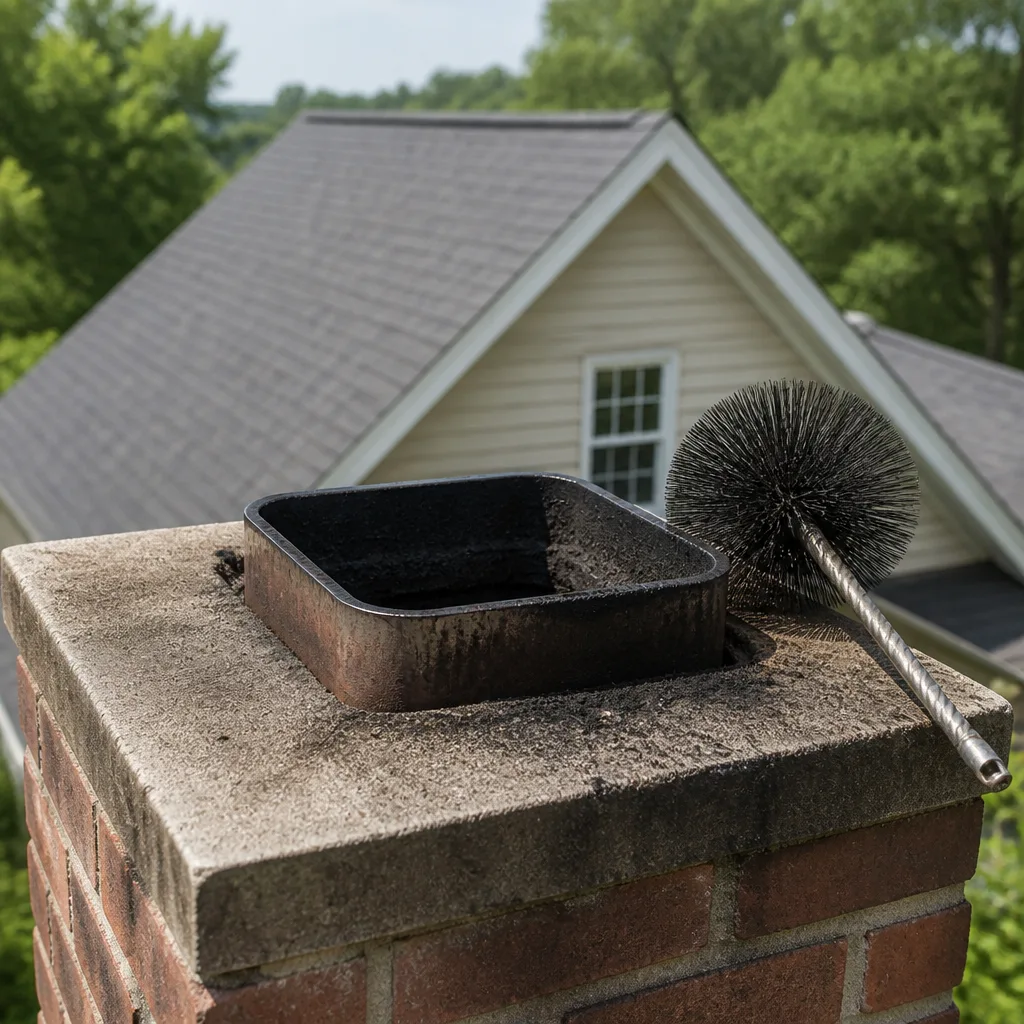
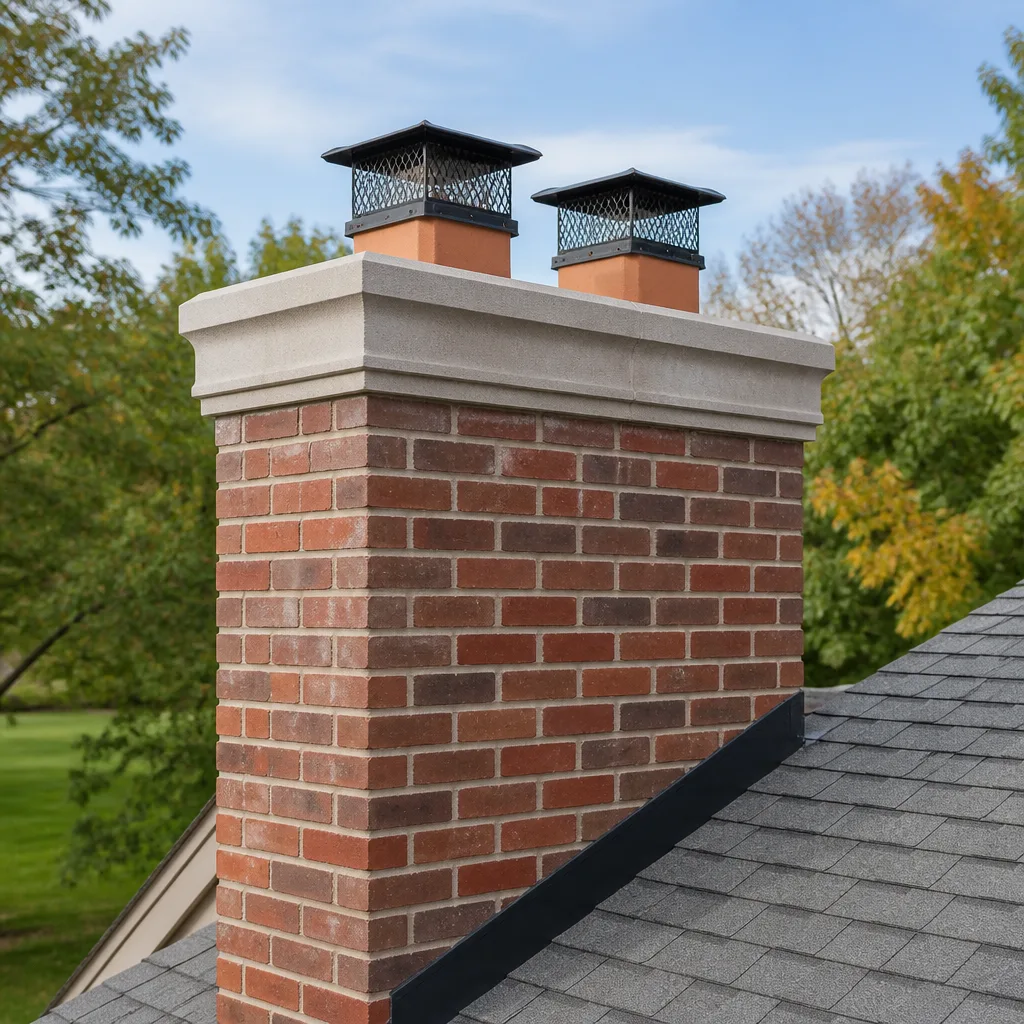
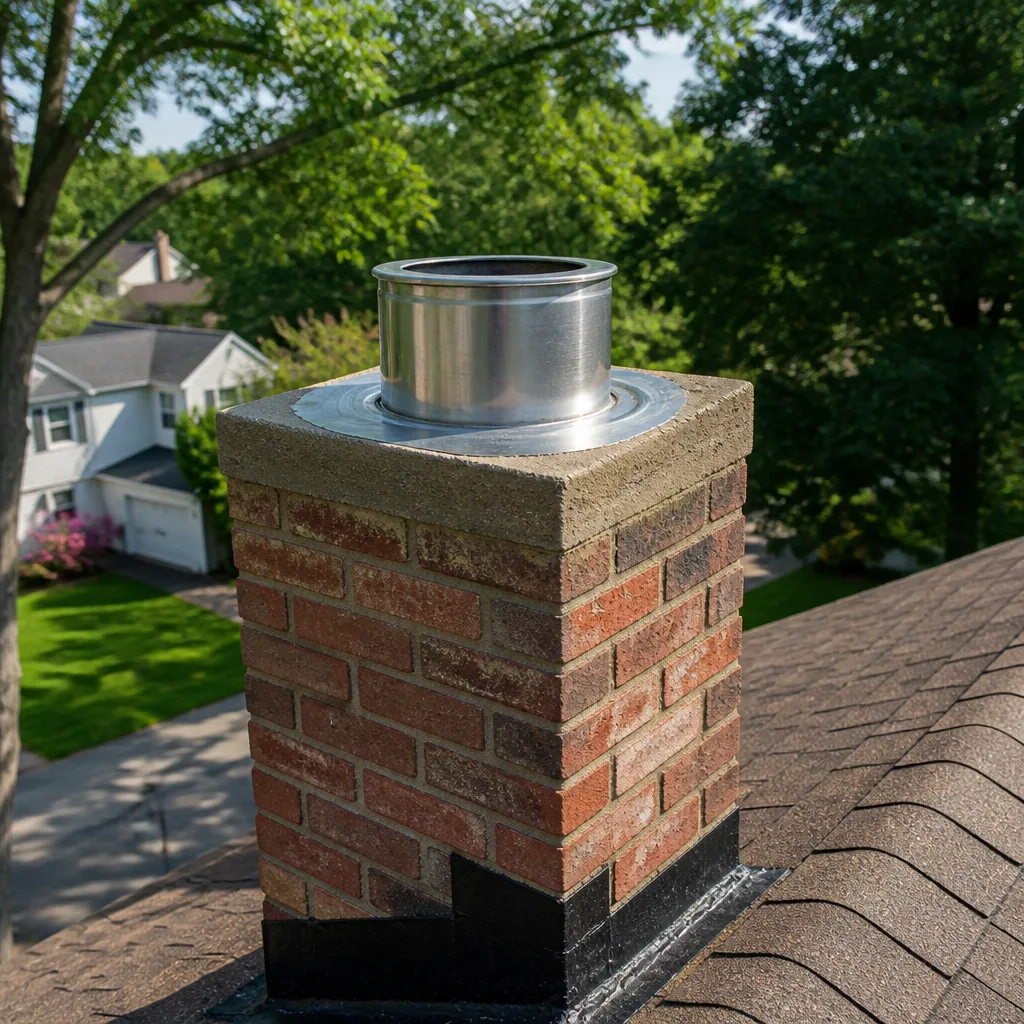
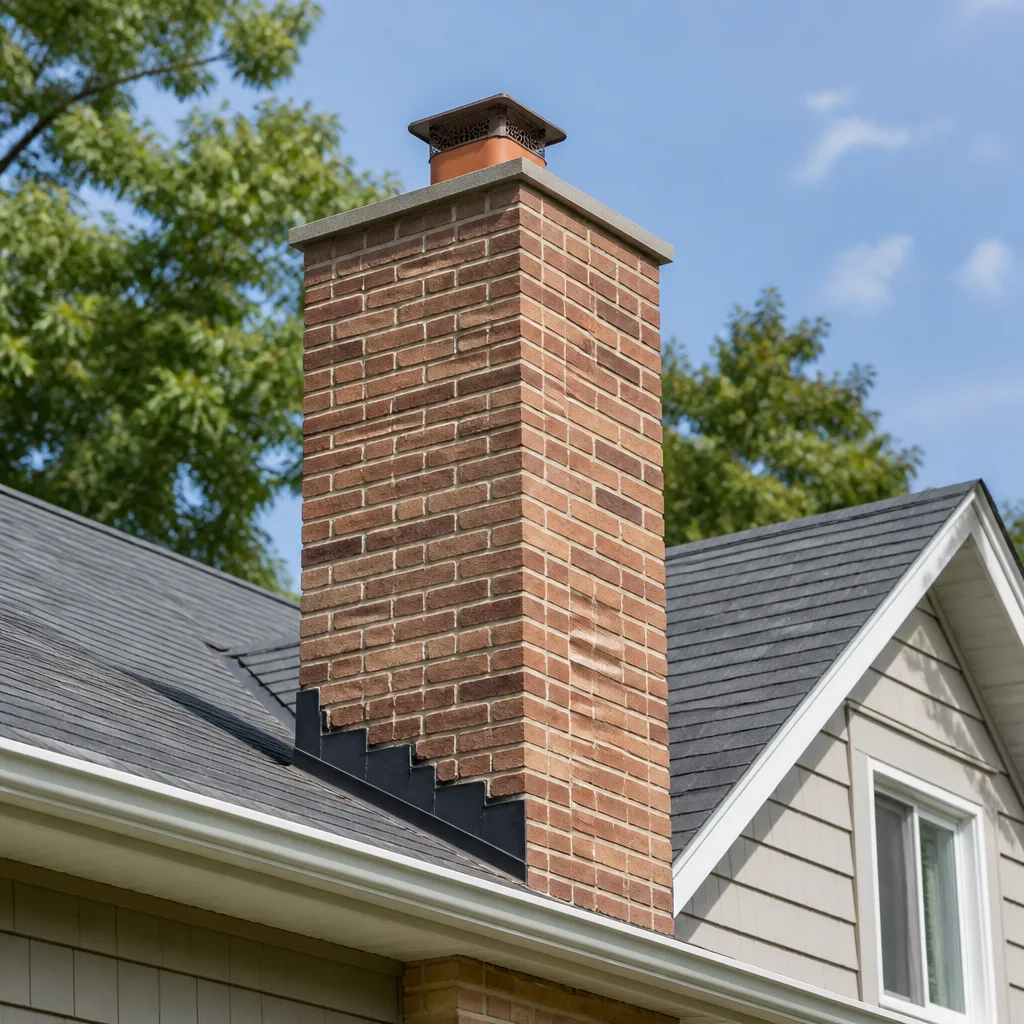
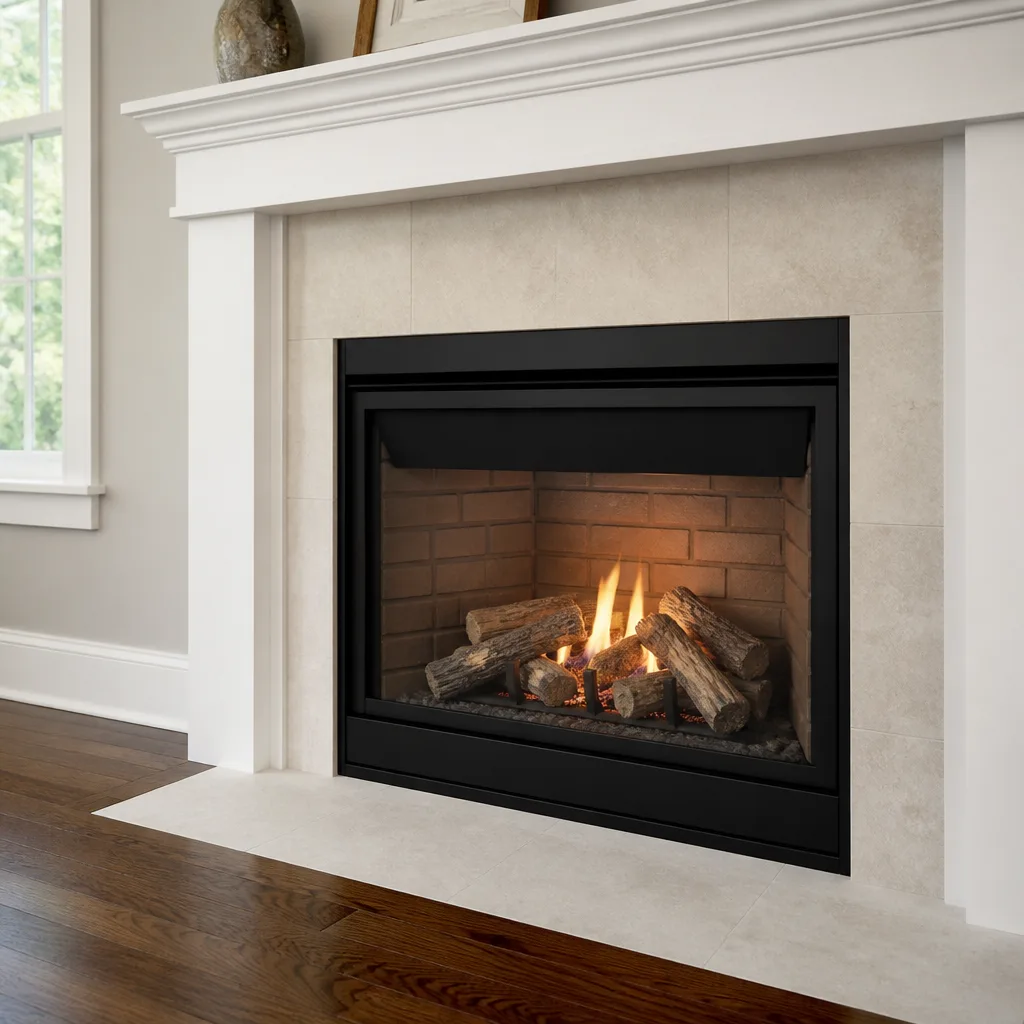
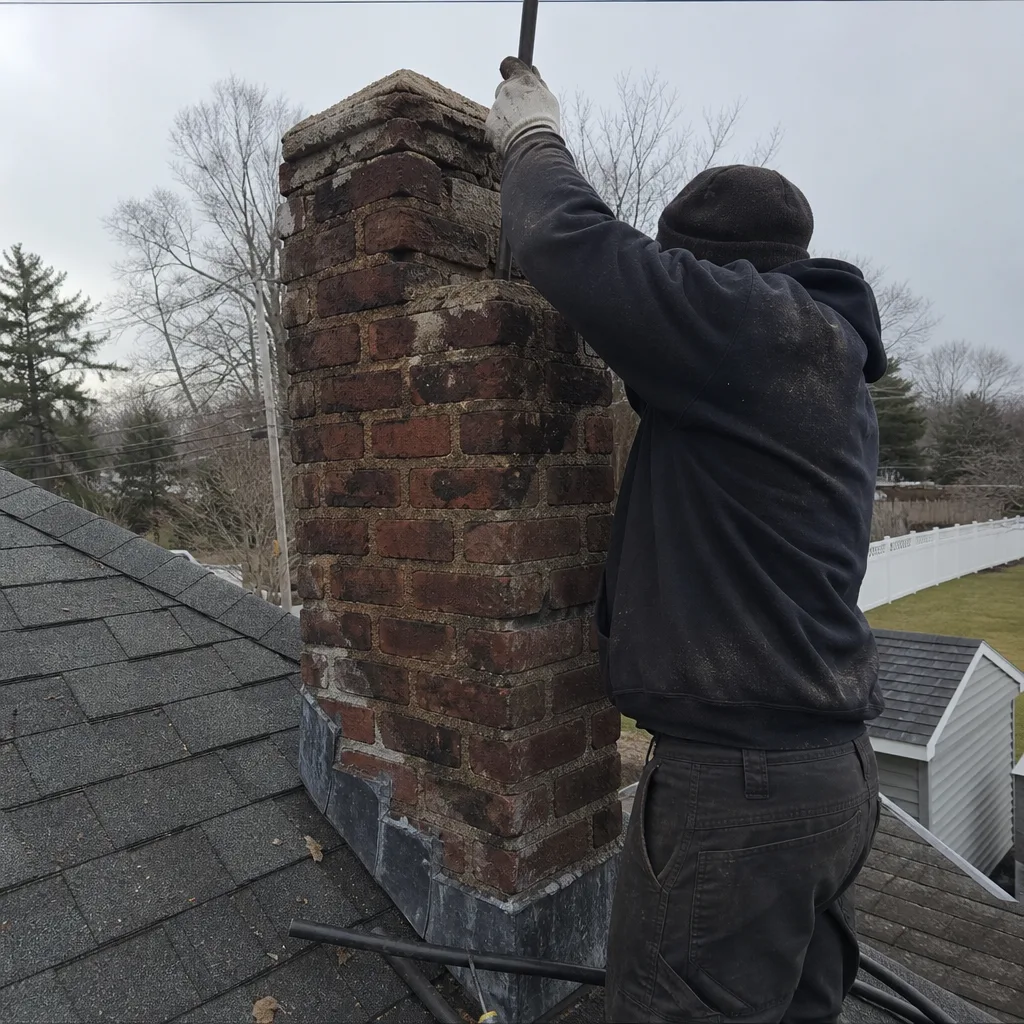 Before
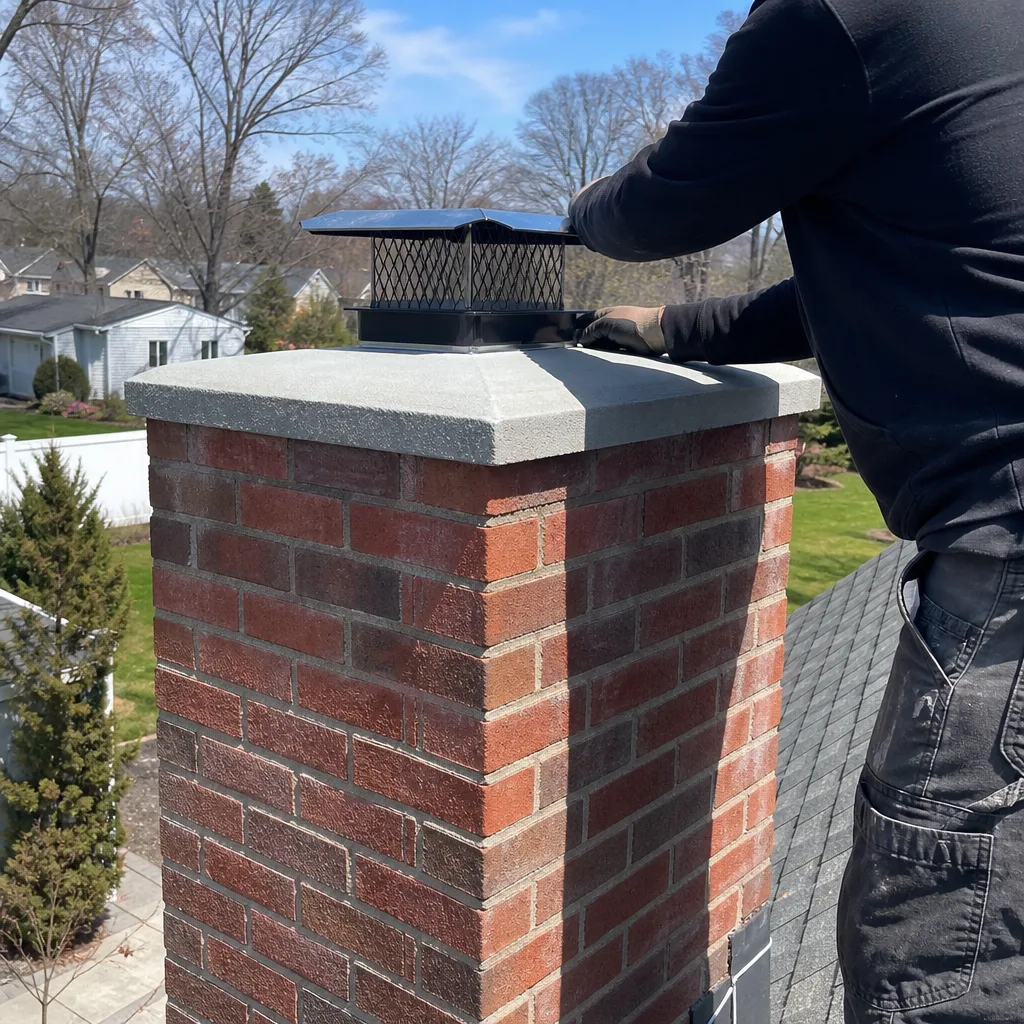 After
After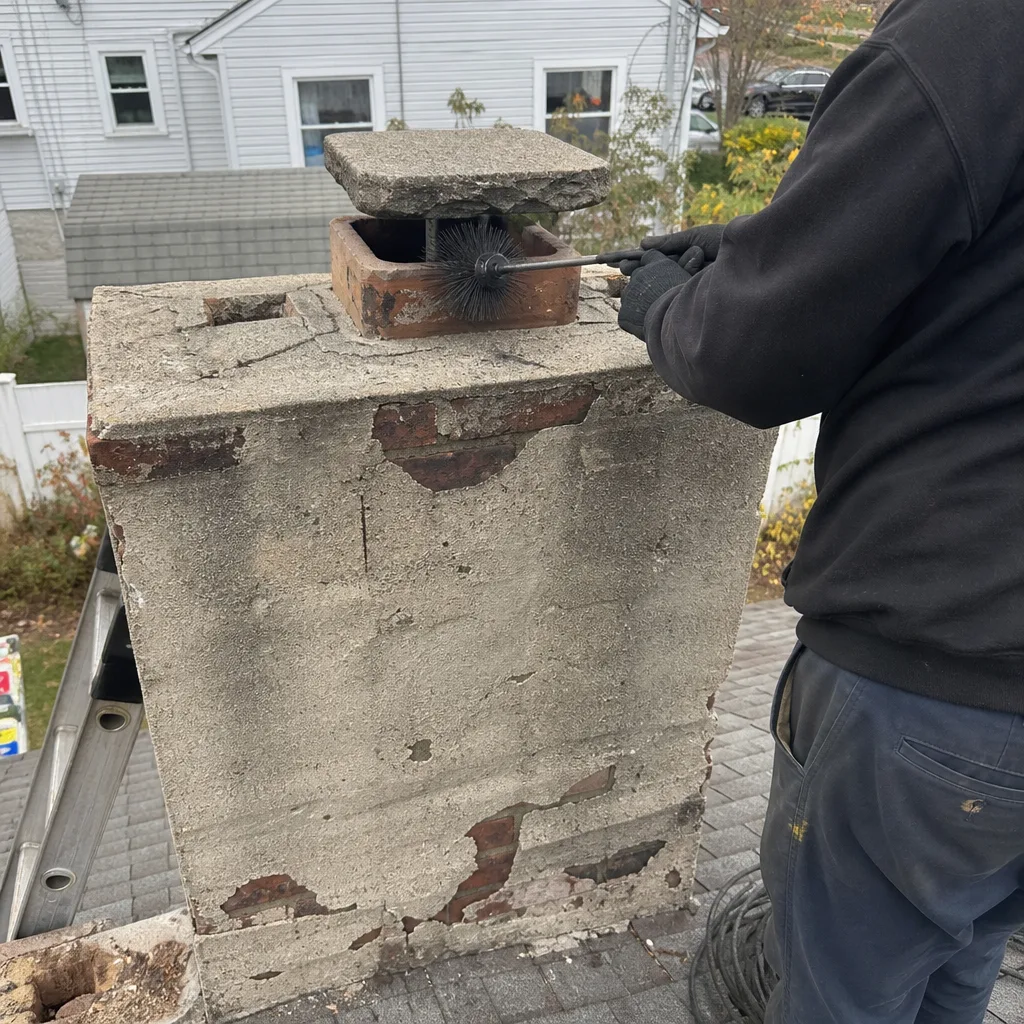 Before
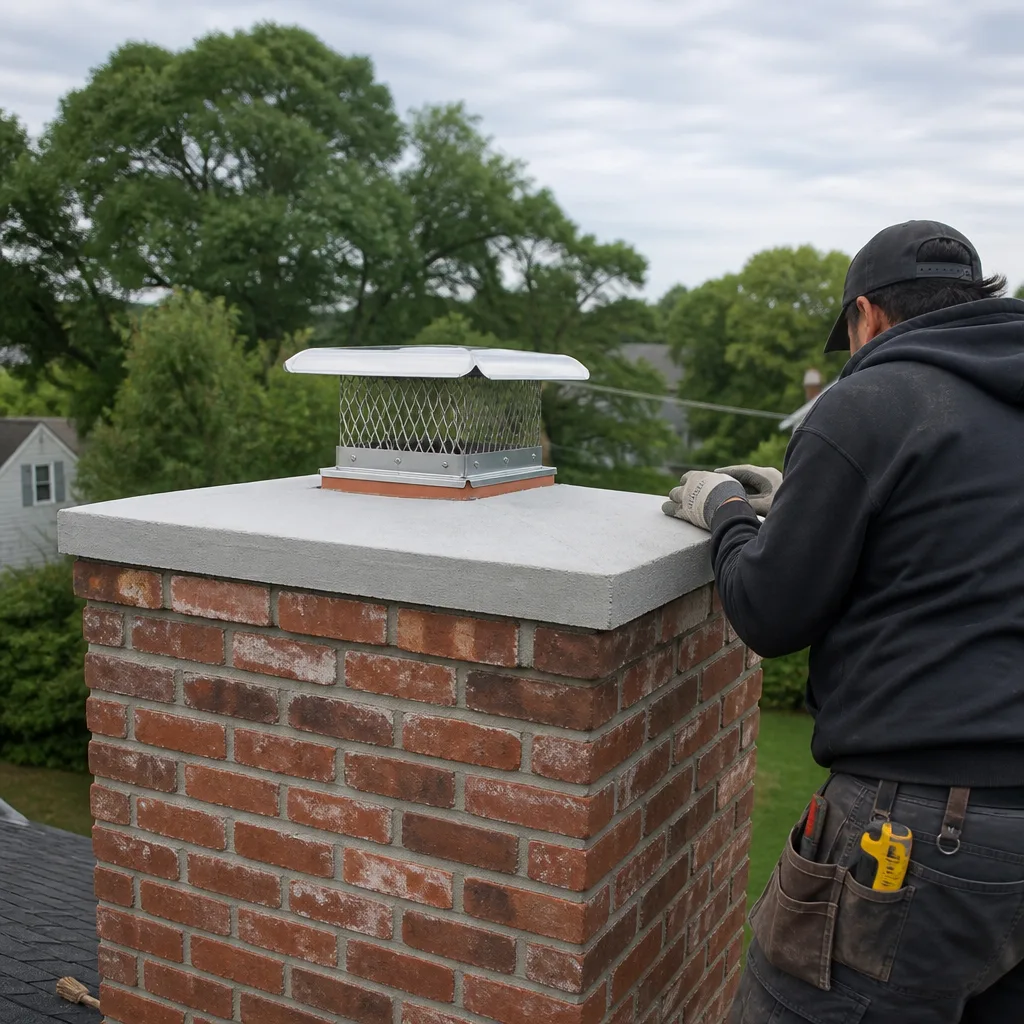 After
After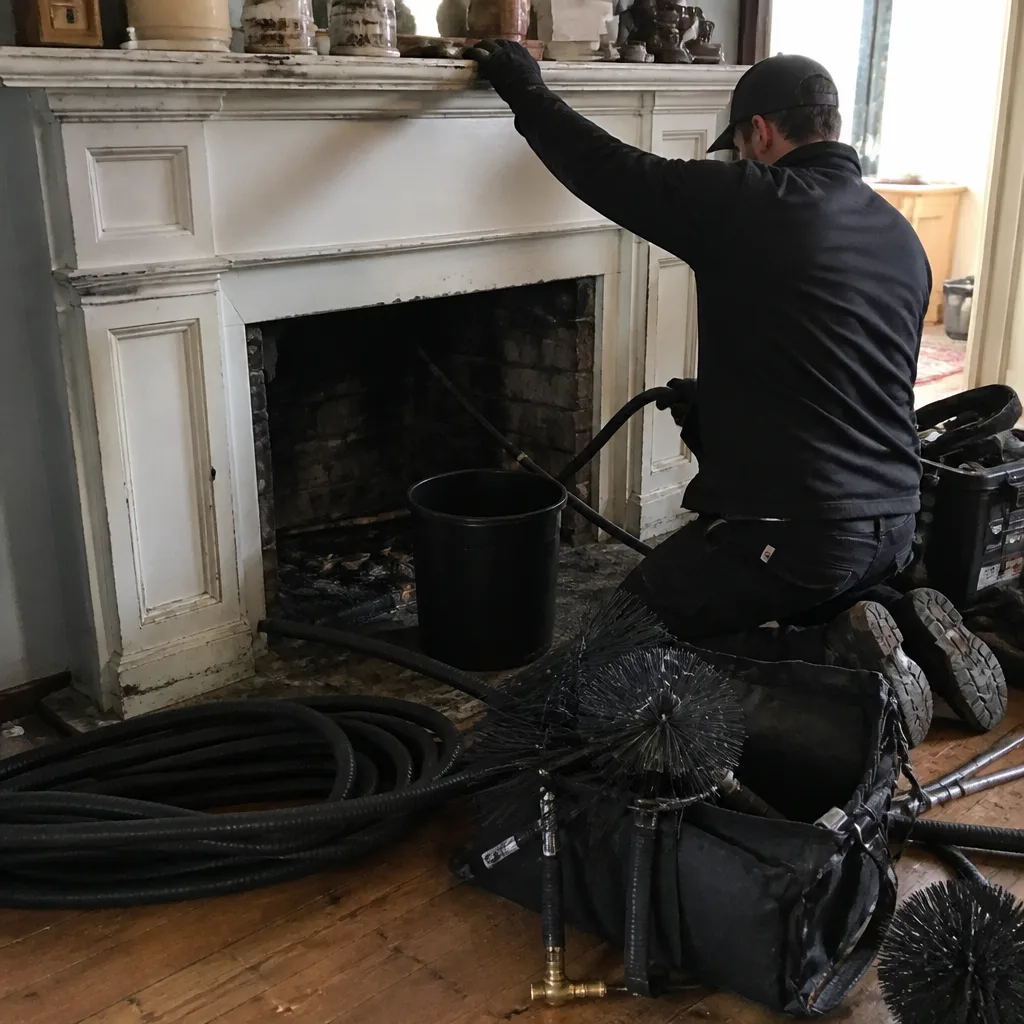 Before
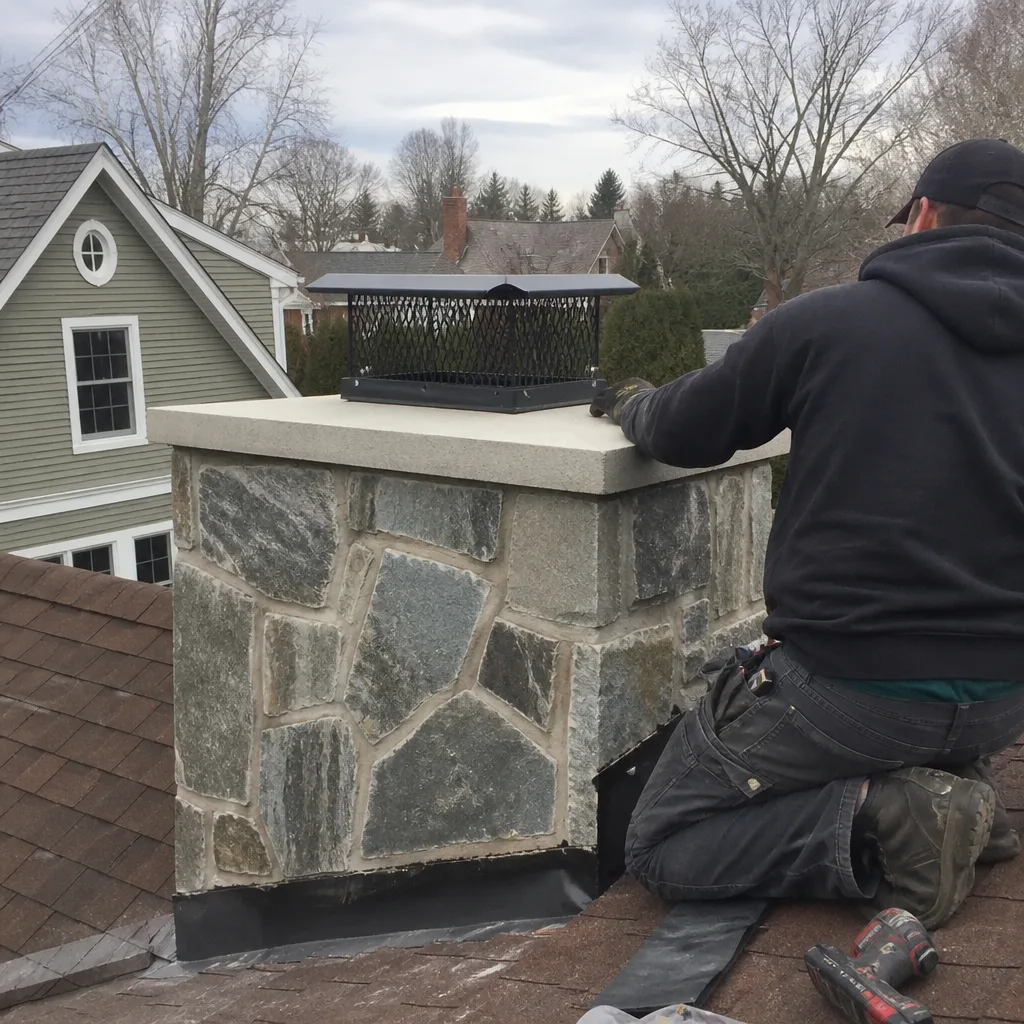 After
AfterChimney Cleaning Permits, Codes & Inspections in NY: What You Need to Know
Most Long Island homeowners never think about chimney permits until a real estate attorney is staring at a closing document and asking questions nobody can answer. Here’s the uncomfortable truth: the chimney cleaning itself almost never needs a permit anywhere in New York, but the repair work a sweep often finds during that cleaning does. Miss that distinction and you can end up with an unpermitted liner installation that comes back to bite you years later during a home sale or an insurance claim. We’ll walk through exactly where the line falls under NY code, how Long Island towns differ, what a Level 2 inspection actually means for your municipality, and what paperwork you should keep in a folder somewhere you’ll actually remember. For related reading, see our Complete Guide to Chimney Cleaning in Long Island.
Quick Answer
Routine chimney sweeping and inspection does not require a permit anywhere in New York State, including Long Island. Permits are triggered by structural repairs or installations such as stainless steel liner installation, flue rebuilding, masonry repair beyond repointing, or changing the fireplace’s firebox or damper system. A Level 2 inspection is a camera-based evaluation of interior flue condition, commonly required by insurers after a chimney fire, real estate transfer, or storm damage. If you’re only getting a sweep, no permit is needed; if the sweep recommends a repair, ask who pulls the permit before work begins. Our Chimney Cleaning & Sweep Maintenance Checklist for Long Island Homeowners covers what to expect during routine service.
Table of Contents
- Maintenance vs. Repair: Where the Permit Line Actually Sits
- How the New York State Building Code Treats Chimney Work
- Long Island Town and Village Codes: Nassau vs. Suffolk vs. Hempstead vs. Oyster Bay
- What a Level 2 Inspection Report Means for Your Municipality and Insurer
- Why Unlicensed Liner Installations Are Common and How to Avoid One
- The Paperwork You Should Keep After Any Permitted Chimney Work
- Common Mistakes to Avoid
- When to Call a Professional
- Frequently Asked Questions
- The Bottom Line
Maintenance vs. Repair: Where the Permit Line Actually Sits
This is the question Wendell answers most often on the phone: “Do I need a permit to get my chimney cleaned?” The short answer is no. A sweep with brushes and a vacuum does not touch the structure of the chimney. No mortar is removed, no bricks are relaid, no metal is installed. The New York State Residential Code views sweeping as routine maintenance, the same category as cleaning gutters or replacing furnace filters. That means you can call a chimney sweep in Nassau or Suffolk County and have the work done same week without ever visiting your town’s building department.
The permit requirement kicks in the moment the work changes from removing creosote to altering the chimney itself. Here’s the practical breakdown we use with homeowners on Long Island:
- No permit needed: chimney sweeping, creosote removal, Level 1 visual inspection, smoke test, camera inspection for diagnostic purposes, rain cap installation that clamps or screws onto existing flue tile, top-sealing damper replacement when the flue is otherwise sound.
- Permit typically required: stainless steel liner installation, flue tile rebuilding, partial or full masonry rebuild, firebox repair that involves removing brick, changing the damper assembly, installing a wood stove insert that connects to the existing chimney.
- Depends on your town: repointing (tuckpointing) of exterior brick, crown repair, flashing replacement. Some towns consider these cosmetic, others treat them as structural. We’ll cover that below.
Here’s a real example from our own work. A homeowner in Massapequa called us after her chimney sweep recommended a stainless steel liner because the old clay flue tiles had cracked. She had already received three quotes, all including the liner itself. One quote was from a handyman who said no permit was needed, that it was “just a tube inside a tube.” She asked Wendell to verify. The answer: under New York State code, installing a liner is a listed repair requiring a building permit in basically every Long Island jurisdiction. The liner becomes the flue. If it’s installed wrong, the house doesn’t vent properly. That is not maintenance.
When we install a liner, whether it’s a DuraFlex or HeatShield system, the permit goes through the local building department before we start. That means an inspector will look at the work, and an inspection record gets filed with the town. It costs a little more and adds a day or two to the schedule. It also means when that homeowner sells the house, the buyer’s attorney won’t find an unpermitted chimney modification in the public record.
How the New York State Building Code Treats Chimney Work
New York’s building code is not one book sitting on a shelf in Albany. It’s the New York State Uniform Fire Prevention and Building Code, which adopts the International Residential Code (IRC) with state-specific amendments. Chapter 10 of the IRC covers chimneys and fireplaces. For practical purposes, here’s what a Long Island homeowner needs to know: any work that alters the chimney’s structure, fire resistance rating, or venting capacity is treated as a regulated alteration. A brush and vacuum don’t qualify. A liner does.
The code language itself doesn’t say “thou shalt pull a permit for a liner.” That’s not how building codes work. Instead, the code sets performance standards, and the permit requirement comes from the administrative section of each municipality’s code. That’s a critical distinction. The state code says a chimney liner must be made of approved material, sized correctly, and installed to handle the appliance’s exhaust temperature. The town code says you need a permit before you do any work that affects structural integrity or mechanical systems. A liner installation touches both.
Here’s what the IRC chapter on chimneys actually requires, in plain language:
- Flue sizing. The flue must be sized to the appliance. A fireplace with a 30-inch firebox opening needs a flue matched to that opening. Too small and smoke backs up. Too large and the draft stalls.
- Clearance to combustibles. Combustible framing must be kept away from the chimney by specified distances. This is why we flag framing that is too close to the flue during inspections.
- Approved materials. Liners must be UL-listed systems, like DuraFlex stainless steel or HeatShield’s ceramic coating. The code doesn’t care about brand, but it does care about listing.
- Firebox construction. The firebox must be made of firebrick or a listed refractory material. A cracked firebox that exposes the hearth framing below is a code violation waiting to become a house fire.
- Termination height. The chimney must extend above the roofline by a minimum height to maintain draft. Too short and the wind swirls smoke back down the flue.
What most homeowners discover is that the permit itself isn’t the expensive part. On Long Island, a residential chimney permit typically runs somewhere in the $50 to $300 range depending on the town and the scope of work. The real cost is the time and the inspection. But skipping the permit because it’s inconvenient is a false economy. We’ve seen unpermitted liners hold up home sales in Wantagh, Garden City, and Bay Shore. The fix usually costs far more than the permit would have.
Long Island Town and Village Codes: Nassau vs. Suffolk vs. Hempstead vs. Oyster Bay
Long Island is not one code jurisdiction. It’s two counties, thirteen towns, two cities, and dozens of incorporated villages, each with its own building department and its own interpretation of what needs a permit. Most follow the same underlying state code, but the practical differences matter. Here’s what we have learned from pulling permits across the Island since 1999.
Nassau County tends to interpret chimney work more strictly than Suffolk. The Town of Hempstead, which is the largest town by population in New York State, requires permits for any liner installation, any firebox repair, and even some crown work depending on the scope. The building inspector will want to see the UL listing on the liner product, whether it’s DuraFlex or Gelco. The Town of Oyster Bay is similarly rigorous, and unincorporated areas are handled directly by the town. Incorporated villages in Nassau, places like Garden City, Rockville Centre, and Freeport, often have additional requirements layered on top. Some villages require a separate village permit even when the town has already issued one. Always call the village first if you live in an incorporated area.
Suffolk County runs through ten separate towns: Babylon, Brookhaven, East Hampton, Huntington, Islip, Riverhead, Shelter Island, Smithtown, Southampton, and Southold. Each has its own building department. The reality is that enforcement varies. Some towns are diligent about chimney permits; others only flag the work when a real estate inspector catches it during a sale. But the variation cuts both ways. A homeowner in Brookhaven might have a different experience than one in Huntington, even for the same liner job. The practical advice is the same: call the building department, describe the work, and ask directly if a permit is required. Get the name of the person you spoke to and write it down.
Here’s how to check your own town before scheduling work:
- Verify your jurisdiction. If you live in an incorporated village, start with the village building department, not the town. The village is the authority that matters.
- Call the building department and describe the work. Don’t ask “do I need a permit for chimney work” because the answer will be generic. Say exactly what the sweep recommended: “I need a stainless steel liner installed in a masonry chimney for a wood-burning fireplace.”
- Ask about inspection requirements. Some towns require a rough inspection before the liner goes in and a final inspection after. Others only require the final.
- Ask about fees and turnaround. This tells you whether the contractor’s timeline is realistic. If the town says three weeks for a permit and the contractor says he can start Monday, he is not pulling a permit.
- Write down the name of the person you spoke with. Building departments are run by people. That name becomes your documentation if anything is disputed later.
Wendell has stood in enough building department lobbies across Long Island to know the folks at the counter. They are generally helpful, but they will not chase you down to tell you a permit is required. The burden is on the property owner. If you do unpermitted work and get caught later, the town can require you to open the wall or remove the liner at your expense before they will inspect and close the permit. That is the worst-case scenario and it happens.
What a Level 2 Inspection Report Means for Your Municipality and Insurer
The National Fire Protection Association divides chimney inspections into three levels. A Level 1 inspection is visual, done with a flashlight and basic tools, and it’s what you get during an annual sweep when nothing has changed about the chimney’s use. A Level 2 inspection is more involved: the sweep runs a camera through the flue and documents interior condition. It’s the standard when the house is being bought or sold, when the chimney’s use is changing (such as converting from a wood fireplace to a gas insert), or after a chimney fire, tornado, or lightning strike. A Level 3 inspection involves opening or removing part of the chimney structure and is only done when a Level 2 reveals something serious enough to warrant it.
The key fact for Long Island homeowners: a Level 2 inspection is not a permit document, but it is a piece of evidence that building departments and insurance companies may request. If you file an insurance claim for chimney damage, the insurer will want to know whether the chimney was properly maintained and whether the damage resulted from a covered peril. A Level 2 report from a credentialed sweep that shows intact flue tiles before the storm is strong evidence. A chimney with no inspection history is a blank slate that insurers often resolve against the homeowner.
Here is what typically triggers a Level 2 inspection on Long Island:
- Real estate transfer. Most home sales in Nassau and Suffolk now include some form of chimney inspection. A buyer’s attorney will ask for documentation. If the seller cannot produce any, the buyer will order a Level 2 at the seller’s expense or walk away.
- Chimney fire. If you have a chimney fire, even a small one you put out yourself, the National Fire Protection Association says the chimney should not be used again until it has been evaluated. Your insurer will likely require a Level 2 before they continue the policy.
- Storm damage. After Hurricane Sandy and the succession of nor’easters since, Long Island building departments and insurers became much more diligent about chimney condition. High winds can crack flue tiles or shift the crown without leaving obvious exterior damage.
- Change of use. Converting a wood-burning fireplace to gas, installing a wood stove insert, or changing the appliance connected to the flue. The new appliance may have different draft and clearance requirements.
- Uncertainty about prior work. If you bought a home with a liner already installed and no permit on file, a Level 2 can tell you whether the liner was installed correctly even if you cannot establish whether it was permitted.
- Are you licensed in New York State and in my town? Nassau, Suffolk, and most villages require home improvement contractors to be licensed. Ask for the number and verify it with the licensing agency.
- Will you pull the permit in your name or in mine? A licensed contractor pulls the permit in the company’s name. If the contractor asks you to pull the permit yourself, they are shifting liability to you.
- When will the inspection happen and who schedules it? The contractor should schedule the inspection and be present for it. If they say inspections “aren’t necessary” for a liner, they are either uninformed or avoiding scrutiny.
- Can you show me the UL listing for the liner product? All modern liner systems carry a UL listing. If the contractor cannot produce the documentation for the specific liner they plan to install, walk away.
- What does your written warranty cover? A warranty that isn’t in writing isn’t a warranty. Get the promise on paper.
- The building permit itself. It shows the scope of work as approved by the town. Keep a copy even after the permit is closed.
- The inspection sign-off or certificate of completion. This is the document that proves the work passed. In some towns it’s a sticker, in others a printed document. Keep both.
- The contractor’s invoice and scope of work. It should list the specific products installed. If a liner went in, the invoice should say DuraFlex or HeatShield or whatever brand was used, along with the length and diameter.
- The Level 2 inspection report with camera footage. If you have video of the flue after installation, save it as a file. Digital files last longer than paper.
- The contractor’s license and insurance information. You might need to show that the work was done by a licensed professional, not a handyman.
- The warranty document. Top Hat Chimney puts its 90-Day Done Right Promise in writing on every job. A one-line promise is better than a hundred-page warranty that no one will ever honor. Get the written promise.
- Assuming a sweep and a liner are the same category of work. They’re not. A sweep is maintenance; a liner is a structural repair. The permit line falls between them. Skipping the permit on a liner is the most expensive shortcut on Long Island.
- Taking the cheapest quote without asking about permits. The low bid is low because someone isn’t pulling a permit or isn’t licensed. That difference becomes your problem at closing.
- Letting a handyman do masonry work on the chimney. Chimney masonry is not a handyman job. It involves fire safety, draft, and code compliance. A handyman who agrees to rebuild a firebox is doing you no favors.
- Not calling the building department yourself. Contractors sometimes say a permit isn’t required. Verify it yourself. One call to the town building department settles the question in five minutes.
- Filing the permit paperwork in a drawer you’ll never find. Paperwork that can’t be found at closing is almost as bad as no paperwork. Scan it, name it, and store it somewhere you’ll remember.
- Skipping the Level 2 inspection when buying a home. The home inspector’s glance at the damper is not a chimney inspection. Order a Level 2 with camera footage before you sign anything.
- Waiting until the home sale to address chimney maintenance. A chimney that’s been ignored for ten years will advertise that fact on inspection day. Maintain it annually and the inspection is a formality.
We perform Level 2 inspections across Long Island using a camera system that records the entire flue. The homeowner gets the footage and a plain-English verdict, every time, no exceptions. That footage is what you show to the building department, the insurer, or the buyer’s attorney. It is not a substitute for a permit, but it is the most direct evidence of what is actually inside your chimney.
Why Unlicensed Liner Installations Are Common and How to Avoid One
The unpermitted liner is the most common chimney problem we see on Long Island that isn’t actually a chimney problem at all. It’s a paperwork problem that becomes a legal problem the moment the house changes hands. Here’s why it happens so often.
First, the work is invisible once it’s done. A stainless steel liner sits inside the flue. The homeowner sees a pipe going up the chimney and assumes it was done properly. There’s nothing to compare it to. Second, the marginal cost of a permit is time. A handyman working without a license can quote a liner installation for $800 less than a licensed sweep because he isn’t paying for the permit, the inspection, the insurance, or the time to stand in line at the building department. The homeowner hears the price and goes with the handyman.
Third, enforcement is reactive, not proactive. No one from the town drives around knocking on doors to check for unpermitted liners. The unpermitted liner only surfaces during a point of friction: a home sale, a refinance, an insurance claim, a neighbor’s complaint. By then, the handyman is often out of business or on to the next trade.
What to ask any contractor before a liner goes in, whether it’s a DuraFlex, HeatShield, Gelco, or Olympia Chimney product:
Wendell has been installing liners on Long Island since 1999, and the permit has always been part of the job. It’s not a selling point. It’s the only way he knows to do the work so the homeowner doesn’t get a surprise later.
The Paperwork You Should Keep After Any Permitted Chimney Work
Most homeowners pay for a permitted repair, file the paperwork somewhere, and never see it again. Then the sale comes, or the insurance adjuster calls, and the paperwork is gone. Here is exactly what to keep and where to keep it.
After any permitted chimney work on Long Island, you should have:
Where to store it: create a physical folder marked “House Systems” and keep it with your deed and insurance paperwork. Go a step further and scan everything into a folder on your computer or cloud storage with a clear name like “Chimney Permit 2025.” The buyer’s attorney and the insurance adjuster both want the same thing: proof that the work was done, done legally, and done by someone with credentials. If you can produce that in five minutes, you have already defused the most common closing-day problem we hear about.
Common Mistakes to Avoid
When to Call a Professional
You don’t need a permit to have your chimney swept, but you do need a pro who knows where the line sits and will tell you straight. Call a chimney sweep when you see flaky creosote buildup, when smoke backs up into the room, when you hear animals in the flue, when the damper is stuck or rusted, or when you haven’t had the chimney looked at in more than a year. Call us right away if you smell smoke in the house after a fire, if you see white staining on the exterior brick, or if the chimney has been through a storm with high winds. Once a year, burn or no burn, is the rule. Chimneys break in the off-season too. Top Hat Chimney offers free estimates in Long Island, call (516) 968-5380. Wendell and his crew are background-checked, uniformed, and give you a real arrival window, and the number you hear on the phone is the number on the invoice.
Frequently Asked Questions
No. Routine chimney sweeping and visual inspection are classified as maintenance, not construction, and no municipality in New York State, including Long Island, requires a permit for those services. The permit requirement only triggers when the work becomes structural, such as installing a liner or rebuilding the firebox. If the sweep only removes creosote, you never have to call the building department.
Chimney sweeping on Long Island typically runs between $180 and $350 depending on flue access, creosote level, and whether a Level 1 or Level 2 inspection is included. Third-degree creosote glaze costs more to remove than first-degree powder. A camera inspection is usually an additional line item. Call (516) 968-5380 for an exact quote, estimates are free.
An unpermitted liner becomes a liability at the point of sale. The buyer’s attorney flags it, and you either open the flue for inspection at your own expense or lose the deal. Some insurers will also deny claims on unpermitted work. The permit is the cheapest part of the job. It is never worth skipping.
Most Long Island insurers do not require routine chimney inspections, but they will likely require a Level 2 inspection after a chimney fire, a severe storm, or before insuring a home with a wood-burning appliance. The insurer wants to know the flue is sound before they write the policy. A camera-based Level 2 inspection with footage is the document they ask for most often.
Once a year, burn or no burn. The National Fire Protection Association recommends an annual inspection, and Long Island winters, with their freeze-thaw cycles, are hard on exterior masonry. Chimneys break in the off-season too, so an annual check catches small problems before they become liner replacements.
The property owner or a licensed contractor can pull the permit, but a licensed contractor should pull it in the company’s name for any significant repair. When the contractor holds the permit, they also hold the responsibility for passing inspection. If a contractor asks you to pull the permit yourself, that’s a red flag. Call (516) 968-5380 if you’re not sure whether your job requires one.
Order a Level 2 camera inspection to verify the liner was installed correctly, then call your local building department to ask about the process for retroactive inspection. Some towns have a process for this; others require removal and replacement. It’s better to know now than at closing. Top Hat Chimney offers a free second opinion on any written estimate, and we’ll tell you plainly whether the liner is worth keeping. For more guides & resources, visit our blog.
The Bottom Line
The core distinction is simple: cleaning is maintenance, repairs are construction, and only construction needs a permit. Long Island towns vary in how they enforce that line, so one call to your local building department settles the question. Keep your paperwork where you can find it, get a camera inspection when the situation calls for one, and never let the bottom line of a quote decide whether the job gets permitted. The permit is the cheapest insurance you’ll ever buy against a closing-day disaster. If you’re on Long Island and you’re not sure whether your project needs a permit, call (516) 968-5380 and Wendell or someone on the crew will walk you through it. No charge, no pressure, and no upsell.
Written by Wendell Pike, Owner at Top Hat Chimney, serving Long Island since 1999. For more on our services, see Chimney Cleaning & Sweep in Long Island, Chimney Repair in Long Island, and Fireplace Services in Long Island.