
Level 1 sweep and inspection to the NFPA 211 annual standard - flue, crown, cap, and flashing checked and photographed
Chimney sweep logs do not sweep chimneys. They loosen some creosote - which then falls where a brush and vacuum still have to collect it.
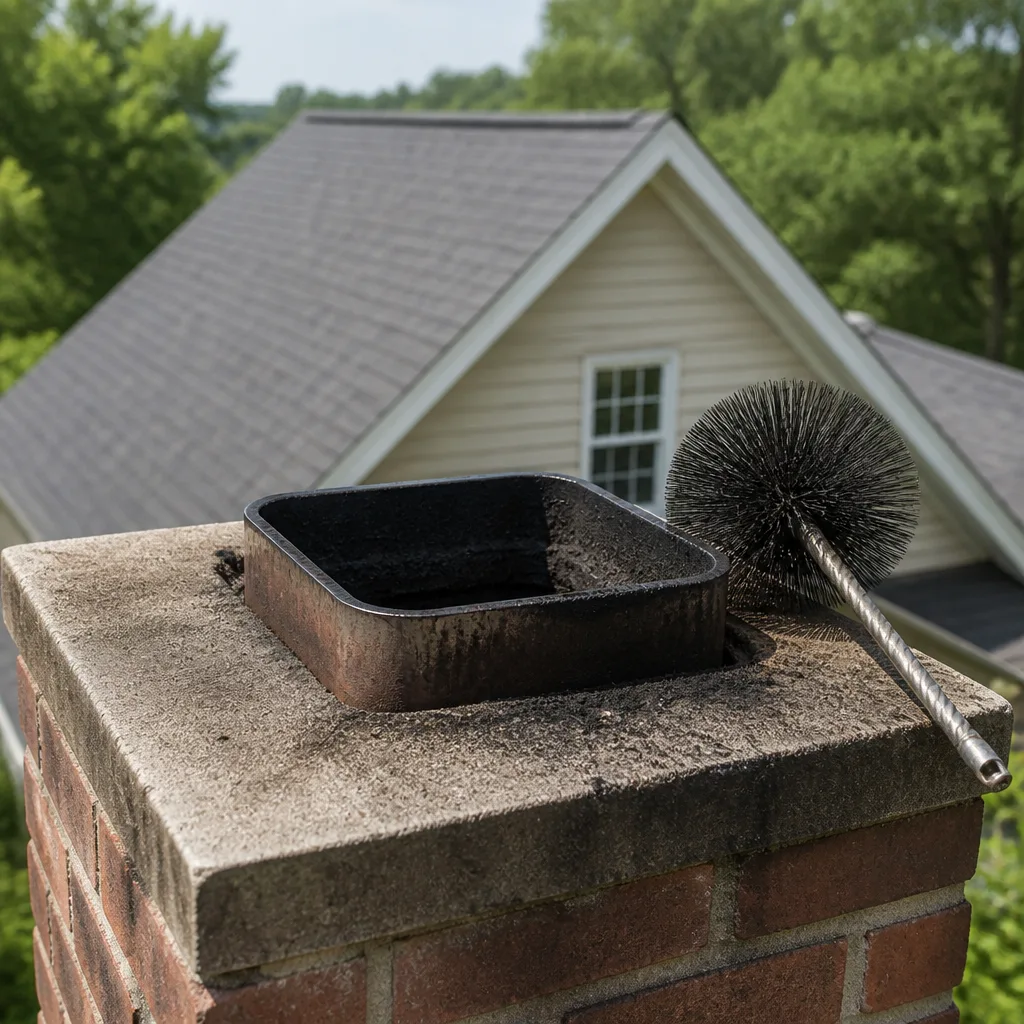
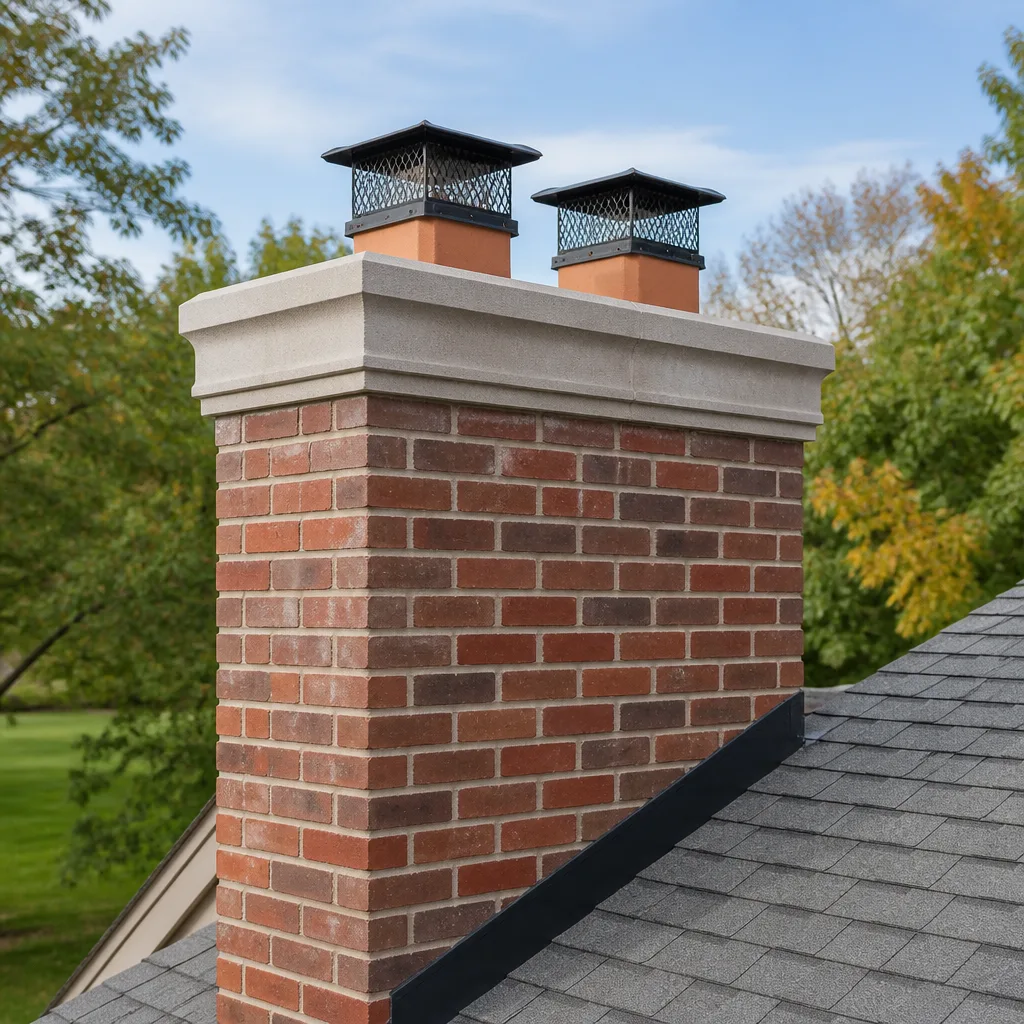
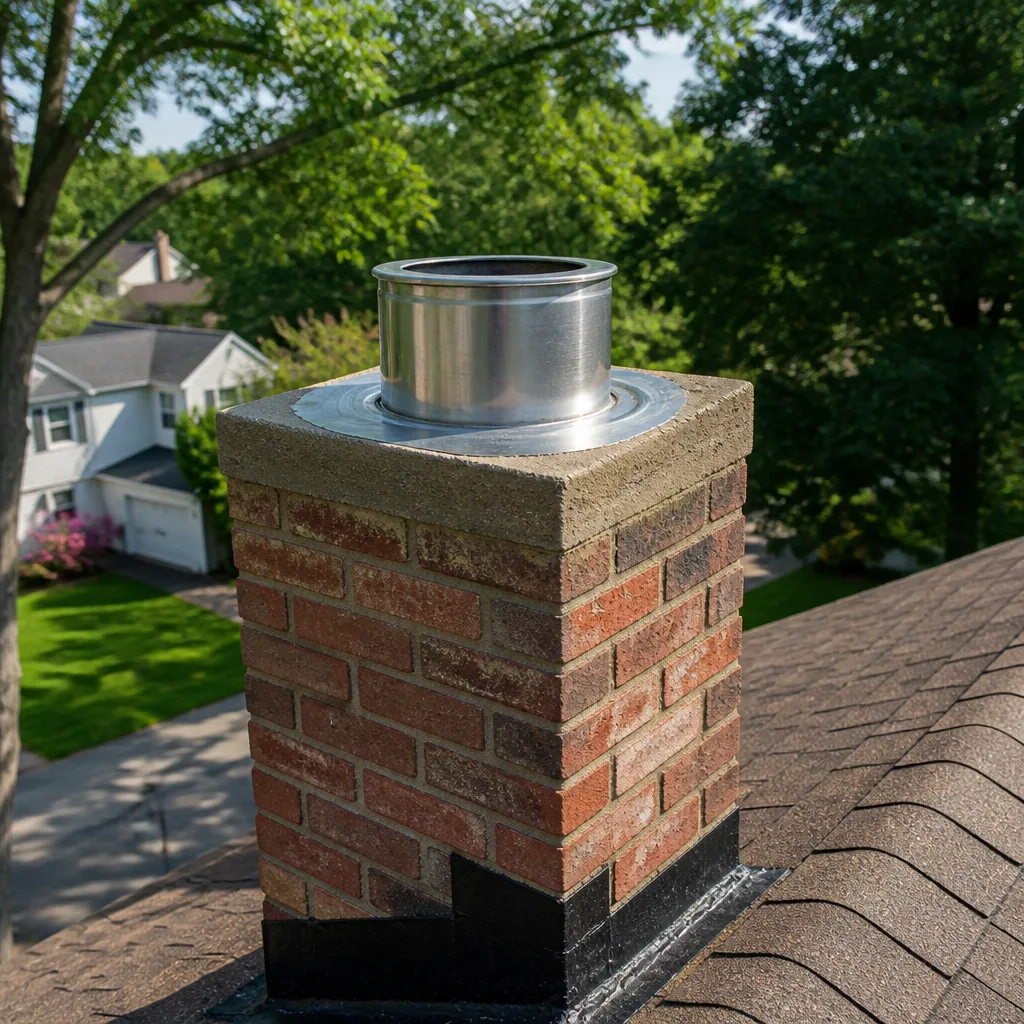
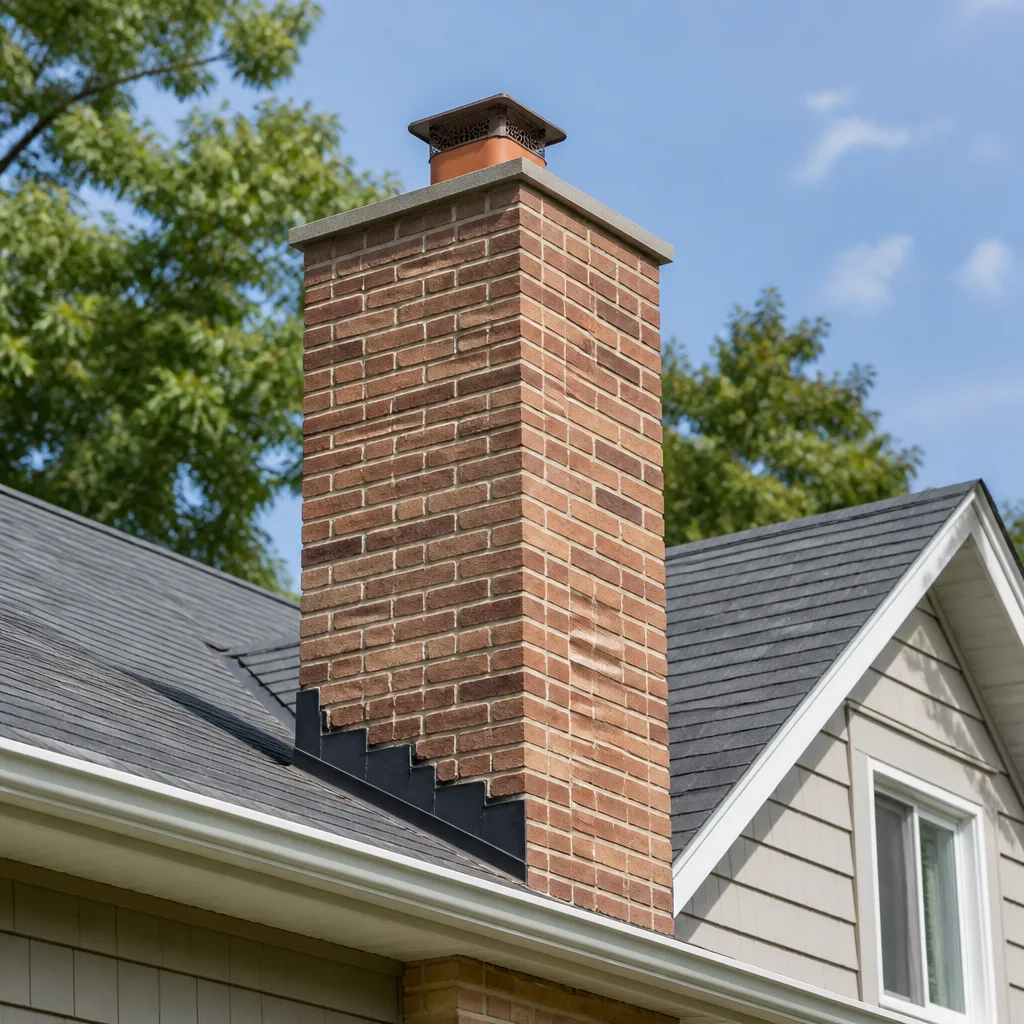
 Before
 After
After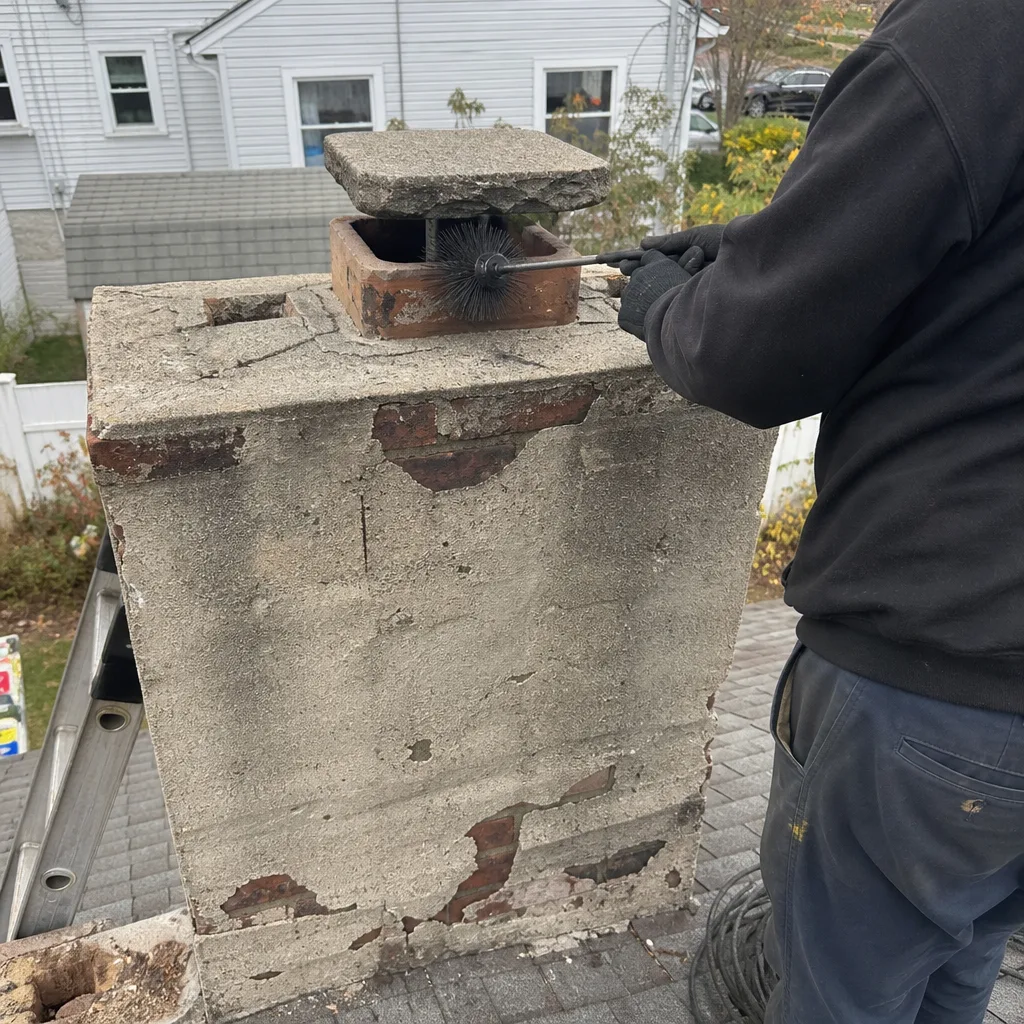 Before
 After
After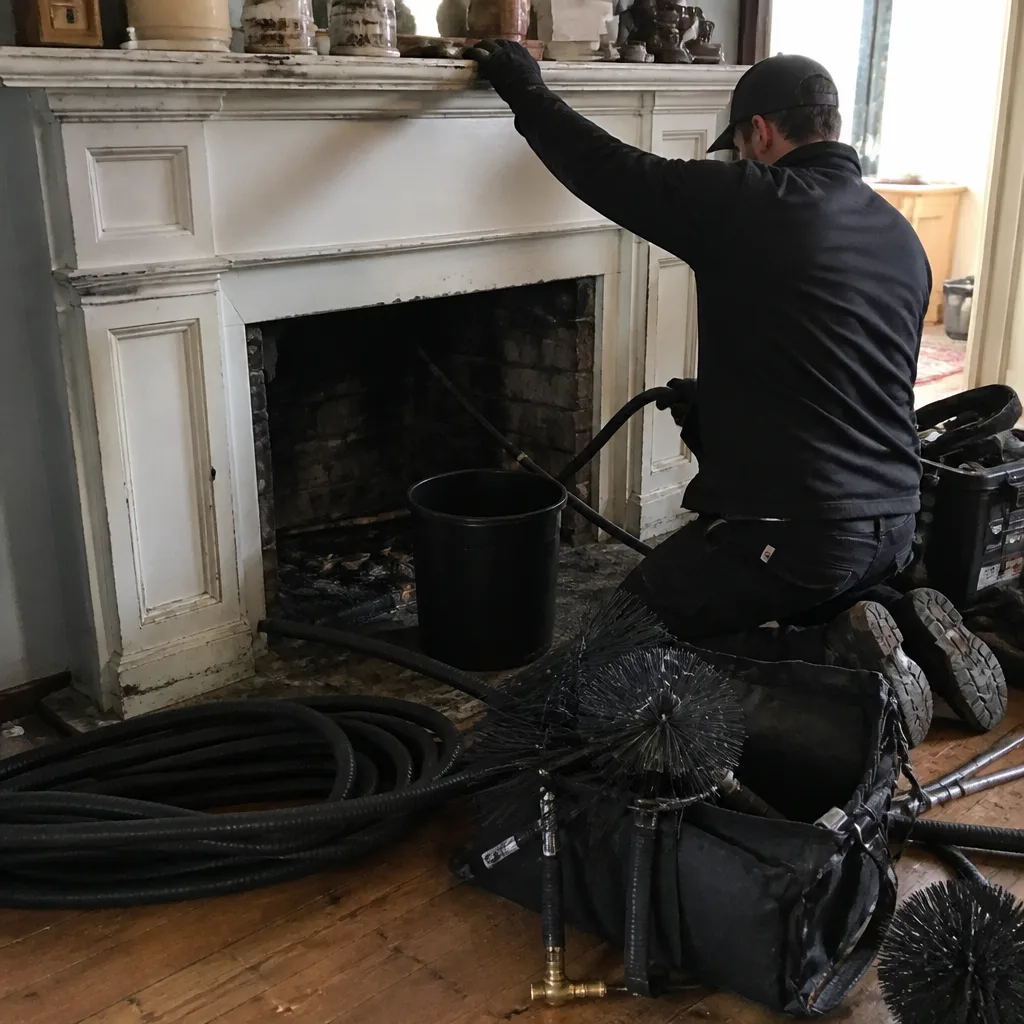 Before
 After
AfterOlympia Chimney Chimney Cap Installation: The Long Island Owner’s Guide
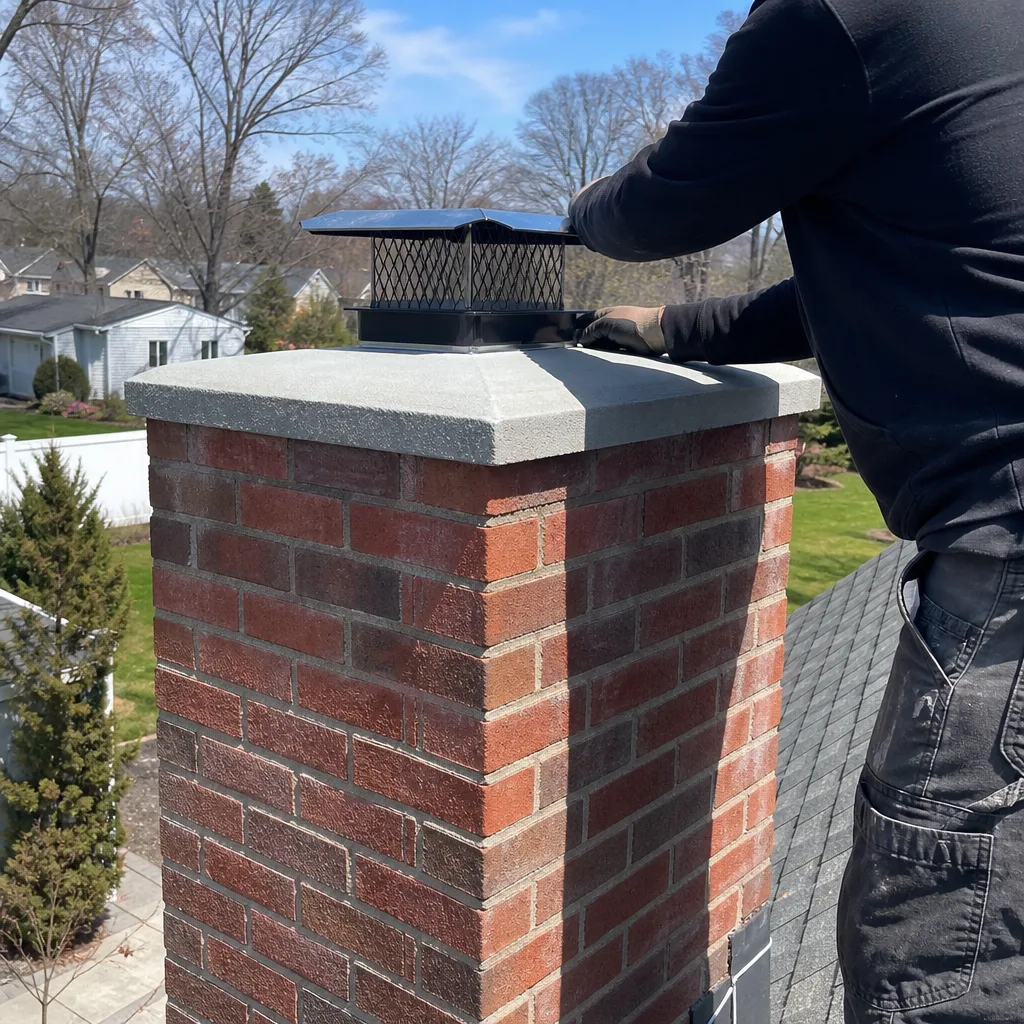
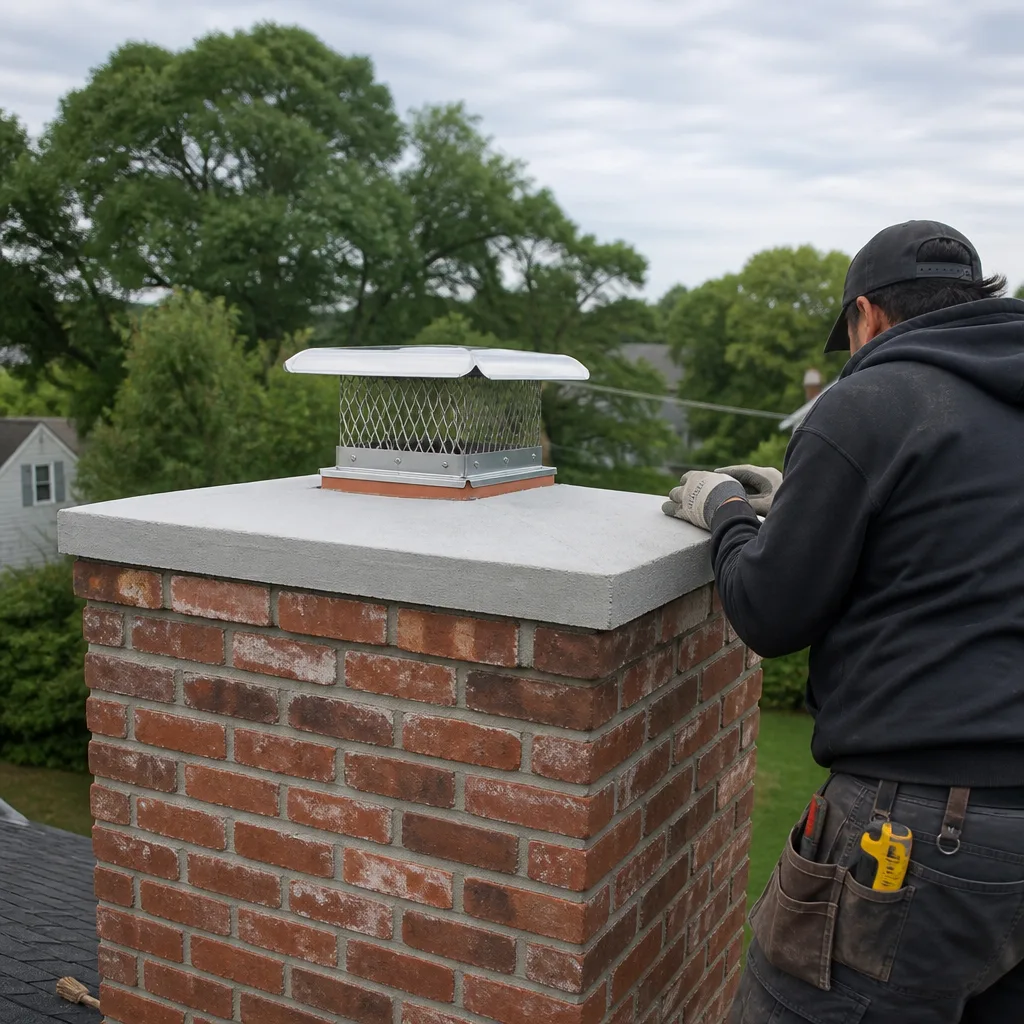
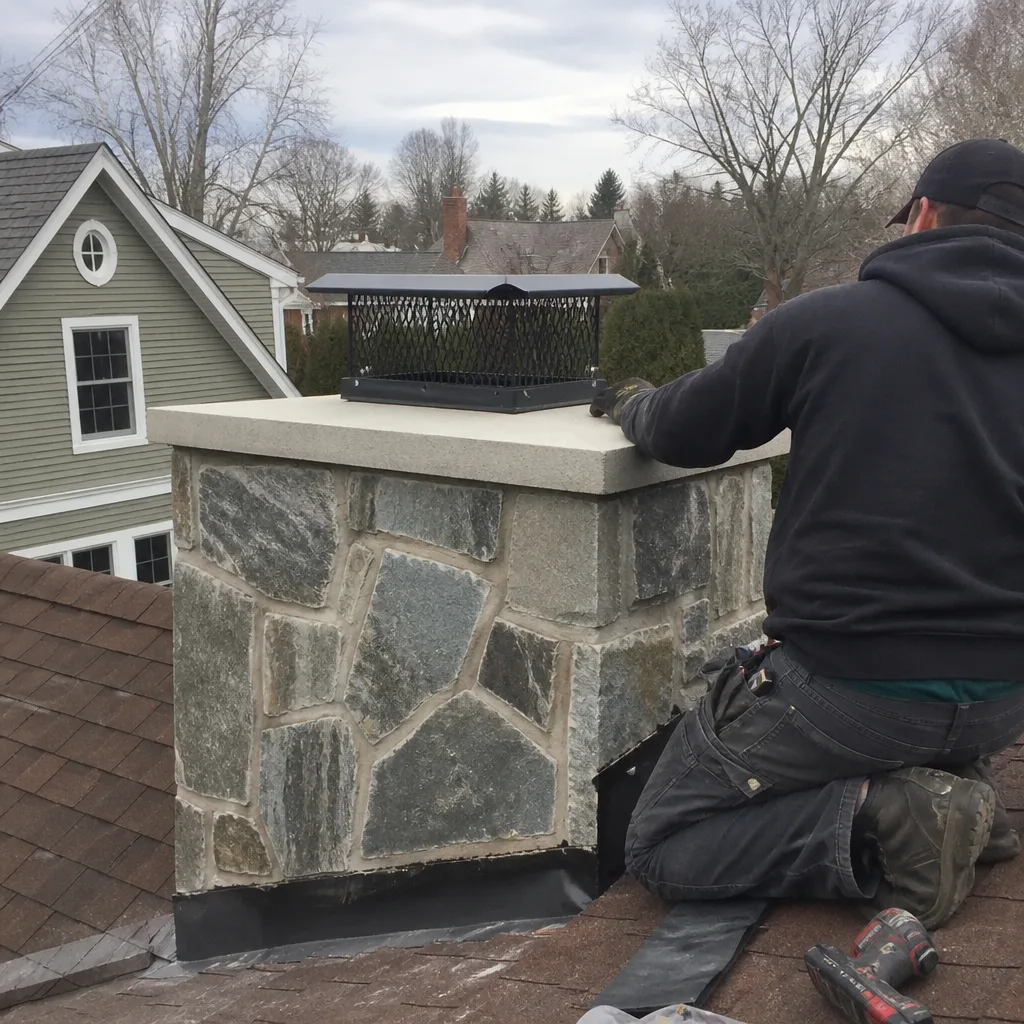
We stock and install Olympia Chimney-compatible chimney caps across Long Island, and most installations run between $340 and $620 depending on the cap size, the flue tile dimensions, and whether the old cap left behind a corroded mounting base that needs cleaning up first. We carry Olympia Chimney caps on the truck so there’s no ordering delay. Most owners find out their cap has failed the same way: they start hearing water dripping down the flue during a nor’easter, or they spot rust staining on the chimney crown and realize the cap that’s supposed to be shedding rain is actually holding it against the masonry.
Here’s the honest picture. A chimney cap on Long Island lives in a rough neighborhood: salt air off the Sound, freeze-thaw cycles all winter, and enough wind off the Atlantic to test every fastener. The Olympia Chimney caps are better built than most, but even good stainless steel eventually loses to that combination, usually at the seams or the mounting screws first. If you caught it early, we can usually swap the cap itself without touching the flue liner or crown. If it’s been failing for a while, we’ll tell you what the moisture already did before we quote anything.
Which Olympia Chimney Models This Applies To
Olympia Chimney makes caps for their stainless steel chimney systems, including the Ventis and Ventis Pro lines, but the cap itself doesn’t care too much about brand loyalty. What matters is the flue tile’s inside diameter and outside diameter, and whether you’re capping a single flue or a multi-flue crown. We measure both before we quote, because “fits an 8-inch flue” isn’t the same thing as “fits your 8-inch flue” once you account for how the tile was laid and whether the crown has settled.
Here’s the compatibility gotcha we run into constantly on Long Island: many older homes in Levittown, Hicksville, and Massapequa have clay flue tiles that measure 8½ by 8½ outside but only 6¾ by 6¾ inside. Olympia Chimney’s standard 8-inch cap won’t seat properly on that tile, and if you force it, the mounting brackets sit crooked and the cap walks loose in the first big wind. We keep a range of sizes and adapter legs on the truck specifically for those older tile jobs. If you’ve got the model number from the cap or the chimney pipe label, great. If not, we’ll pull it off the measurements in about ten minutes.
And one thing we tell every customer: Top Hat Chimney is an independent installer, not an Olympia Chimney dealer. We stock their caps because we think they’re among the best stainless caps built for coastal weather, and we can source OEM or good aftermarket equivalents depending on what fits your tile and your budget.
Signs Your Olympia Chimney Chimney Cap Installation Is Failing
- Rust streaks running down the cap or the crown. That means water is sitting where it shouldn’t, and the cap’s protective layer is compromised. On Long Island, salt accelerates this faster than most folks expect, especially within a mile or two of the shoreline.
- A faint metallic rattle when the wind picks up. That’s a mounting leg or a seam that has loosened. The cap is working its way free, and one good January gust will take it into the neighbor’s yard.
- Water in the firebox after a hard rain. This isn’t always the cap, but if your flue tile is dry and the damper is dry, and you’re still seeing damp patches on the firebox floor, the cap’s drip edge or the seal around the mounting legs is usually the culprit.
- Debris inside the firebox: leaves, twigs, or nesting material. A cap with a damaged mesh screen isn’t just ugly, it’s an open invitation. Squirrels and starlings find their way in through gaps you can’t see from the ground.
- The cap sits visibly tilted or off-center from the street. That’s usually a mounting base that corroded or a crown that settled. Either way, the cap isn’t doing its job and your flue is exposed.
Replacement Cost & What’s Included
For a standard single-flue Olympia Chimney cap installed on Long Island, expect to pay between $340 and $480. Multi-flue caps or oversized custom caps run $500 to $620 or more depending on the crown dimensions and whether a mounting ring needs to be fabricated. The range isn’t a game; it comes down to cap size, stainless gauge, whether the old mounting hardware left behind rust that has to be ground off the tile, and how much ladder work is involved to reach a steep roof or a tall chase.
What’s included in our price: the cap itself, the mounting brackets, stainless fasteners, removal and disposal of the old cap, a visual check of the exposed flue tile, and a photo report so you can see what we saw up there. We don’t charge extra to haul away the old cap, and we don’t surprise you with a “fuel surcharge” or a “steep roof fee” after we’ve already started. The number we give you on the phone is the number on the invoice, and every cap install is covered by our 90-Day Done Right Promise. If the cap shifts or the mounting loosens within 90 days, one call brings Wendell back at no charge.
We also carry caps from DuraFlex, HeatShield, Gelco, Famco, and Copperfield, so if an Olympia Chimney cap isn’t the right match for your particular tile, we can show you what is and explain the difference up front.
DIY or Call Us?
If you can safely get a clear look at your cap from a ladder or an upstairs window, here’s what’s worth checking yourself: is the mesh screen torn, are any mounting legs visibly separated from the tile, and is there rust at the seam where the cap body meets the base. That’s useful information, and it helps us quote more accurately over the phone.
Where DIY goes wrong is the install itself. The cap sits at the top of a flue tile, usually on a sloped roof, and the job means carrying tools up a ladder, working over a chimney chase, and using fasteners that can crack an older clay tile if they’re over-torqued. A loose cap that blows off becomes a projectile, and a tile cracked during install becomes a whole different repair. This is a job where the cost of doing it wrong is a lot higher than the cost of doing it once, and it’s the reason we recommend a trained hand. If you’d rather skip the ladder entirely, call us at (516) 968-5380 and we’ll do the measuring, the install, and the cleanup, and you’ll have a written quote before anything comes off the truck.
FAQs
A quality stainless cap like the Olympia Chimney models typically lasts 8 to 12 years in Long Island’s coastal climate, though caps within a mile of the salt water often show rust at the seams in 5 to 7 years. The first thing to go is usually the mounting screw, not the cap body, so an annual visual check catches most failures early. If yours is already showing rust or sitting loose, give us a call at (516) 968-5380 and we’ll tell you if it’s a quick fix or a full replacement.
Sometimes yes. If the cap body is intact and the problem is a torn mesh screen or a single corroded mounting leg, we can often repair it for significantly less than a full replacement. If the cap has rusted through at the seams or the mounting base is no longer clamping evenly to the tile, repair becomes a stopgap and we’ll tell you that straight. Call (516) 968-5380 and describe what you’re seeing; we’ll give you an honest read before we ever schedule a visit.
Most single-flue cap installations take about 45 minutes to an hour from ladder up to ladder down. Multi-flue caps or custom-fit jobs over an odd-sized crown run longer, usually an hour and a half to two hours. We’ll give you a real arrival window, not a four-hour spread, and if we’re running late, we call.
We stock Olympia Chimney caps in the most common Long Island flue sizes on the truck, and we can typically pull the right size the same day we come out. For less common sizes or multi-flue configurations, we order direct from the supplier and the cap arrives within a few days.
Written by Wendell Pike, Owner, Top Hat Chimney at Top Hat Chimney, serving Long Island and nearby areas.