
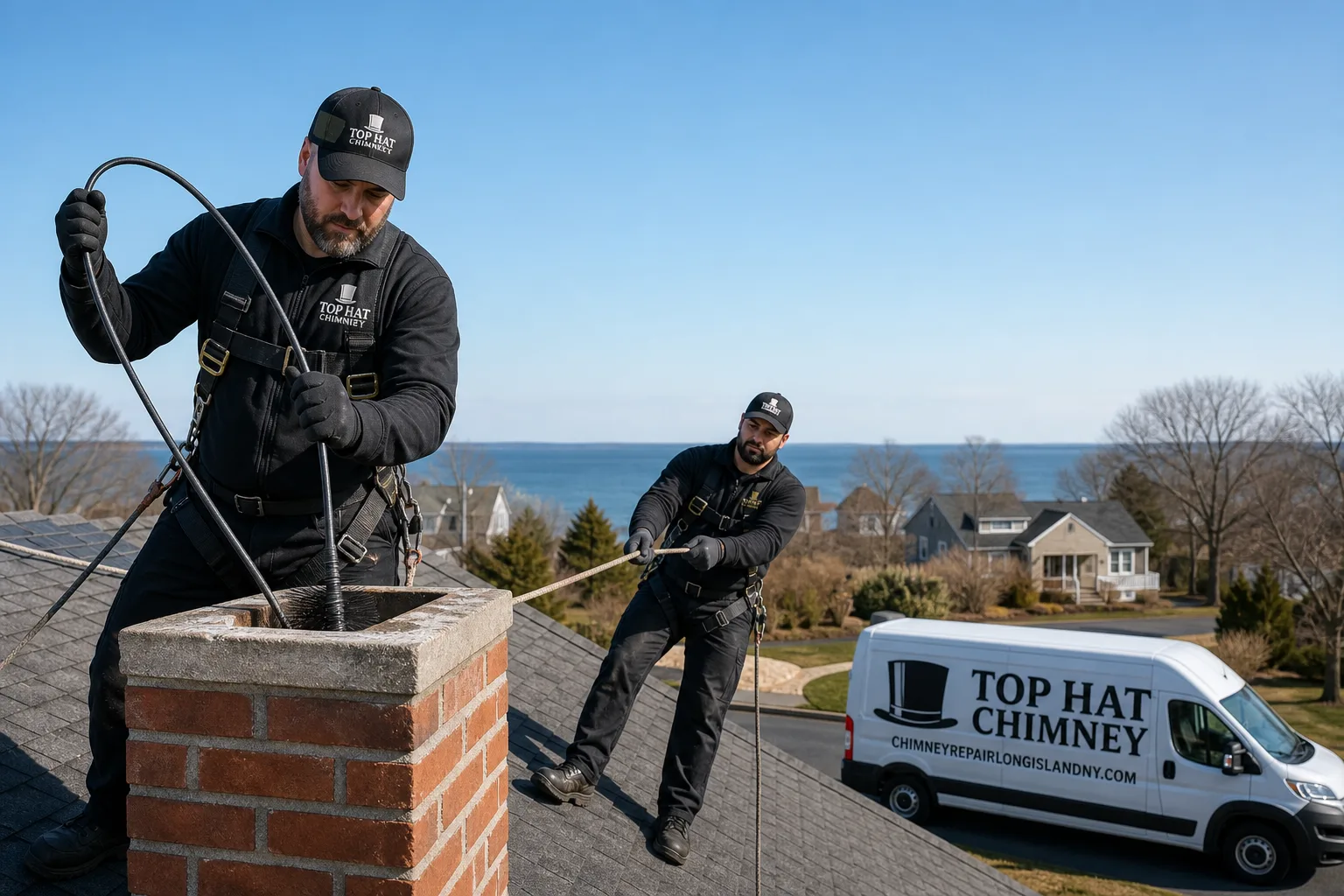
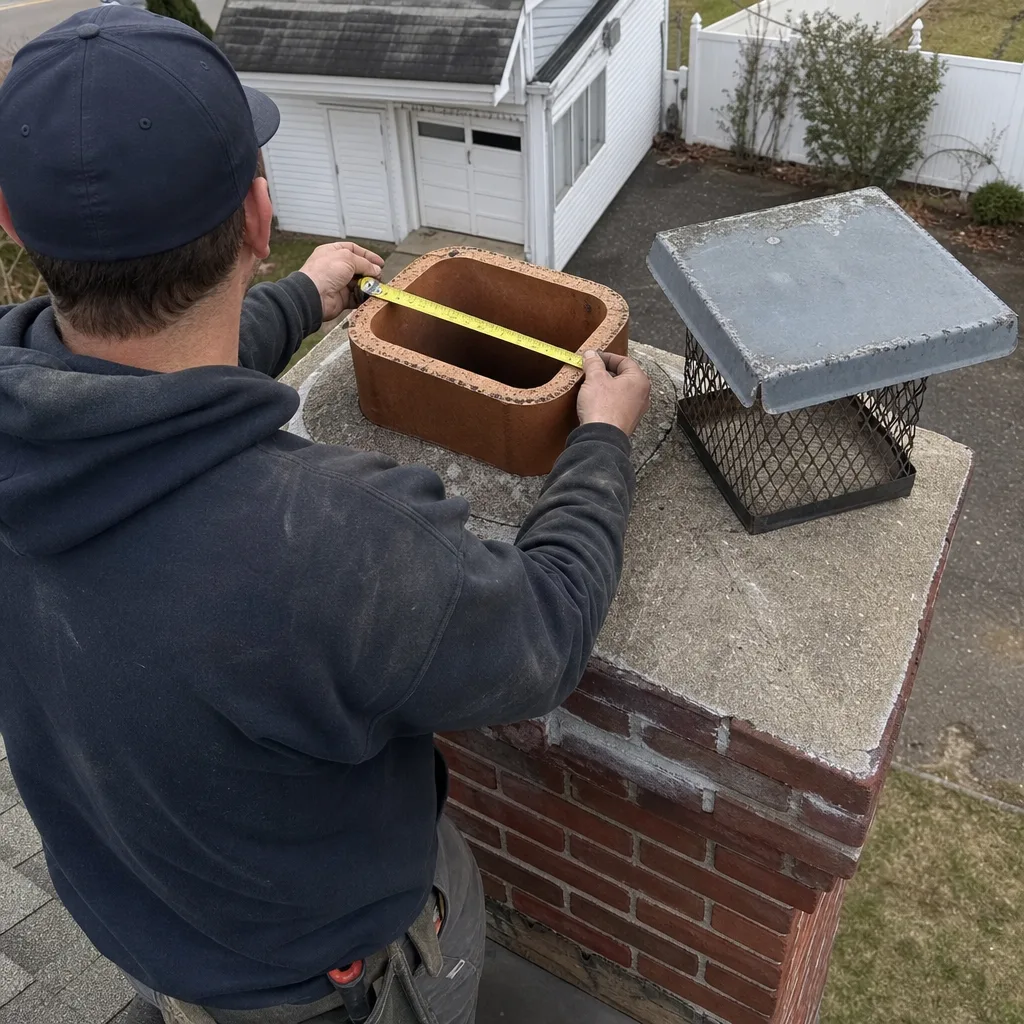
Level 1 sweep and inspection to the NFPA 211 annual standard - flue, crown, cap, and flashing checked and photographed
Chimney sweep logs do not sweep chimneys. They loosen some creosote - which then falls where a brush and vacuum still have to collect it.
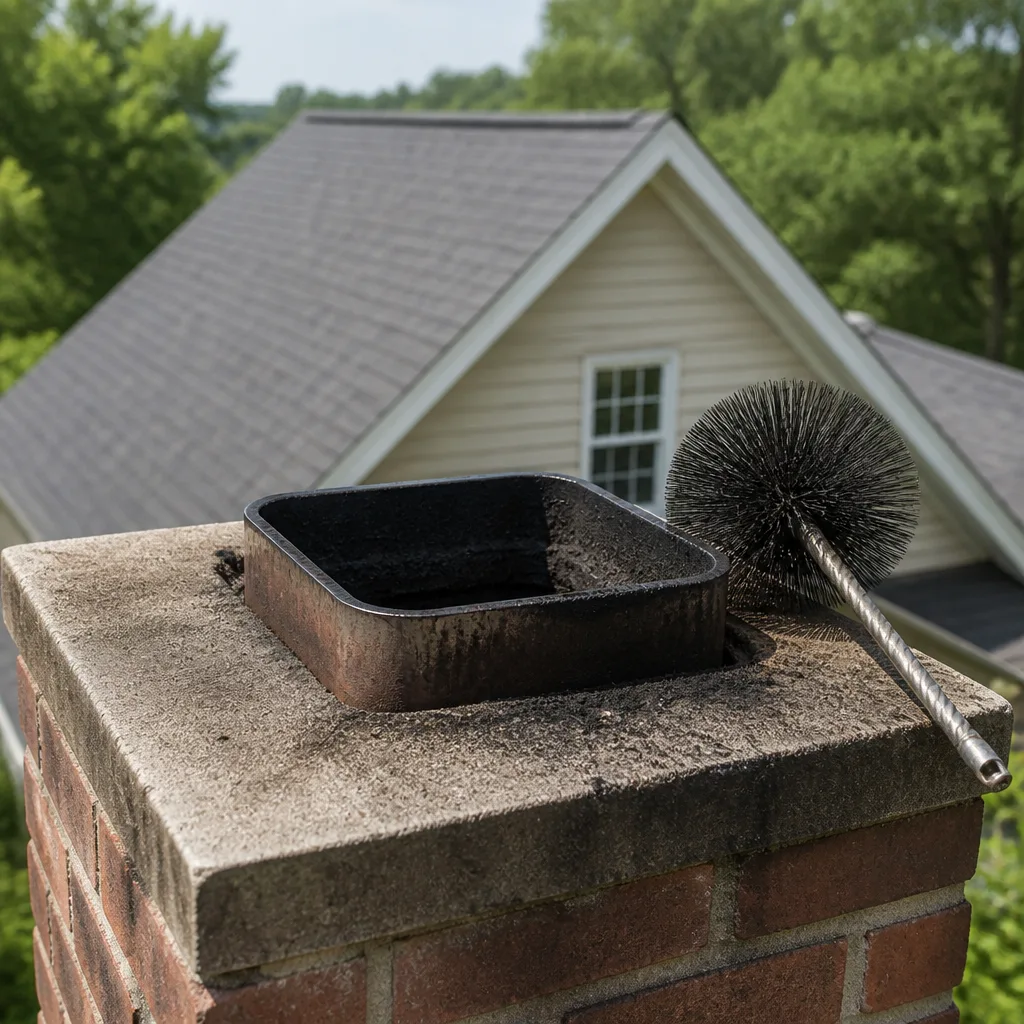
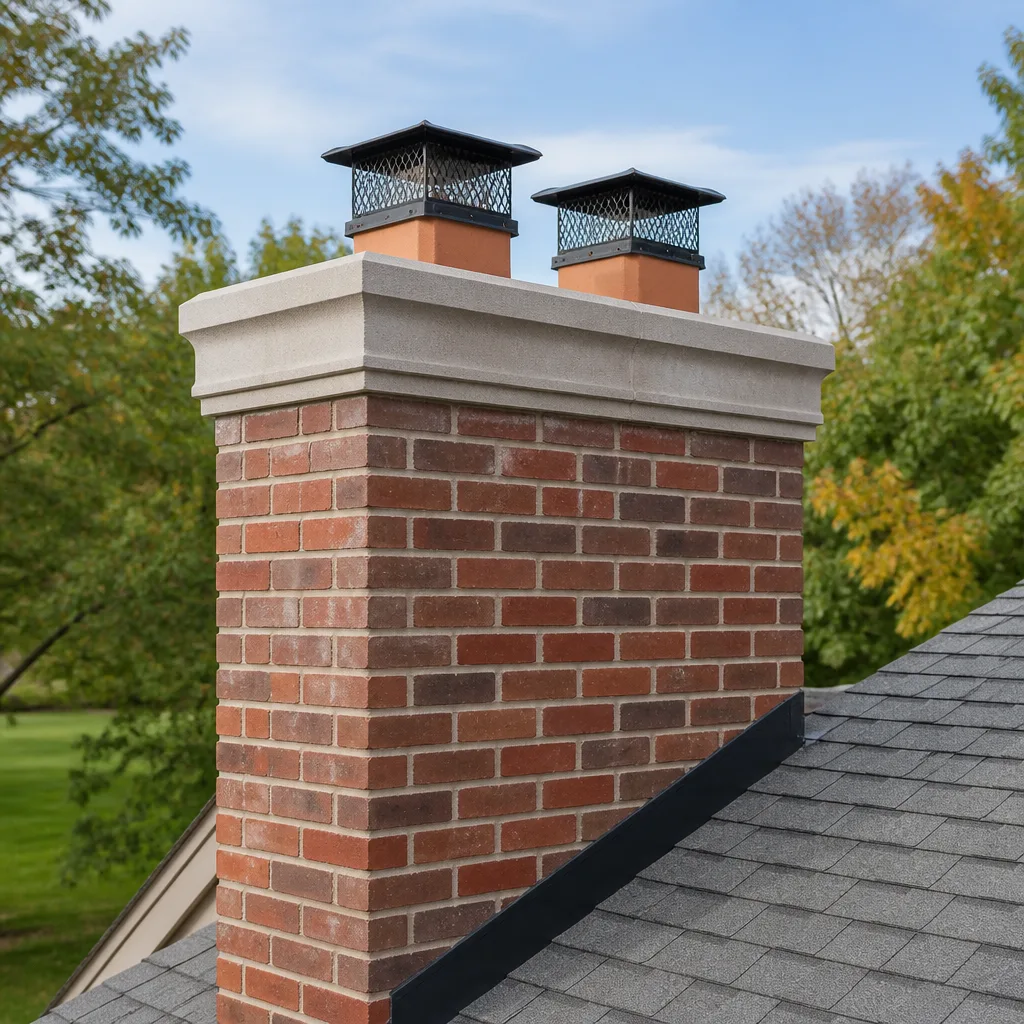
 Before
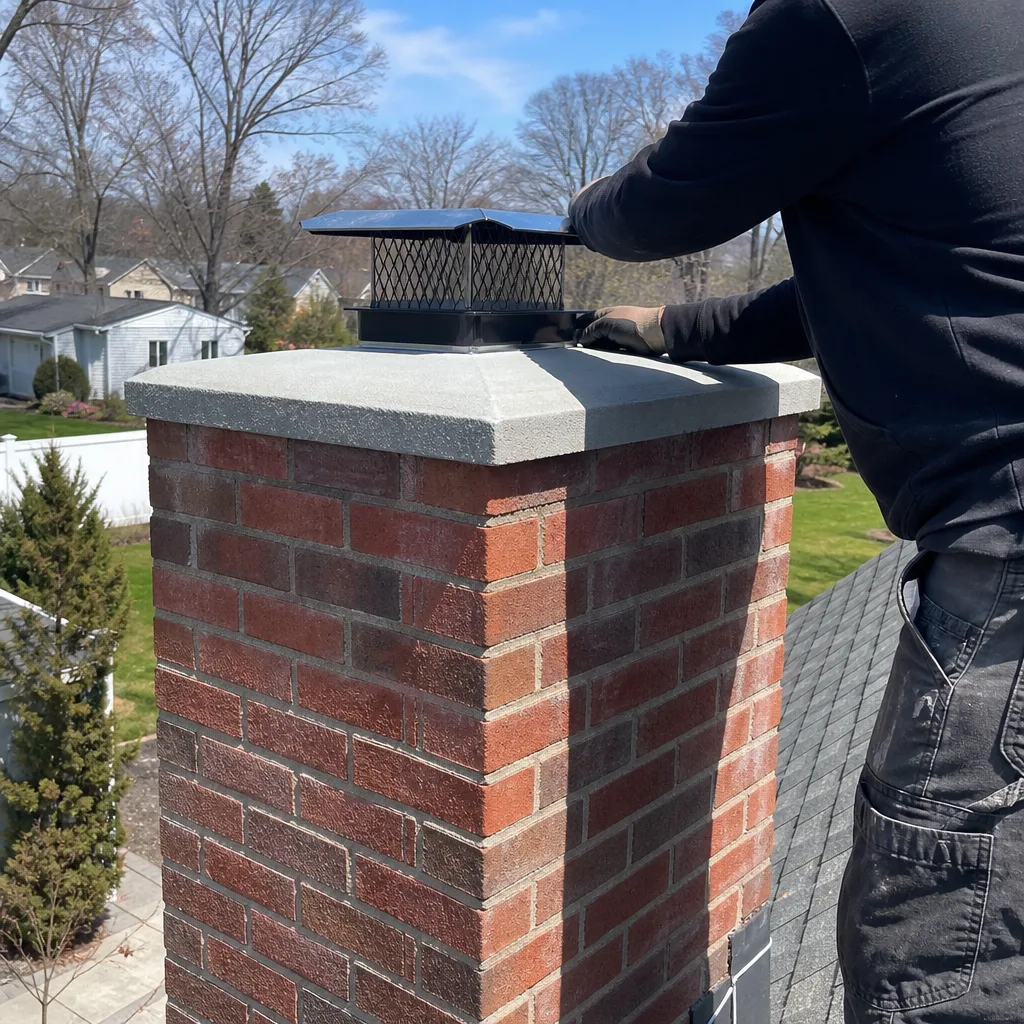 After
After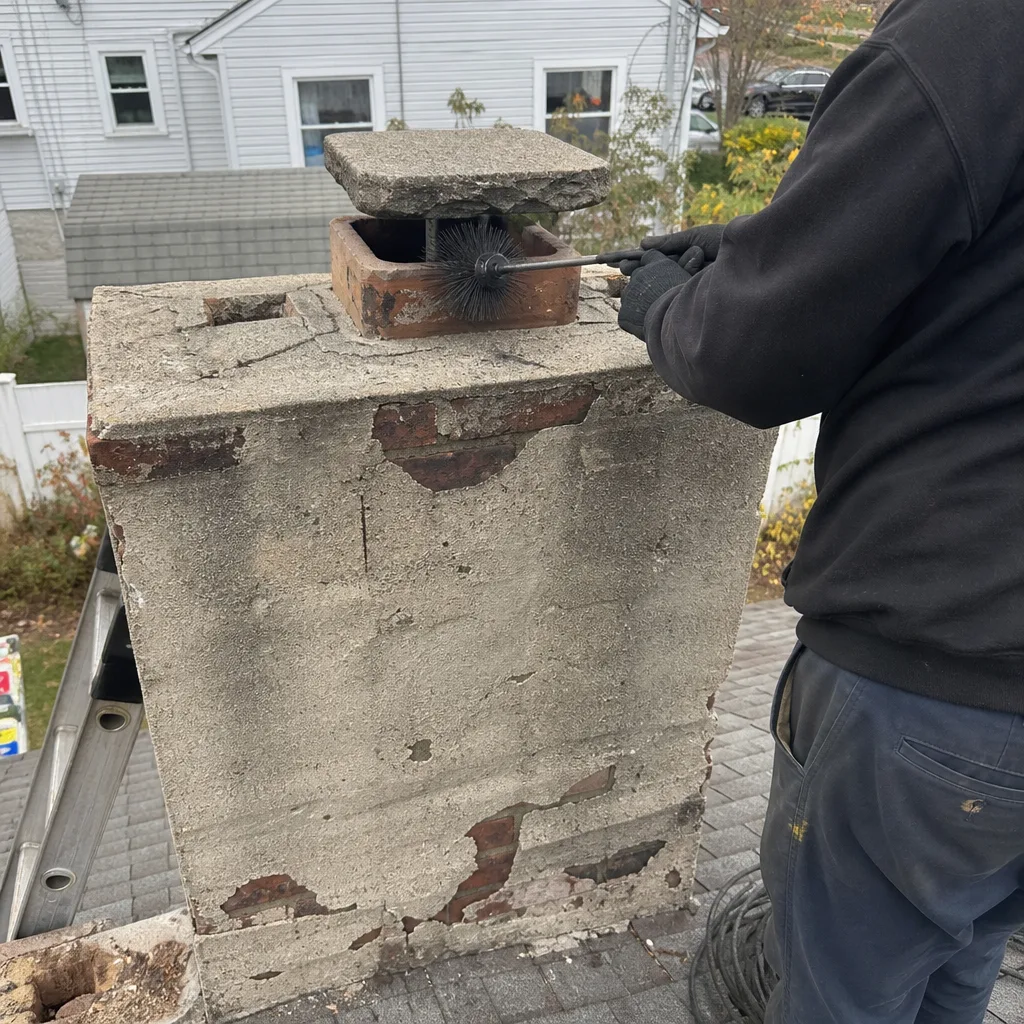 Before
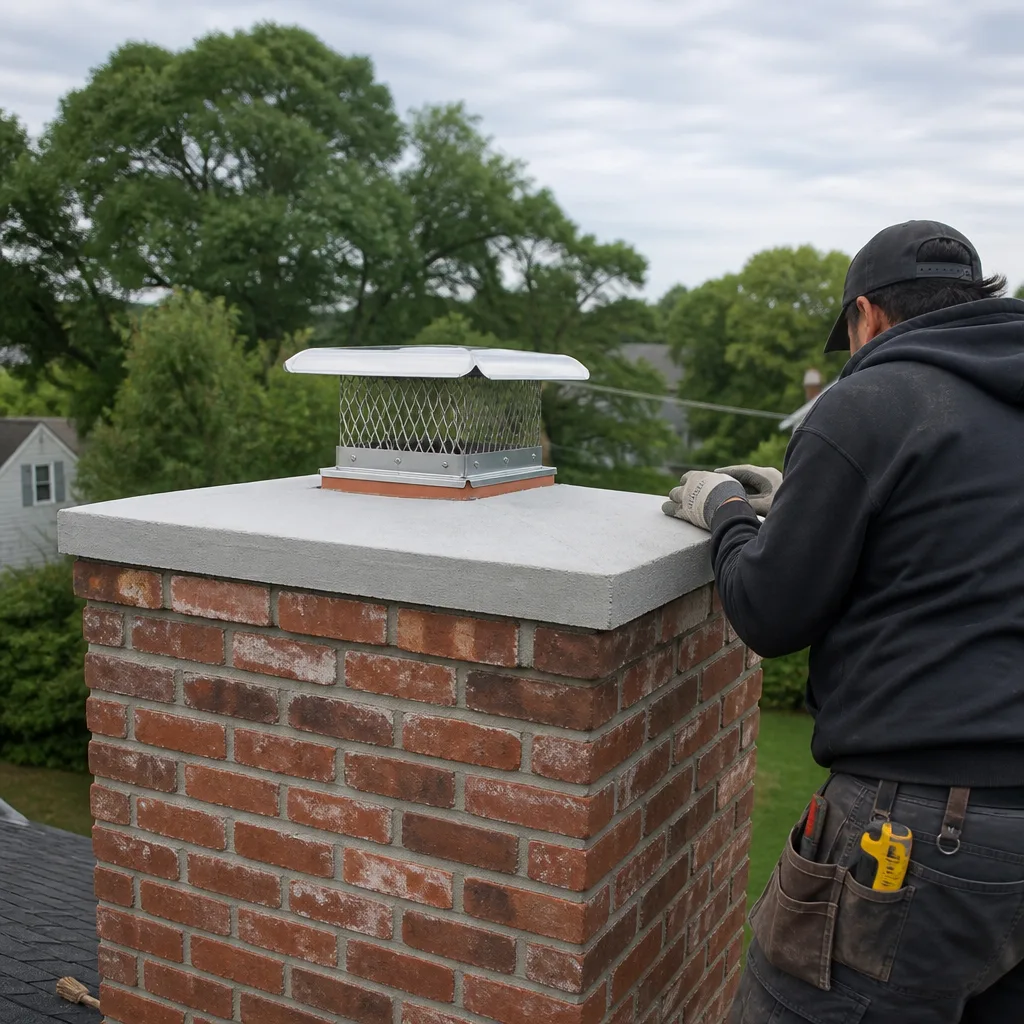 After
After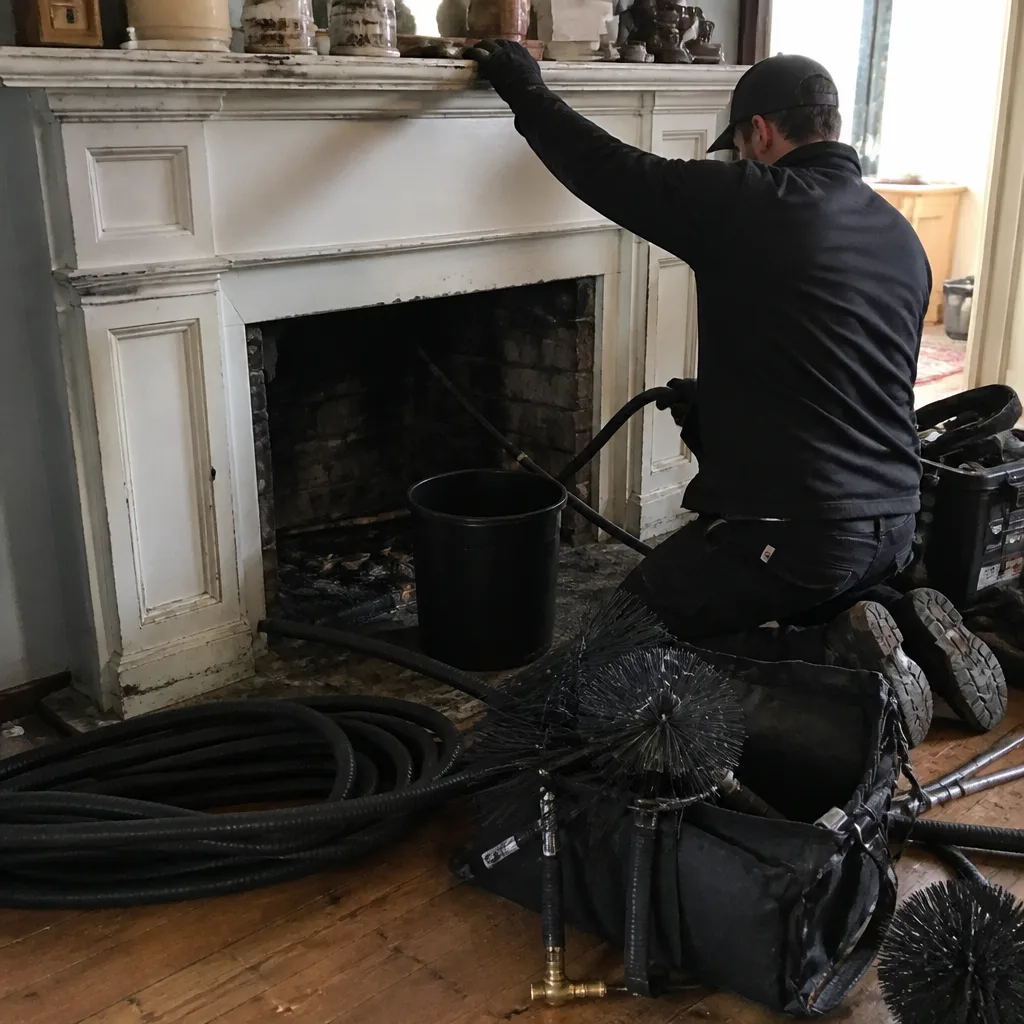 Before
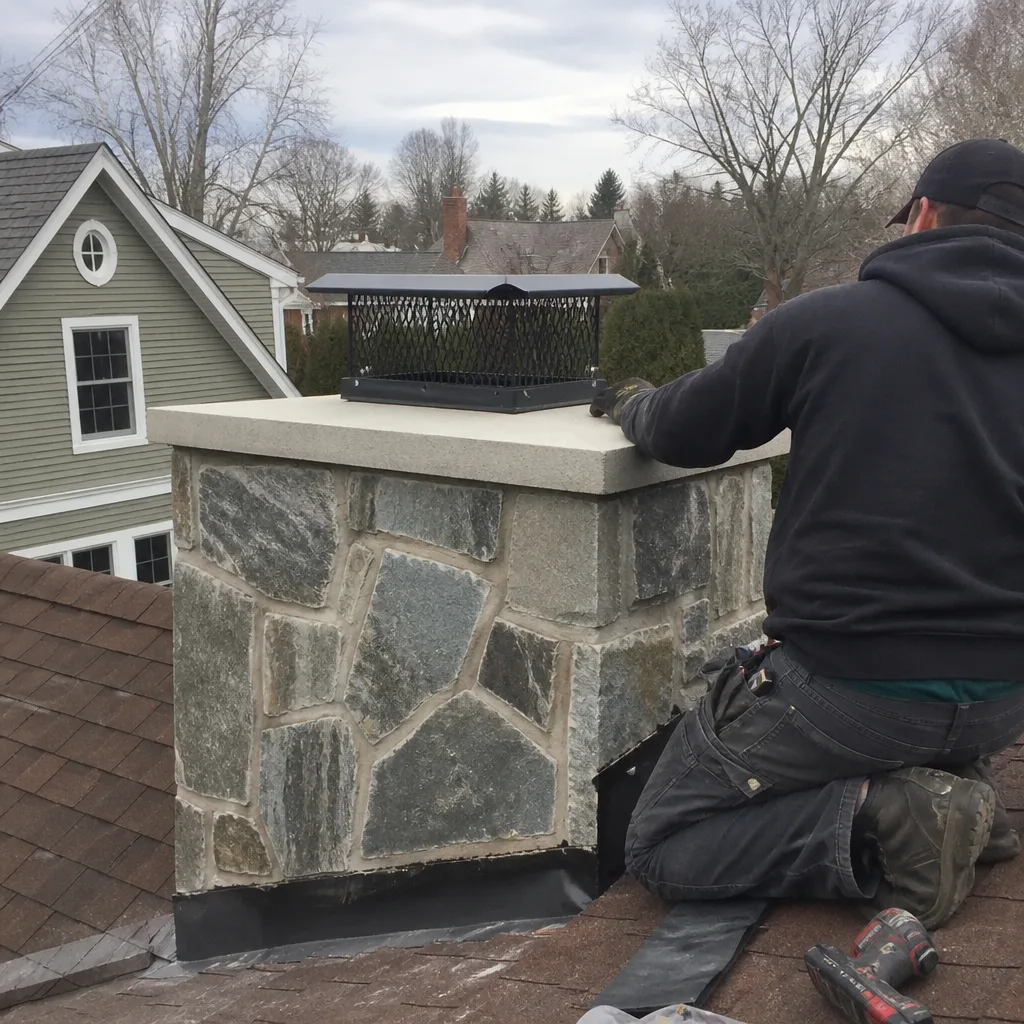 After
AfterHow Much Does Chimney Cap & Crown Cost in Long Island?
Chimney Cap & Crown work in Long Island, NY typically runs $150 to $1,800, depending on whether you need a simple cap replacement or a full crown rebuild. A single stainless steel cap on a standard flue runs $150 to $350 installed; a cracked or deteriorating crown - the concrete slab that seals the top of your chimney structure - costs $300 to $900 to repair and $800 to $1,800 to rebuild from scratch. Most Long Island homeowners pay somewhere in the $250 to $600 range when they catch the problem before it turns into a masonry or liner issue.
Chimney Cap and Crown Cost Breakdown (2026)
Here is what you can expect to pay for each type of work on Long Island as of 2026. These are real installed prices, not material-only figures pulled off a home improvement forum.
| Service | Low End | High End | Typical Job |
|---|---|---|---|
| Single-flue galvanized cap, installed | $130 | $220 | $160 |
| Single-flue stainless steel cap, installed | $175 | $350 | $240 |
| Multi-flue cap (covers 2-3 flues), installed | $280 | $600 | $380 |
| Copper decorative cap, installed | $450 | $950 | $650 |
| Crown repair (hairline cracks, sealant application) | $200 | $450 | $290 |
| Crown repair (moderate spalling, partial resurfacing) | $400 | $750 | $520 |
| Full crown rebuild (tear-off and pour) | $800 | $1,800 | $1,100 |
| Crown coat / elastomeric sealant treatment | $150 | $350 | $220 |
A few things push that number in either direction. Height is the biggest one on Long Island. A two-story colonial in Garden City or a three-story home in Oyster Bay puts the chimney crown 30 to 40 feet up, which means extra ladder and scaffold time that gets built into the price. That is not a padding move – it is a real safety cost. Accessibility matters too: a chimney that sits tight against a dormer or an addition is slower to reach safely than one on an open ridge.
Material choice makes a meaningful difference on the cap side. Galvanized steel is the budget pick, but on Long Island – where salt air rolls in off the Atlantic and the Sound and sits on rooftops through a long, humid summer – a galvanized cap can rust through in under ten years. Stainless steel costs more up front and lasts two to three times as long. If the chimney is on a historic property in Huntington Village or a waterfront home in Bay Shore, a copper cap often makes sense both aesthetically and practically; copper develops a protective patina instead of corroding.
Crown work pricing depends on how far the damage has gone. We see a lot of crowns in Long Island that were originally poured with regular mortar mix instead of a proper Portland-cement crown mix – a shortcut that shows up 15 or 20 years later as wide, horizontal cracks. If the cracks are hairline and the crown is otherwise sound, a good elastomeric sealant treatment stops the water for years. If the freeze-thaw cycles have popped the crown into pieces – which happens regularly in the hard winters we get in Suffolk County – you’re looking at a full rebuild.
What Affects Chimney Cap and Crown Pricing in Long Island
- Salt air and coastal exposure: Homes within a few miles of the ocean or Long Island Sound – think Freeport, Amityville, Northport, or out in the Hamptons – see accelerated deterioration on both caps and crown mortar. Salt air draws moisture into concrete and steel faster than you’d see 30 miles inland. That doesn’t always change the starting price, but it affects how often you’ll need the work done if you pick the wrong material the first time.
- Chimney height and roof pitch: A steep roof on a two-story home adds setup time. Long Island has no shortage of Cape Cods and colonials with complex rooflines in communities like Massapequa, Syosset, and Levittown. The sweep who shows up needs to get up there safely – that time is real labor.
- Number of flues: Many older Long Island homes were built with two or three separate flues serving the fireplace, furnace, and water heater. Each flue needs its own cap, or a multi-flue cap sized to cover them all. A three-flue chimney costs more than a single-flue job for obvious reasons.
- Extent of crown damage: A surface crack costs a fraction of what a full rebuild costs. Having the crown inspected before you assume it needs replacement is worth every minute. We have turned away plenty of full-rebuild jobs in Long Island that turned out to need only a sealant treatment – that’s the honest call.
- Original crown construction quality: If the crown was poured with an inadequate mix or without a proper drip edge, it will fail faster and a rebuild needs to do it right this time. We see this regularly in homes built in the post-war boom years across Nassau County, where chimneys went up fast and crown specs were loose.
- Cap sizing and custom fit: Standard flue tile dimensions are common, but not universal. Older or custom-built chimneys sometimes need a cap fabricated to fit rather than pulled off a shelf. Custom sizing adds to the material cost, not dramatically, but enough to notice.
Cap vs. Crown: Why Both Matter, and How They Work Together
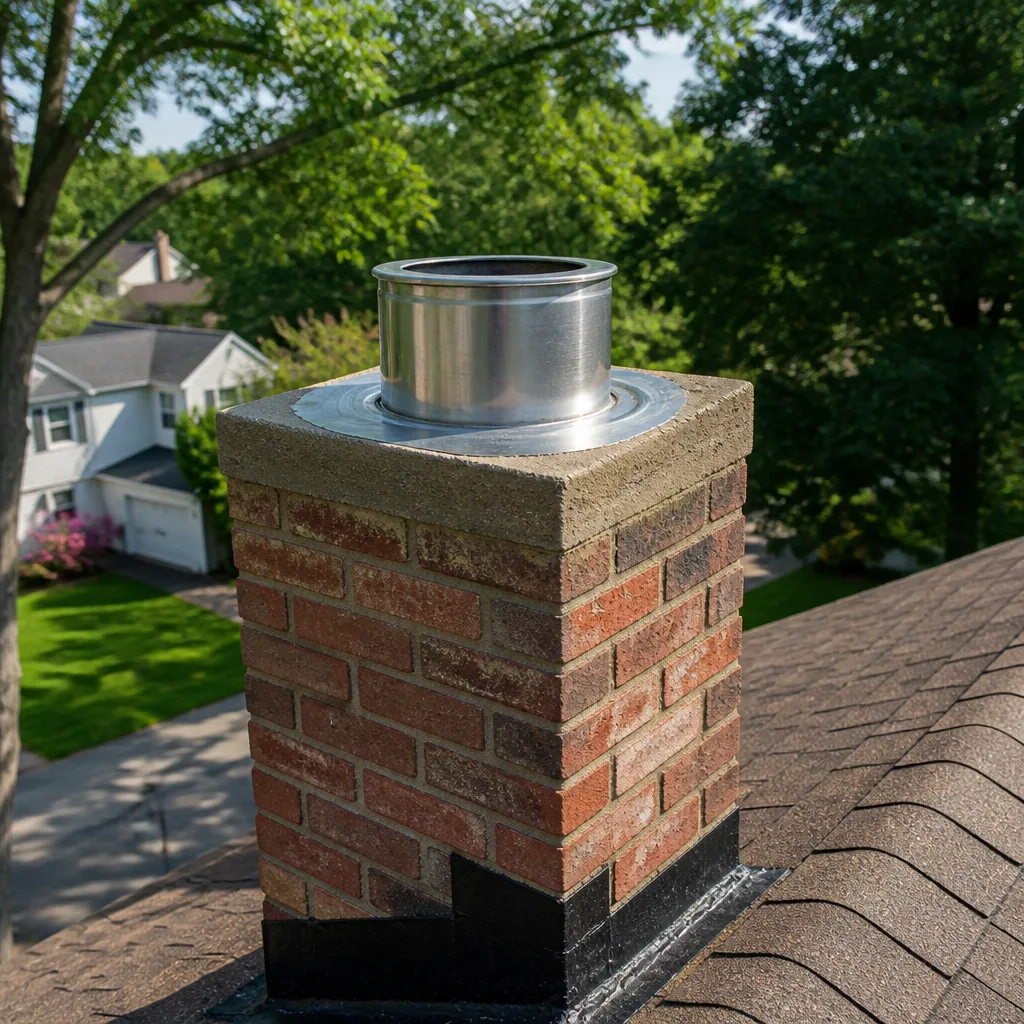
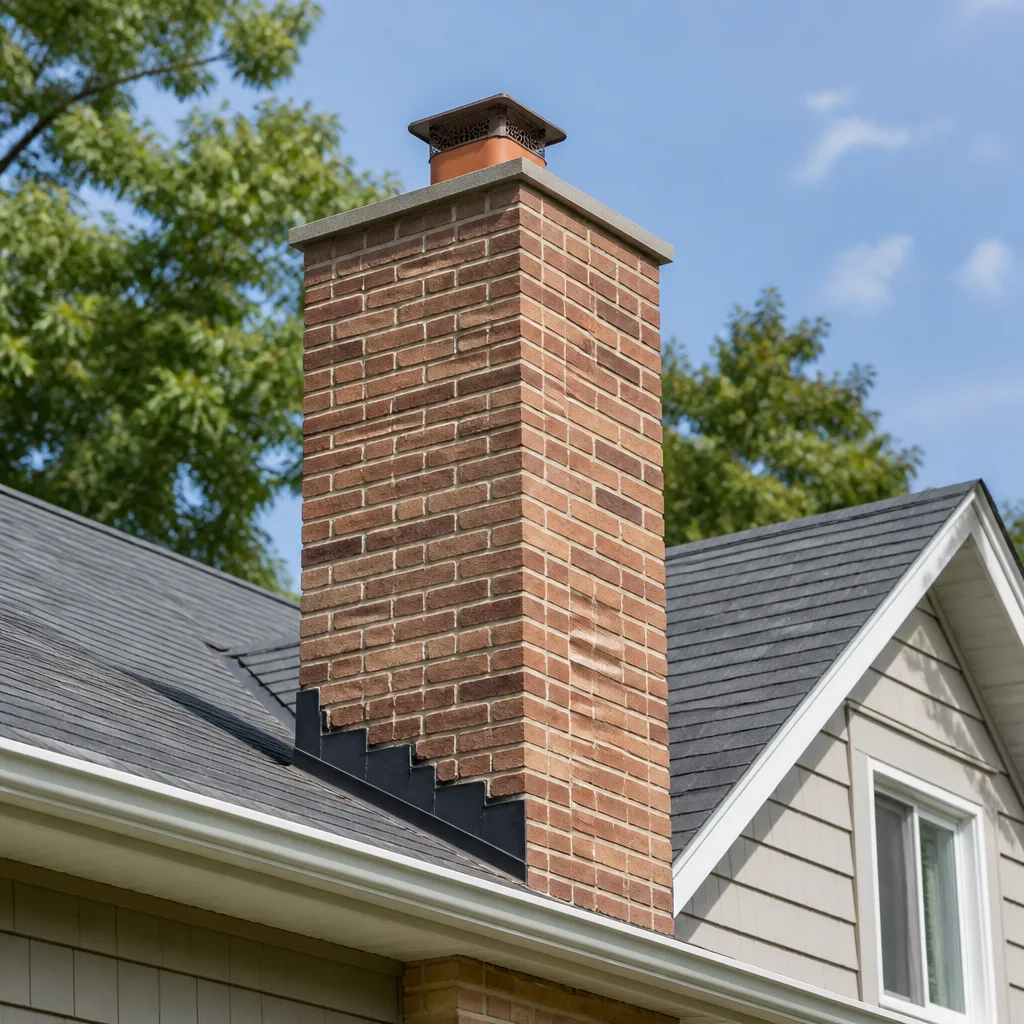
People sometimes call us thinking they need one when they actually need the other. A quick breakdown: the cap is the metal cover that sits directly over the flue opening. It keeps rain, birds, squirrels, and windblown debris out of the flue. The crown is the sloped concrete slab that covers the top surface of the chimney structure itself, from the edge of the flue tile out to the chimney sides. It sheds water away from the brick and mortar below it.
Both do the same fundamental job – keep water out – but from different angles. When the cap is missing or rusted through, water drops straight down the flue. When the crown cracks, water seeps into the brick and mortar just below the roofline. On Long Island, with our combination of coastal humidity in summer and hard freezes in January and February, a failed crown can pop two or three courses of brick loose in a single winter. We have seen it in Ronkonkoma, in Smithtown, and in countless ranch homes in Nassau County where the crown was the original 1960s pour and nobody had touched it since.
In some cases, a new cap and a crown repair make sense as a single visit. When the work is bundled, you pay one mobilization cost instead of two, and the sweep is already up there with the right materials. Ask about that combination when you call.
Long Island-Specific Chimney Cap and Crown Issues We See Regularly
Long Island’s geography creates a specific pattern of chimney wear. The North Shore, from Oyster Bay east to Port Jefferson, sits in the path of cold northwest winds off the Sound in winter. Those winds drive rain and snow directly into exposed chimney crowns, accelerating freeze-thaw cracking. The South Shore – Babylon, Islip, Oakdale and east toward the barrier islands – deals with salt air and high humidity year-round.
In Great Neck and Manhasset, and along much of the North Shore’s older housing stock, we see a lot of double-wythe chimneys built without proper crown overhangs. Water runs straight down the face of the chimney instead of dripping clear, and the mortar joints at the roofline are the first to go. On the South Fork, homes in Bridgehampton and Southampton often have multi-flue chimneys serving old cooking ranges as well as fireplaces – crown sizing on those structures is more complex and the rebuild cost is toward the higher end of that range.
If your home is in a historic district – there are several in Long Island, including parts of Huntington, Cold Spring Harbor, and Setauket – the material and finish of a new cap or rebuilt crown may need to match the original look. That can mean custom fabrication rather than off-the-shelf product, and it usually means a conversation with the sweep before anything gets ordered.
How to Save on Chimney Cap and Crown Work
The single most effective thing you can do is catch the damage early. A $220 crown coat treatment stops a hairline crack from becoming a $1,100 rebuild. We’re not saying that to drum up business – we’re saying it because it is true and because we would rather come back every few years for a small job than once for a big one that involves rebuilt masonry below the crown line.
A few other practical moves:
- Get a free second opinion before signing anything. Top Hat Chimney offers a free second opinion on any written estimate you’ve received from another company. If you were quoted $1,500 for a full crown rebuild and you’re not sure it’s warranted, call us at (516) 968-5380 before you commit. We’ve saved Long Island homeowners real money by catching oversold jobs.
- Bundle the work. If your crown needs attention at the same time your cap is corroded, doing both in one trip costs less than scheduling two separate visits. Same goes for combining a chimney inspection with cap or crown work.
- Ask about the $40 off repair discount. Any repair over $200 at Top Hat Chimney qualifies for $40 off. That applies to crown repairs as well as cap installations when the total hits that threshold.
- Seniors and veterans: ask for your 10% discount. It is a standing offer, always. Wendell has applied it since the beginning and it does not expire.
- Choose the right cap material the first time. Spending $80 more upfront for stainless steel over galvanized will save you the cost of a second cap installation in 8 years. On Long Island, especially near the water, galvanized caps simply don’t hold up.
- Schedule in the off-season. Late winter and early spring – February through April – tend to be slower on Long Island than the fall rush before fireplace season. You may get a faster appointment window. Crown work can be done anytime the temperature is above freezing, so you do not have to wait for summer.
If you want an exact number for your home, call (516) 968-5380 for a free estimate. Wendell or someone from the crew will look at what you actually have and give you a price before any tool comes off the truck. No surprise number at the door.
What Happens If You Skip the Cap or Crown?
Water is the only thing that genuinely destroys a chimney from the outside in. Fire breaks things from the inside, but slow water damage is what we see most in Long Island homes that have been neglected for a decade or more. A missing cap lets water straight into the flue, which accelerates liner deterioration and soaks the smoke shelf and firebox floor. A cracked crown pushes water into the brick and mortar below it, where freeze-thaw cycles pry the masonry apart a little more each year.
What starts as a $290 crown repair can turn into $3,000 to $5,000 of masonry repair if water has been running into the brick for several winters. We see that progression in older homes across Long Island – sometimes it starts with a renter who never called anyone, sometimes it’s a second home that sat empty. The chimney doesn’t announce the problem with smoke or smell, so it keeps deteriorating quietly until someone goes up to look.
The cap and crown are the cheapest part of any chimney system. Replacing them promptly is also the cheapest form of chimney insurance there is.
The Top Hat Chimney Difference on Long Island
Wendell Pike founded Top Hat Chimney in 1999, and in the years since, he and his crew have worked on chimneys across Long Island – from the two-family homes in Hempstead to the old stone fireplaces in Lloyd Harbor. That’s not a marketing line; it’s just the truth about what 26-plus years in the same communities produces. When you call, you are not getting a national chain’s regional scheduling desk. You are getting a live person – possibly Wendell himself – who knows what a Long Island winter does to a crown poured with the wrong mix.
Every job comes with the 90-Day Done Right Promise: if the work isn’t right, one call brings us back at no additional cost. That is in writing on every invoice, not just said over the phone. And upfront pricing means the number you hear before work starts is the number on the invoice at the end. No bait and switch, no “we found something else” phone call halfway through a job we quoted flat.
If you want to learn more about the full range of cap and crown services we offer, visit our Chimney Cap & Crown in Long Island service page, or head back to the home page to see everything Top Hat Chimney covers across Long Island.
FAQs: Chimney Cap and Crown Cost in Long Island
How much does a chimney cap cost in Long Island, NY?
A standard single-flue stainless steel cap installed in Long Island costs $175 to $350, with most jobs landing around $240. Galvanized caps run $130 to $220 but corrode faster in Long Island’s coastal air, so they’re a false economy for homes near the water. Multi-flue caps run $280 to $600 depending on size. Call (516) 968-5380 for a free estimate on your specific chimney – we’ll measure before we quote.
How much does chimney crown repair cost in Long Island?
Crown repair in Long Island runs $200 to $750 for most repair jobs, depending on how extensive the cracking or spalling is. Hairline cracks treated with an elastomeric crown coat are on the low end, around $150 to $350. Moderate damage requiring partial resurfacing runs $400 to $750. A full tear-off and rebuild costs $800 to $1,800. Most homeowners who catch the damage at the first visible crack pay in the $200 to $450 range. Call (516) 968-5380 for a free look before you assume the worst.
How long does a chimney cap last in Long Island?
A quality stainless steel cap lasts 20 to 30 years on Long Island, even in coastal environments. Galvanized steel caps last 7 to 12 years in inland areas and considerably less near salt air – sometimes under 8 years on the South Shore or in waterfront communities. Copper caps effectively last indefinitely when properly fabricated and fitted. The cap itself rarely fails at the material; more commonly, the screws or mounting band corrode first, which is a quick fix if caught early.
Can a cracked chimney crown be repaired, or does it need a full rebuild?
Many cracked crowns can be repaired rather than rebuilt – specifically when the cracks are hairline to moderate width and the underlying structure is still sound. A properly applied elastomeric crown sealant bonds to the concrete, bridges surface cracks, and creates a waterproof membrane that lasts 10 to 15 years. A full rebuild is warranted when the crown has delaminated from the chimney, cracked into large sections, or allowed enough water infiltration to damage the brick below. We will tell you honestly which one your crown needs – and if it only needs a coat, that’s what we’ll recommend. Call (516) 968-5380 and we’ll come out and look.
Does Top Hat Chimney offer free estimates on cap and crown work in Long Island?
Yes – free estimates on all chimney cap and crown work throughout Long Island, with no trip charge for calls inside our service county. Wendell or one of his crew will come out, get up on the roof, and give you an upfront price before any work begins. There are no surprise add-ons once the job is underway. If you’ve already received a written estimate from another company, we’ll give you a free second opinion on it. Call (516) 968-5380 to set it up.
Is it worth replacing a chimney cap before winter in Long Island?
Yes, and the timing matters more than most people think. Long Island winters bring sustained freezing temperatures, nor’easters, and heavy wet snow – all of which drive water into an uncapped flue. A single winter without a functioning cap can soak the smoke shelf and liner enough to require repairs that cost several times what the cap itself costs. The ideal window is early fall, before chimney season starts. But if your cap is already missing, replacing it in December or January is still far better than waiting until spring.
Key Takeaways
- Chimney cap installation in Long Island runs $150 to $950 depending on material and flue count. Most single-flue stainless steel jobs are $175 to $350 installed.
- Crown repairs run $200 to $750; a full rebuild costs $800 to $1,800. Catch it early and the repair cost is a fraction of the rebuild.
- Long Island’s coastal air, freeze-thaw cycles, and post-war construction quality all accelerate crown and cap wear – especially on the North and South Shores.
- Stainless steel outlasts galvanized by 10 to 15 years in Long Island’s climate. Spend the extra $80 once.
- Top Hat Chimney offers free estimates, $40 off any repair over $200, 10% off for seniors and veterans, and a 90-Day Done Right Promise in writing on every job.
- Call (516) 968-5380 for a free estimate – live person answers around the clock.
Pricing reflects the Long Island market as of 2026. Top Hat Chimney offers free estimates – call (516) 968-5380.
Written by Wendell Pike, Owner at Top Hat Chimney, serving Long Island since 1999.
What Our Customers Say
"He repointed the crown and waterproofed the stack, and two winters on there is not a damp mark on the ceiling where there used to be one every February."
- Harold Vance"Converted our old wood burner to gas and took the time to talk me out of the fancier insert I had picked out because it would have been wrong for the size of the room."
- Duane Kittering"Wendell has swept our chimney every autumn for six years now. He knows the flue better than I know it and he tells me when it does not need doing, which is not something most trades will admit to."
- Eleanor Prescott