
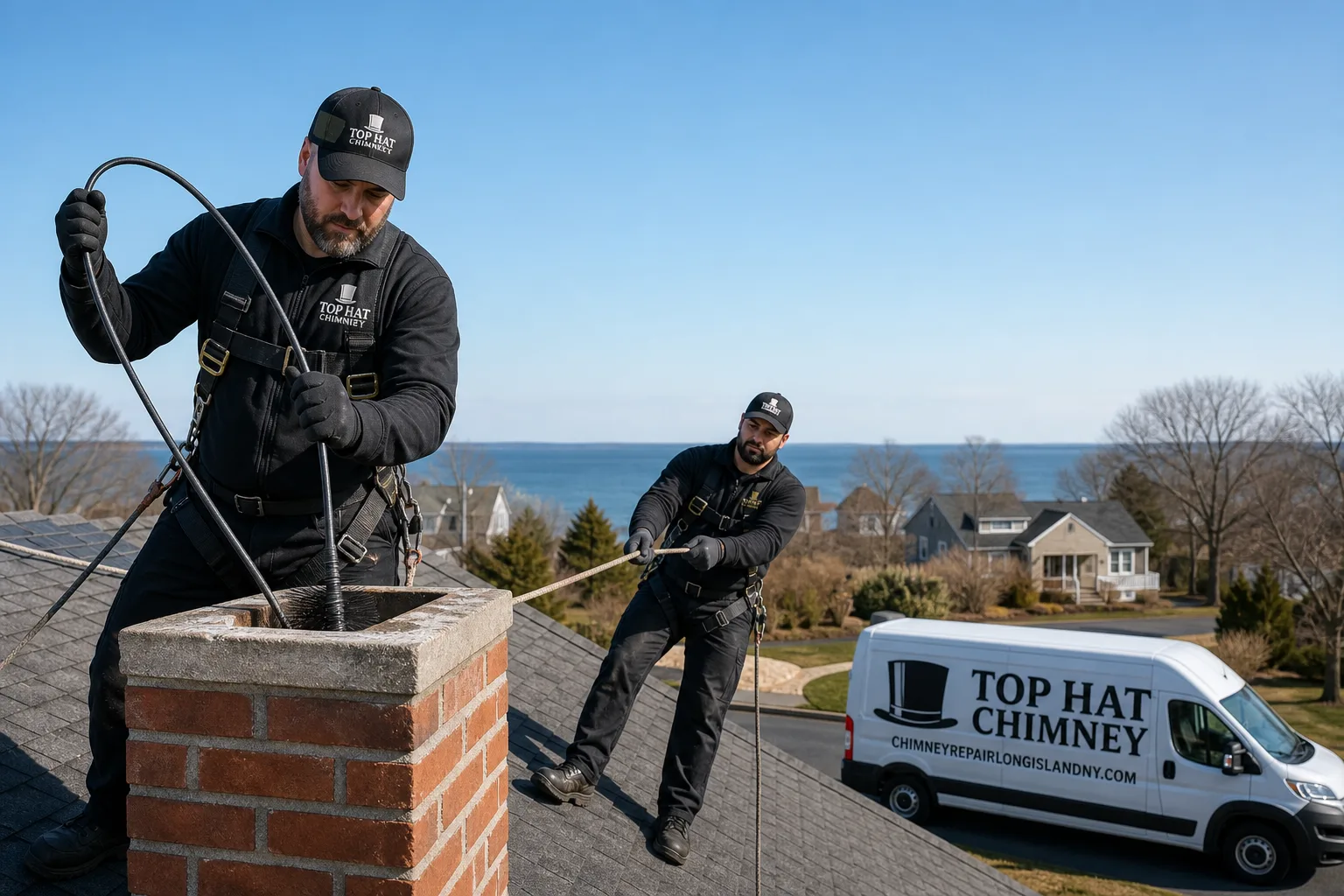

Level 1 sweep and inspection to the NFPA 211 annual standard - flue, crown, cap, and flashing checked and photographed
Chimney sweep logs do not sweep chimneys. They loosen some creosote - which then falls where a brush and vacuum still have to collect it.
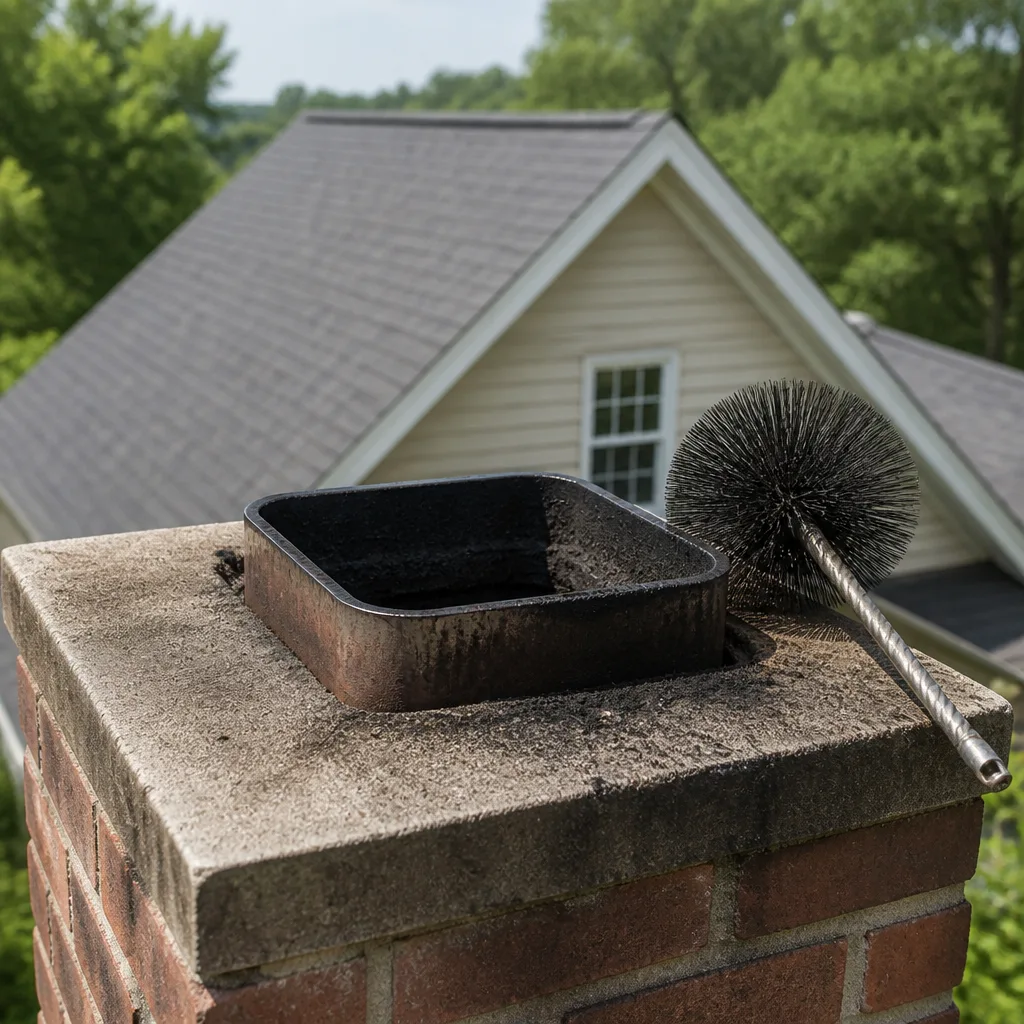
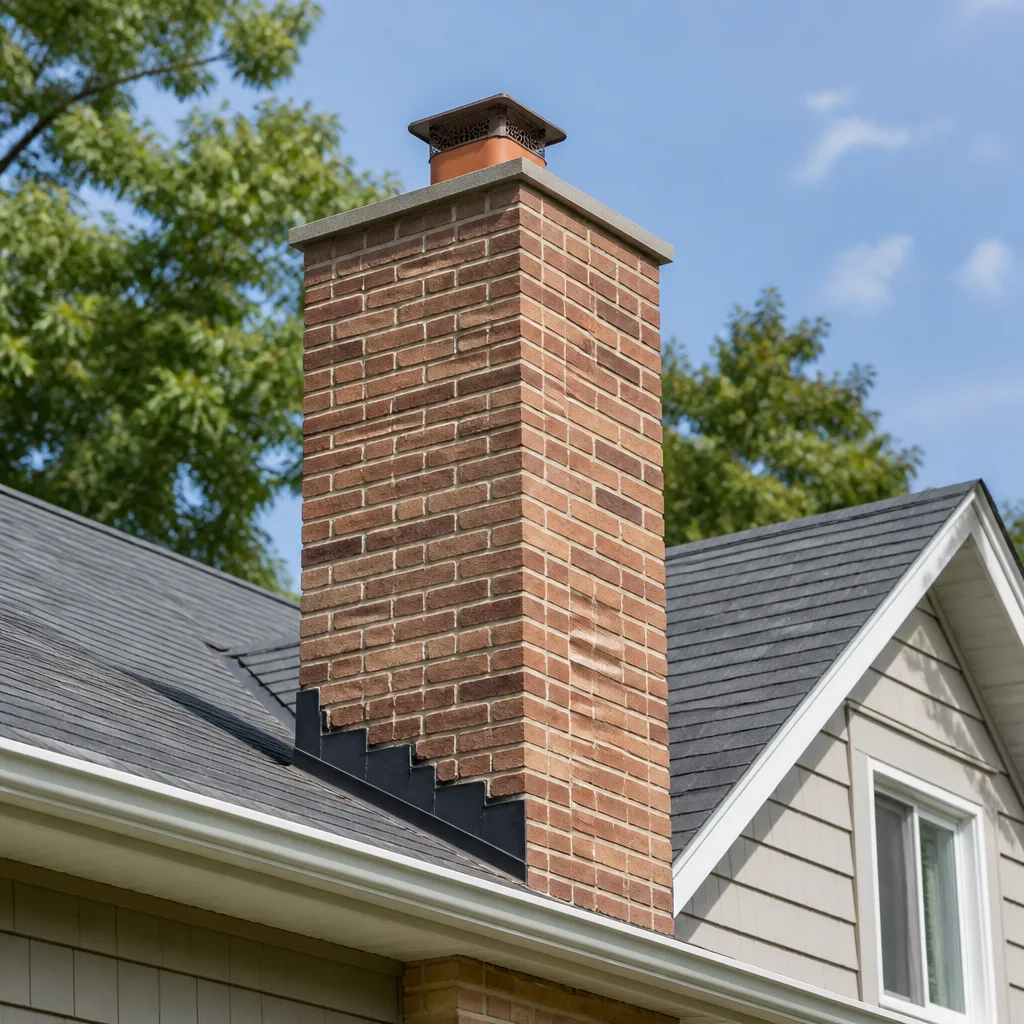
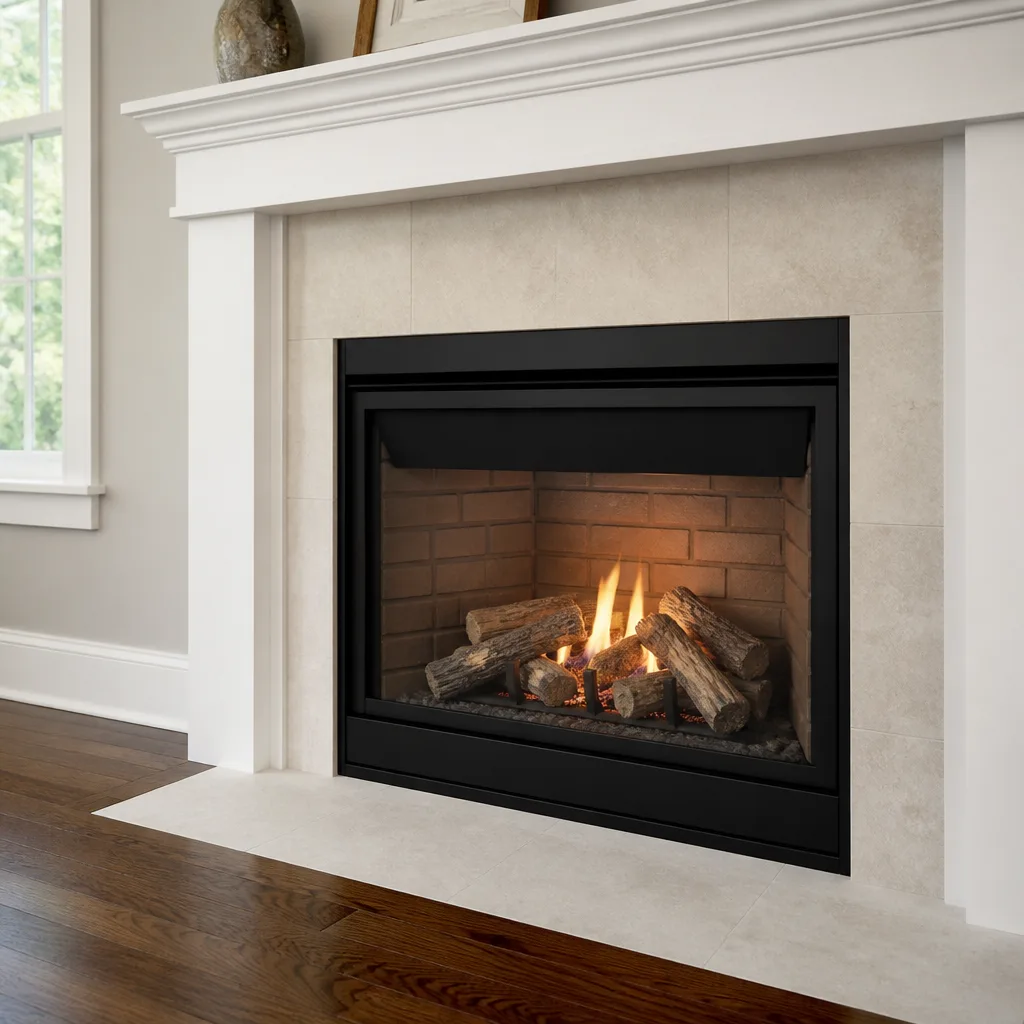
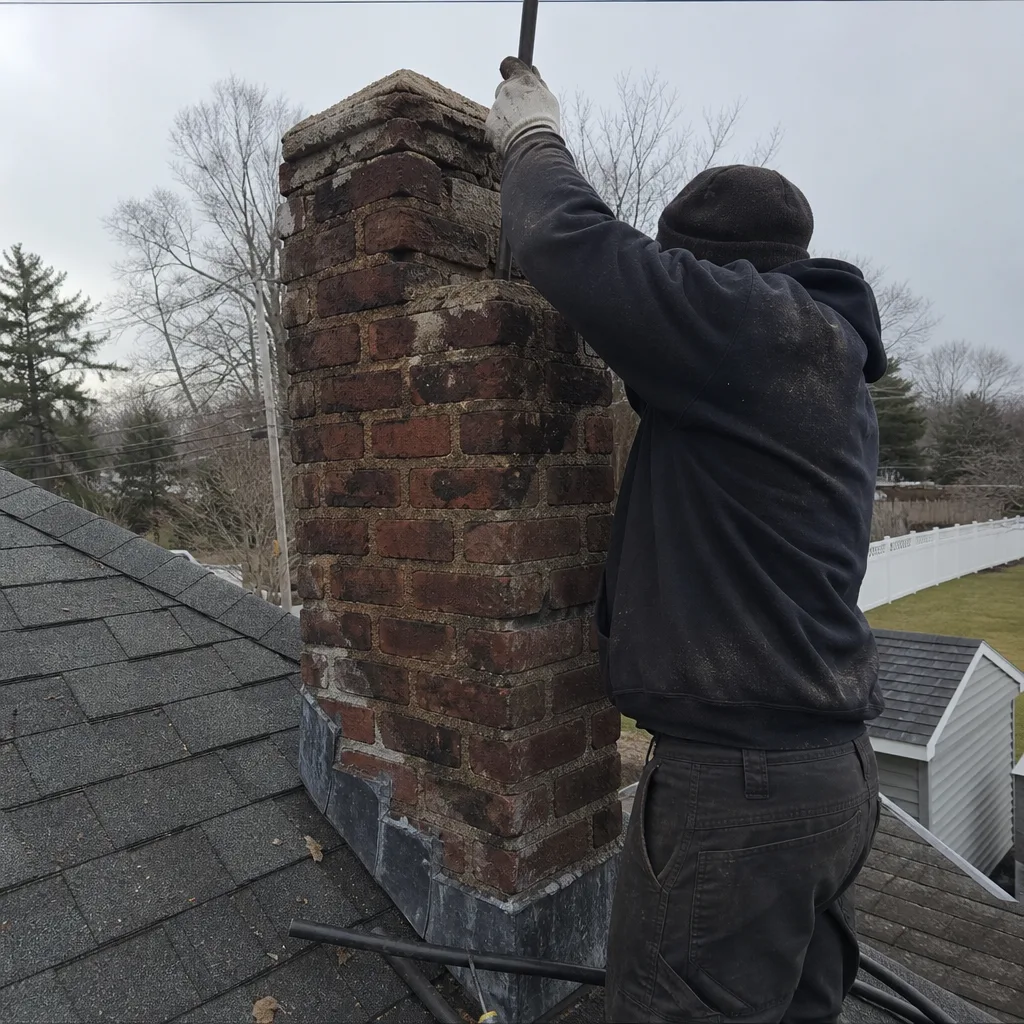 Before
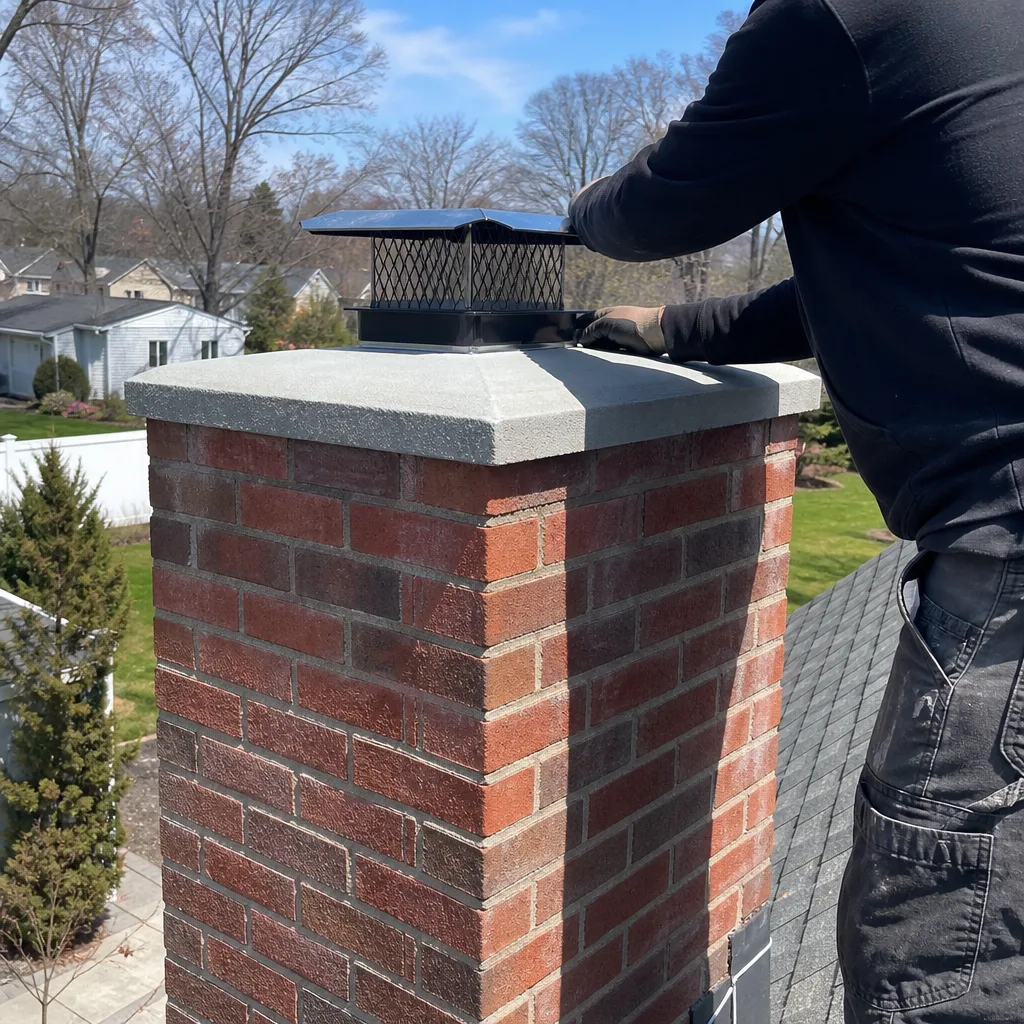 After
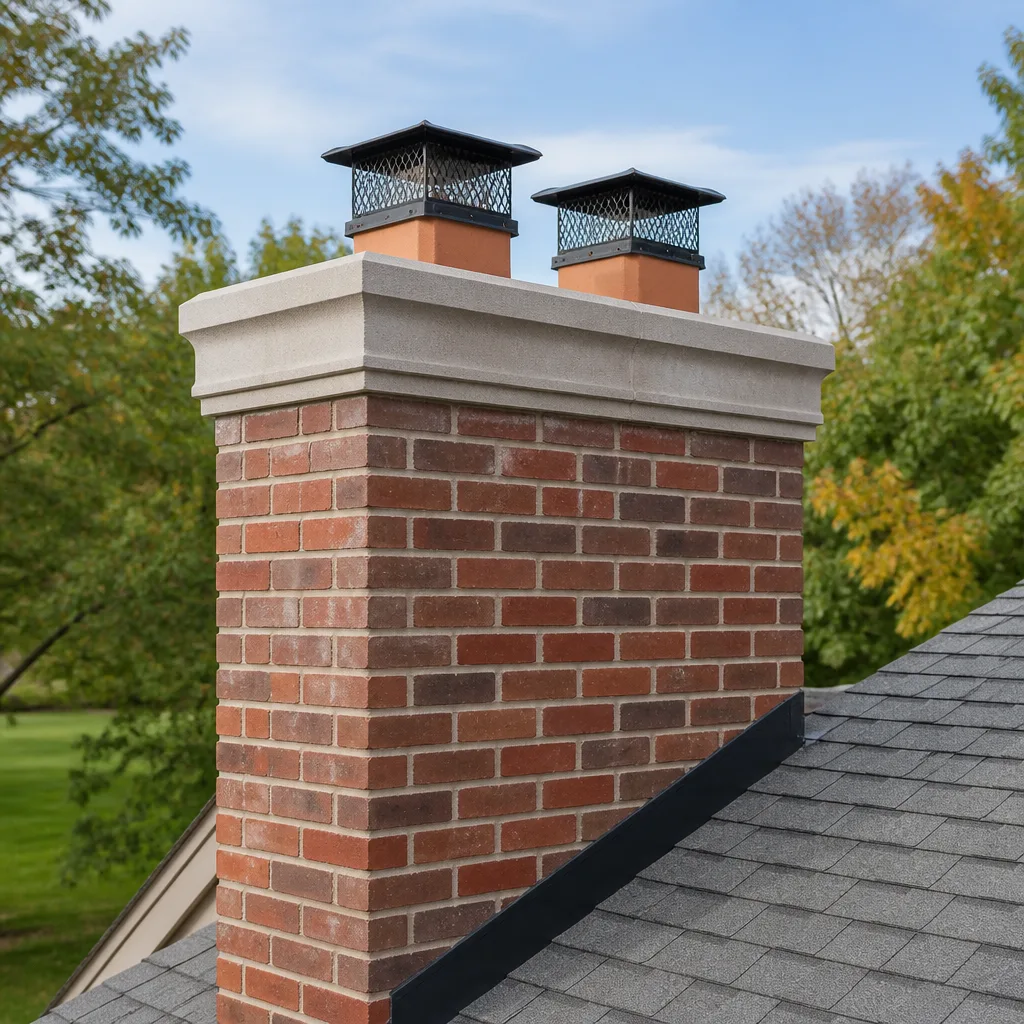
After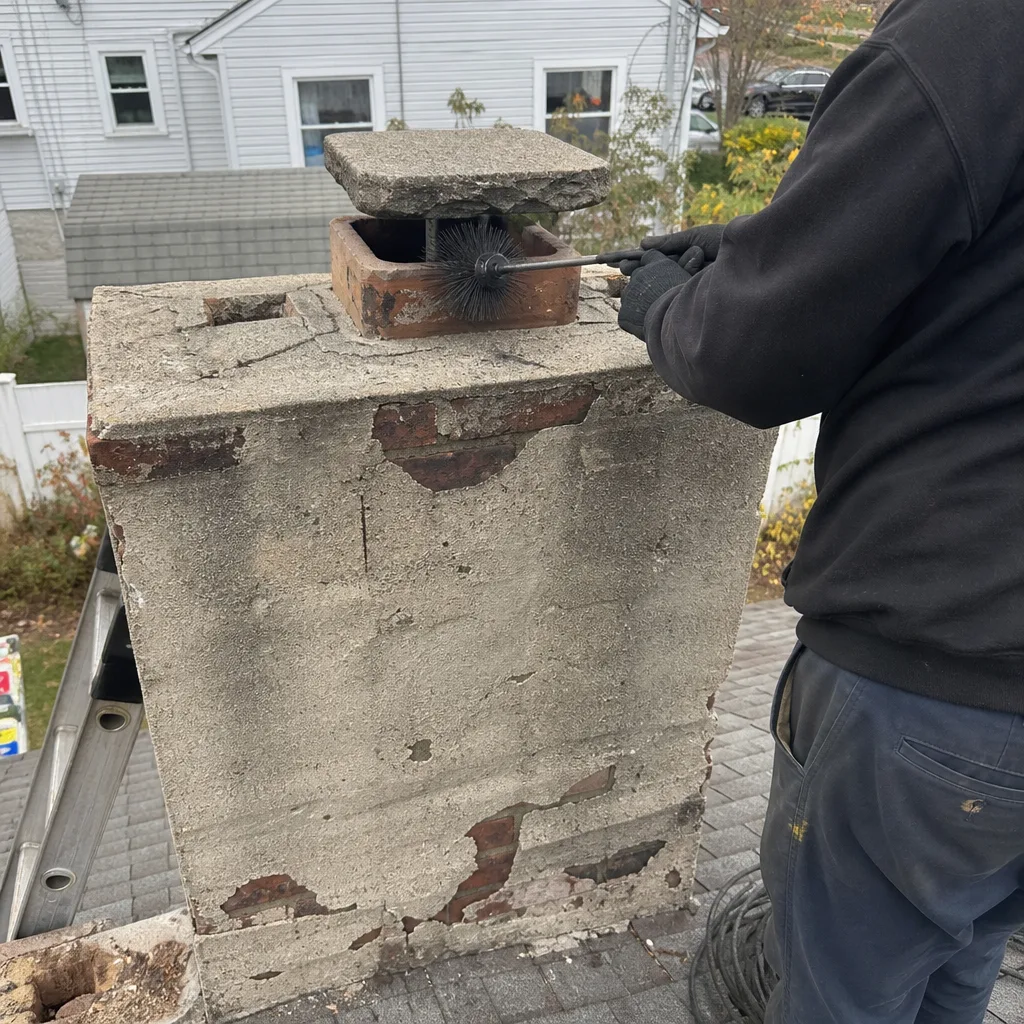 Before
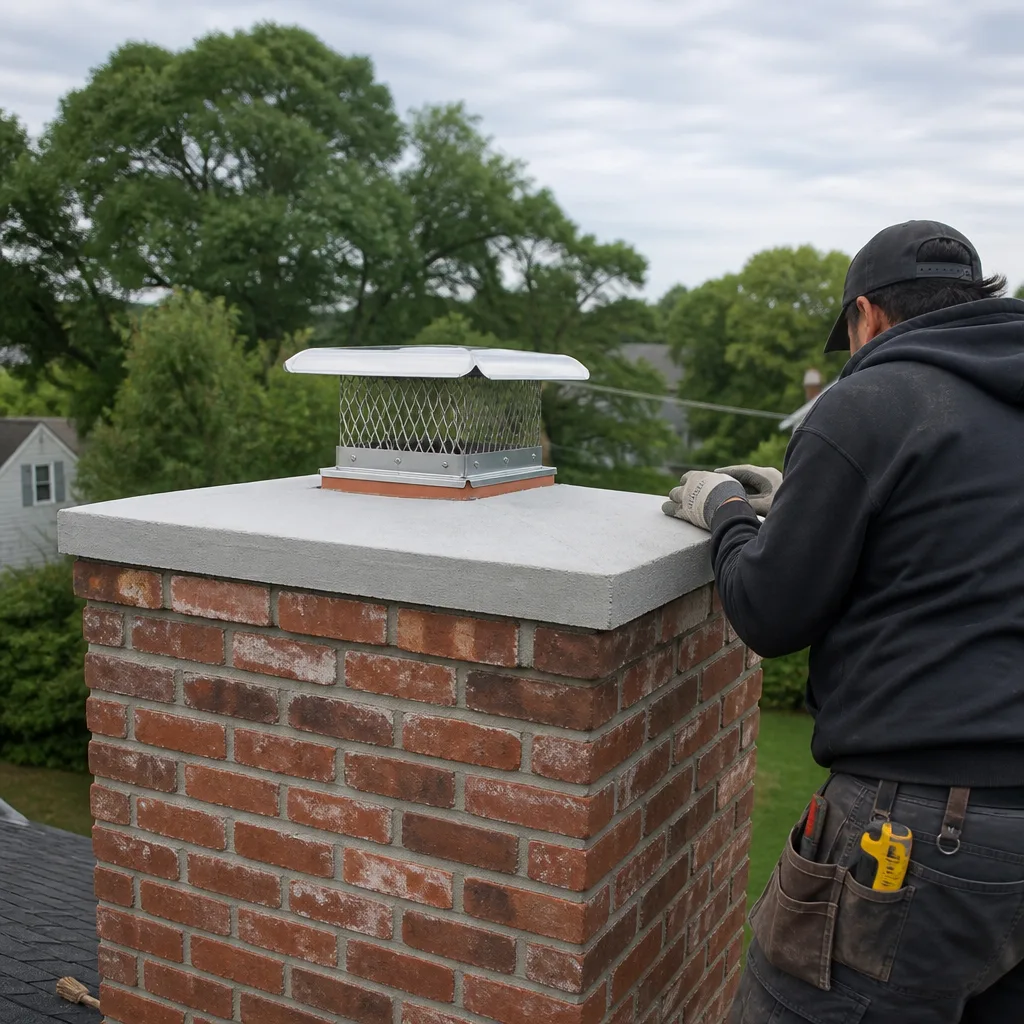 After
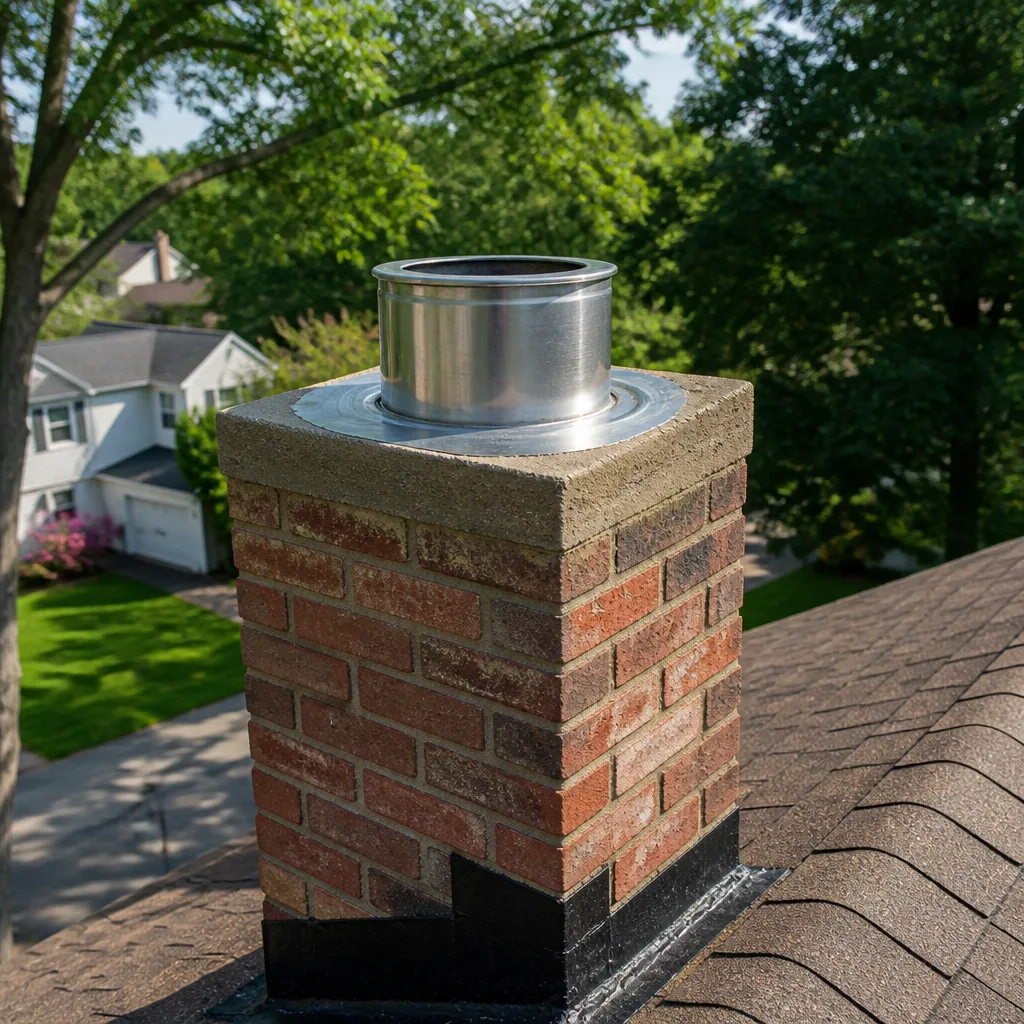
After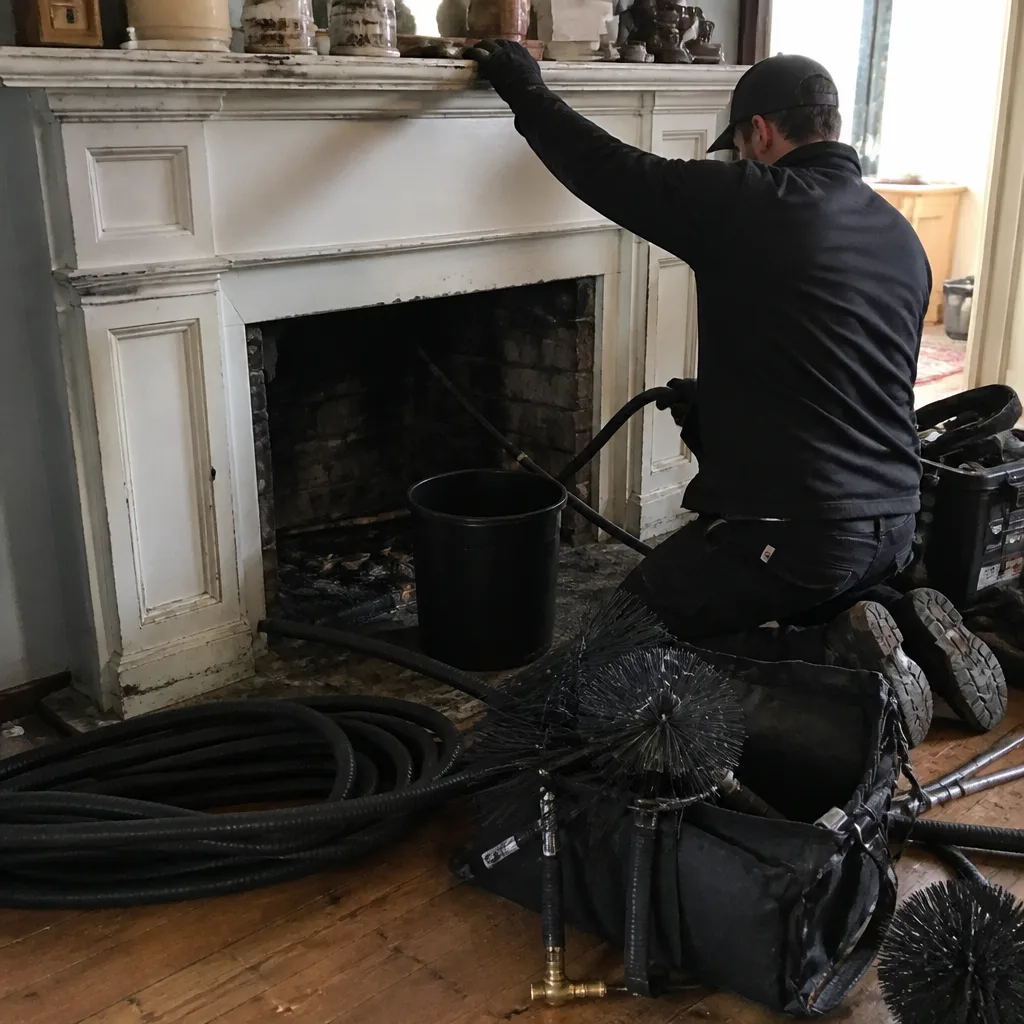 Before
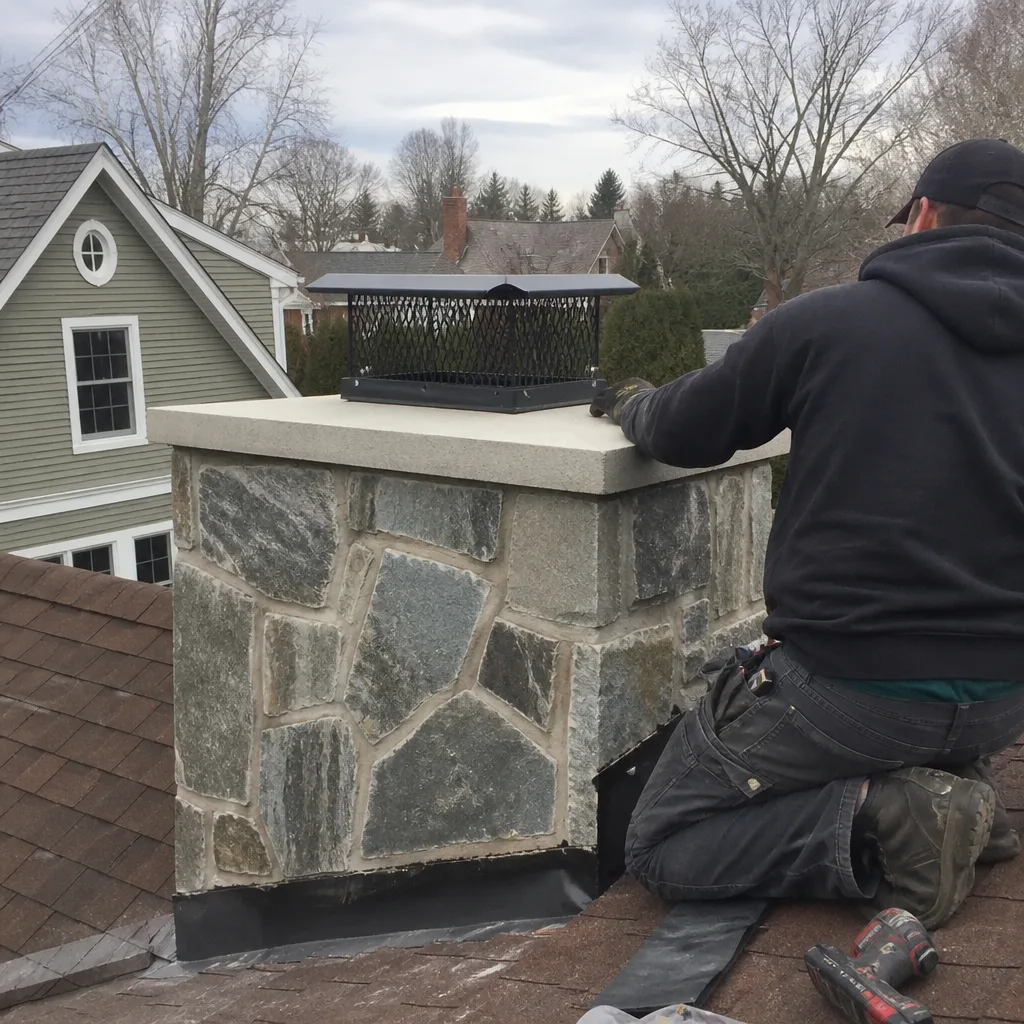 After
AfterHow Much Does Chimney Repair Cost in Long Island?
Chimney Repair in Long Island, NY typically runs between $150 and $4,500, depending on what needs fixing and how far gone it is. Minor work – a cracked crown patch or a new cap – lands on the low end. A full liner replacement or partial rebuild is where costs climb. Most homeowners on Long Island end up paying somewhere between $300 and $1,200 for a single repair visit.
The ranges below reflect what we actually charge in this market in 2026, not national averages pulled from a database. Long Island’s salt air, clay soil shifting, and freeze-thaw cycles put specific stress on masonry and flue systems that inland pricing guides don’t account for.
—
Chimney Repair Cost Breakdown (2026)
Here’s a direct look at what common chimney repairs cost in Long Island right now. These are real ranges – not floor prices designed to get a truck in your driveway.
| Repair Type | Typical Cost Range (Long Island, 2026) | Notes |
|---|---|---|
| Chimney cap replacement | $150 – $350 | Stainless steel caps last longer in coastal salt-air conditions |
| Crown repair or patch | $200 – $600 | Full crown rebuild runs $400-$900 depending on chimney size |
| Mortar joint repointing (tuckpointing) | $300 – $1,200 | Price scales with how much of the stack needs attention |
| Firebox repair (minor cracks, refractory patch) | $250 – $700 | HeatShield resurfacing for moderate damage: $900-$2,500 |
| Flue liner repair (HeatShield or DuraFlex) | $900 – $2,800 | Depends on flue length and severity of damage |
| Flexible liner installation (full) | $1,800 – $3,800 | DuraFlex stainless liner; price includes top and bottom fittings |
| Partial chimney rebuild (above roofline) | $1,500 – $4,500 | Spalling brickwork common in Long Island’s coastal zone homes |
| Damper repair or replacement | $175 – $450 | Top-mount dampers are more reliable in windy coastal conditions |
| Waterproofing / sealer application | $150 – $400 | Gelco products hold up better in high-humidity zones |
| Chimney inspection (Level 1 or 2) | $99 – $250 | Camera inspection included with Level 2 in most cases |
What Drives the Final Number
Height is probably the biggest single variable. A chimney that clears two stories and requires scaffolding costs more to work on than one you can reach from a single-story roofline. In older neighborhoods like Huntington Village or the North Shore communities along the Sound, you’ll often find taller, more ornate chimneys on Victorian-era homes – and those come with additional setup time.
Material condition matters just as much. Soft, crumbling mortar in a chimney that’s been sitting through Long Island winters since the 1950s takes longer to prep and requires more product than a crown with a single hairline crack. If the flue tile shows stair-step spalling, that’s not a patch job – that’s a liner conversation.
Access is another real factor on Long Island specifically. Properties with tight setbacks between homes, mature trees close to the roofline, or shed dormers that complicate ladder placement add time. Time is labor, and labor is cost. We’ll tell you this before we start, not after.
Finally, if your municipality requires a permit – which some Town of Hempstead and Town of Babylon jurisdictions do for liner installations and structural rebuilds – that’s a cost we’ll flag upfront. Permit fees on Long Island typically run $75 to $200 depending on the township. We handle the paperwork.
—
What Affects Chimney Repair Pricing in Long Island
- Salt air and coastal exposure. Homes within a few miles of the South Shore bays, Fire Island Inlet, or the Long Island Sound shoreline see accelerated mortar deterioration. Sodium chloride in the air works into porous masonry and accelerates the freeze-thaw breakdown that turns solid mortar into dust. In places like Freeport, Babylon, or Bay Shore, we often see repointing jobs on chimneys that are only 20-25 years old – half the lifespan you’d expect inland.
- Chimney age and original construction quality. Long Island has a lot of postwar housing stock – homes built between 1945 and 1965 in communities like Levittown, Elmont, and Valley Stream. The chimneys in those homes were often built with softer brick and thinner mortar joints. They’re not failing because of neglect; they’re failing because of age. Repair costs on older stock tend to run 20-30% higher because prep work is more extensive.
- How far the damage has progressed. A chimney crown with a hairline crack costs a fraction of what a crown that has split entirely and allowed two years of water into the flue will cost to fix. The number one factor in keeping chimney repair affordable is catching problems before they compound. Annual inspections exist for this reason – not to generate work, but to stop a $250 crack from becoming a $2,500 liner job.
- Liner condition and type. If your flue tiles are in good shape, a repair may be all that’s needed. If the tiles have separated, cracked along their length, or show significant spalling, a liner is the right answer – and liner work is one of the bigger line items on this page. Clay tile systems in Long Island homes built before 1980 sometimes have no liner at all, which is a code and safety issue that has to be addressed before the fireplace can be used safely.
- Roofline complexity and access. Hip roofs, valley intersections, and steep pitches common in older Long Island neighborhoods add real setup time. When scaffolding is required instead of a ladder, the job cost reflects that. It’s not padding – it’s what safe work on a difficult roofline actually costs.
- Seasonal timing. Mortar and masonry products have temperature minimums for proper curing. Scheduling repairs in late winter or early spring on Long Island sometimes means waiting for the right conditions, or using materials rated for lower temperatures. Repairs scheduled in late summer or early fall – before heating season – are easier to schedule, easier to cure, and often faster to complete.
—
Long Island Neighborhoods We See the Most Repair Work
Chimney repair needs aren’t evenly spread across Long Island. Certain communities come up repeatedly in our schedule, and there’s usually a reason tied to housing age, coastal exposure, or both.
In Huntington and Cold Spring Harbor, we work on a lot of older colonial and Victorian homes where the original chimney was built for coal or wood and was never properly lined for modern gas appliance use. Many of these homeowners don’t realize there’s a liner issue until they have a Level 2 inspection.
Massapequa, Wantagh, and Seaford sit close enough to the South Shore that salt-air exposure is a real factor. We see mortar joint failure in those communities on chimneys that look fine from the street. The face of the brick holds color while the joints behind it crumble. You’d never know without a close inspection.
In Smithtown, Hauppauge, and communities along the Route 25A corridor, postwar ranch homes with low-pitch roofs often have chimneys that were patched multiple times with the wrong materials – Portland cement over lime mortar, for example, which traps moisture and makes cracking worse. The right repair in those cases starts with removing the incompatible patch, not adding another layer on top of it.
Garden City and Rockville Centre have a mix of prewar homes and postwar additions where we frequently find a newer gas-insert fireplace venting into a clay tile system that wasn’t sized for the appliance. That’s a liner conversation, and it’s one worth having before the heating season starts.
—
How to Save on Chimney Repair
The single most effective way to keep chimney repair costs down on Long Island is not waiting. A cracked crown that gets waterproofed in October costs a couple hundred dollars. That same crown, left through a wet winter, admits water into the flue. By spring, you may be looking at spalled tile, deteriorated mortar joints, and a liner that needs attention. The job didn’t get harder because of bad luck – it got harder because of time.
Practical steps that actually help
- Schedule your inspection before heating season. September and early October are the right time to look at a chimney in Long Island – not December when the system is already running and you’ve lost all your scheduling flexibility. If there’s a problem, catching it in fall gives you time to repair it without scrambling.
- Get a second opinion on any estimate over $500. We offer free second opinions on any competing written estimate. Bring it in. We’ll look at what was quoted and tell you honestly whether the scope and price are reasonable for this market. If they’re right, we’ll say so. If they’re not, you’ll know before you sign anything.
- Ask about our $40 off any repair over $200. It’s a standing offer – no coupon needed, no expiration date. Just mention it when you call. Seniors and veterans also receive 10% off, always, without asking twice.
- Combine work when it makes sense. If you’re having a liner installed, it’s logical to also address mortar joint issues at the same time. One mobilization, one setup, one crew. Doing jobs together costs less than scheduling two separate visits a year apart.
- Don’t pay to waterproof a chimney that hasn’t been repaired first. Sealing over cracked mortar traps moisture inside the masonry. The right order is: repair first, seal second. Any company that leads with waterproofing before assessing the underlying structure is adding a step that may not hold.
- Avoid the price-on-the-phone, different-price-at-the-door companies. You’ve heard about them. Some of them work Long Island heavily – they quote low to book the appointment, then find “additional damage” once they’re on the roof where you can’t easily follow. Upfront pricing before a single tool comes off the truck is how we work. The number you hear on the phone is the number on the invoice.
For a free estimate on any chimney repair in Long Island, call (516) 968-5380. A live person will answer – not a voicemail, not a callback queue. It may well be Wendell himself.
—
Understanding the Work: What Each Repair Actually Involves
Pricing makes more sense when you understand what the labor actually includes. Here’s a plain-language look at the most common jobs.
Crown Repair
The chimney crown is the concrete or mortar slab at the top of the chimney structure that protects the masonry below from direct rain exposure. Long Island winters crack them – water gets in, freezes, expands, and widens the gap. A small patch, done correctly with a flexible crown sealant rather than rigid Portland cement, can extend the crown’s life by years. A crown that has split through its full thickness needs to be rebuilt. The difference in scope is visible in the price difference: $200 versus $800.
Tuckpointing
Mortar Repointing is the process of removing deteriorated mortar from between brick joints and replacing it with fresh mortar matched to the original mix. On Long Island’s older homes, the original mortar was often a softer lime-based mix, and the correct repair uses a compatible mortar – not harder Portland cement, which can cause the brick face to spall. A full tuckpointing job on a two-story chimney takes a day. Spot repointing on a few courses takes an hour or two. The price reflects which situation you’re in.
Liner Work
The flue liner is the first line of defense between combustion gases and your home’s framing. A compromised liner – whether cracked tile or a system with no liner at all – is a carbon monoxide and fire risk. This is not a corner to cut. HeatShield resurfacing is an option for clay tile systems with moderate deterioration; it applies a ceramic coating inside the existing flue. For more serious damage or systems being converted to a different fuel, a DuraFlex stainless steel flexible liner is the right answer. Both are jobs for a trained sweep, not a DIY weekend project.
If you’re replacing a liner, the Chimney Repair in Long Island page walks through what a full liner installation involves and what questions to ask before you commit to a quote.
Firebox Repair
The firebox – the chamber where the fire actually burns – takes heat stress every time you light the fireplace. Refractory panels crack. Mortar joints at the firebox floor and back wall deteriorate. Minor hairline cracks in the refractory can be patched with refractory cement. Larger damage, including panels that have shifted or crumbled, requires panel replacement or a full HeatShield resurfacing of the firebox interior. The HeatShield system, which we’ve used for years, creates a seamless ceramic surface that stands up to repeated thermal cycling better than the original clay tile it replaces.
—
When Repair Stops Making Sense
Not every chimney is worth repairing, and we’ll tell you when that’s the case. If a chimney’s interior structure is compromised below the roofline, if the firebox has shifted on its footing, or if the masonry has deteriorated to the point where repair cost approaches replacement cost, a partial or full rebuild may be the more honest recommendation.
The benchmark we use: if the repair cost exceeds 60-70% of what a new chimney structure would run, the math usually favors rebuilding – especially on Long Island homes where the replacement will be built with better modern materials and last another 40-50 years. We’ll put that comparison in writing so you’re making an informed choice, not just taking our word for it.
On the other end, some chimneys that look alarming from the street are structurally sound and need only cosmetic work. Camera inspections – which we include with every Level 2 inspection – are the only honest way to know which situation you’re in. The camera footage and a plain-English verdict: every time, no exceptions.
—
FAQs – Chimney Repair Cost in Long Island
How much does chimney repair cost in Long Island, NY?
Most chimney repairs in Long Island run between $150 and $4,500, with the majority of single-visit jobs falling between $300 and $1,200. Small fixes like a new cap or a crown patch are on the low end. Liner work and partial rebuilds are where the higher numbers come from. Call (516) 968-5380 for a free estimate – we’ll tell you the price before any work begins.
Is it cheaper to repair or replace a chimney?
Repair is almost always cheaper for isolated damage – a cracked crown, failed mortar joints, or a compromised liner. Full chimney replacement on Long Island runs $8,000 to $20,000 or more depending on height and complexity, so repair wins in most cases. The exception is a chimney where multiple systems have failed simultaneously, or where the masonry has deteriorated below the roofline. If repair quotes are approaching $4,000 or more, it’s worth asking for an honest comparison of repair versus rebuild costs. We’ll give you both numbers.
How often does a chimney need repair in Long Island?
Most chimneys on Long Island benefit from a professional inspection every year – not because they break every year, but because small problems found early cost far less than large problems found late. The combination of salt air, clay soil movement, and the Long Island freeze-thaw cycle is harder on masonry than most homeowners realize. Expect to do some form of maintenance work every 5-10 years on an average chimney, and budget for a larger repair every 15-20 years.
Can I get a same-day chimney repair estimate in Long Island?
Yes. Call (516) 968-5380 and a live person will answer around the clock. We can typically schedule an inspection and same-day estimate within 24 to 48 hours for most of Long Island. Emergency situations – an active water intrusion into the firebox, a cap blown off by a storm, a damper that’s stuck open in cold weather – move faster. There’s no trip charge for calls inside our service area, and the estimate is free.
Do I need a permit for chimney repair in Long Island?
For cosmetic work like repointing or crown patching, permits are generally not required. For liner installations and structural rebuilds, permit requirements vary by municipality across Long Island. Some townships within Nassau and Suffolk County do require permits for liner work; others don’t. We handle the permit determination and paperwork for every job where it’s needed, and the permit fee is included transparently in the quote – not added afterward. Call (516) 968-5380 and we’ll tell you what applies to your specific address.
Why do chimney repair prices vary so much between companies on Long Island?
Some of the variation is legitimate – scope differences, material quality, liner gauge, brand of products used. A cheap liner quote often means a thinner-gauge stainless that won’t last as long in Long Island’s salt-air environment. But some of the variation is less honest: low phone quotes that expand once the crew is on the roof, or “additional findings” that weren’t mentioned during the estimate. The safest move is to get two written estimates with identical scope and compare them line by line. We offer free second opinions on any competing written estimate. Bring it in and we’ll walk through it with you.
—
Key Takeaways
- Chimney repair in Long Island ranges from about $150 for a cap replacement to $4,500 for a partial rebuild, with most single-repair visits running $300 to $1,200.
- Long Island’s salt air, postwar housing stock, and freeze-thaw cycles create specific repair patterns that national pricing averages don’t reflect accurately.
- Liner work and structural rebuilds are the biggest-ticket items. Crown repair, tuckpointing, and cap replacement are the most common day-to-day jobs.
- Annual inspections are the most cost-effective chimney maintenance a Long Island homeowner can do – a $150 inspection can prevent a $2,000 surprise.
- Top Hat Chimney offers $40 off any repair over $200, 10% off for seniors and veterans, and free second opinions on any written estimate.
- Every job is backed by the 90-Day Done Right Promise – if it’s not right, one call brings the crew back at no additional cost.
- Call (516) 968-5380 for a free, upfront estimate. The price you hear on the phone is the price on the invoice.
—
Ready for a Free Estimate?
Wendell and the crew at Top Hat Chimney have been working Long Island chimneys since 1999. If you’re looking at a crack, a leak, a damaged liner, or you just want to know what shape your chimney is actually in before the heating season starts, call (516) 968-5380. A live person will pick up. You’ll get a real appointment time, a real price before any work starts, and a crew that puts their name on the job and backs it in writing.
No voicemail. No pressure. No price changes at the door.
If you’ve already got a written estimate from another company, bring it. The second opinion is free, and you’ll know exactly where you stand.
Pricing reflects the Long Island market as of 2026. Top Hat Chimney offers free estimates – call (516) 968-5380.
Written by Wendell Pike, Owner at Top Hat Chimney, serving Long Island, NY since 1999.
What Our Customers Say
"Gave me the photos from inside the flue on a memory stick along with the invoice. I have never had a trade hand me evidence before."
- Priscilla Ng"Honest work and a fair price. The masonry repair took longer than the two weeks he first said because of the weather, which I understand, but I would have liked being told rather than having to ask."
- Isaiah Brantley"Creosote build up was bad enough that he showed me a jar of it. Explained the difference between the stages and why the wood I had been burning was the cause. I have burned seasoned wood ever since."
- Gordon Selkirk