

Level 1 sweep and inspection to the NFPA 211 annual standard - flue, crown, cap, and flashing checked and photographed
Chimney sweep logs do not sweep chimneys. They loosen some creosote - which then falls where a brush and vacuum still have to collect it.
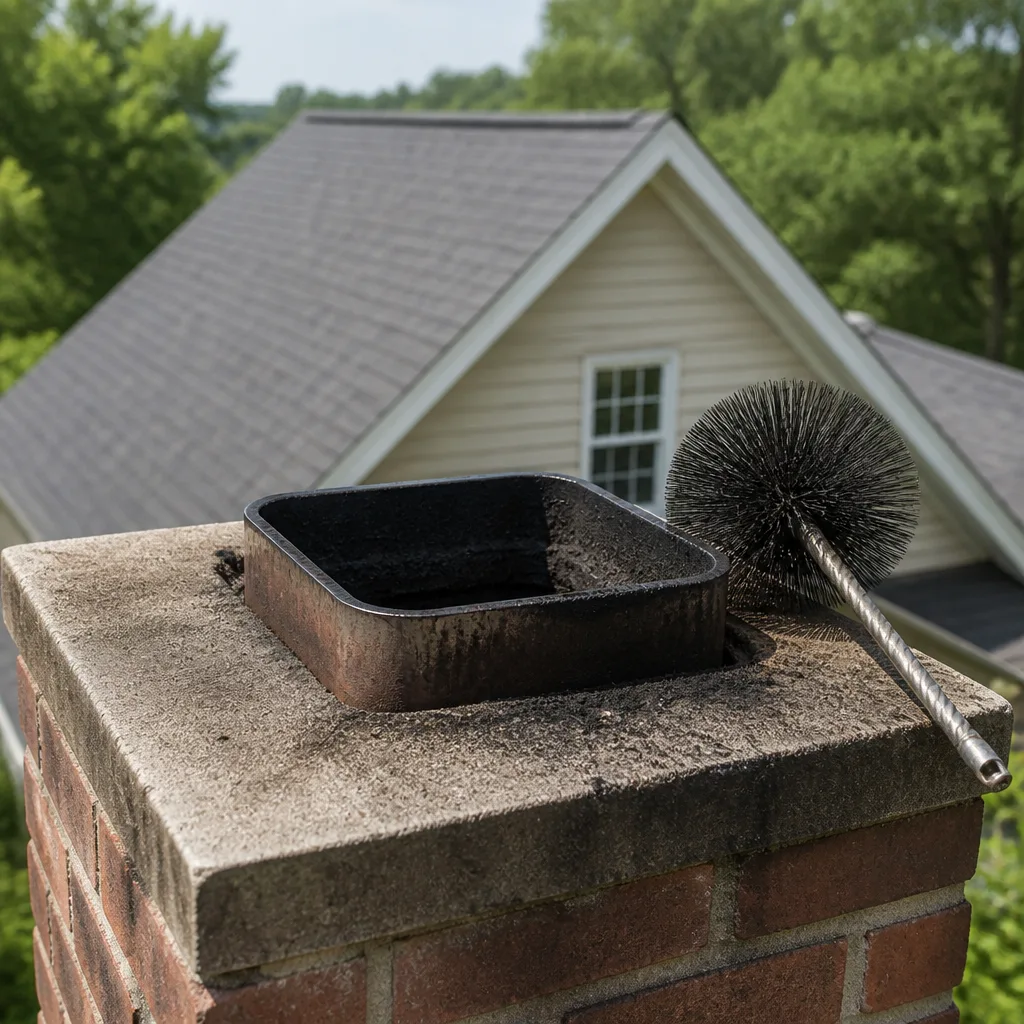
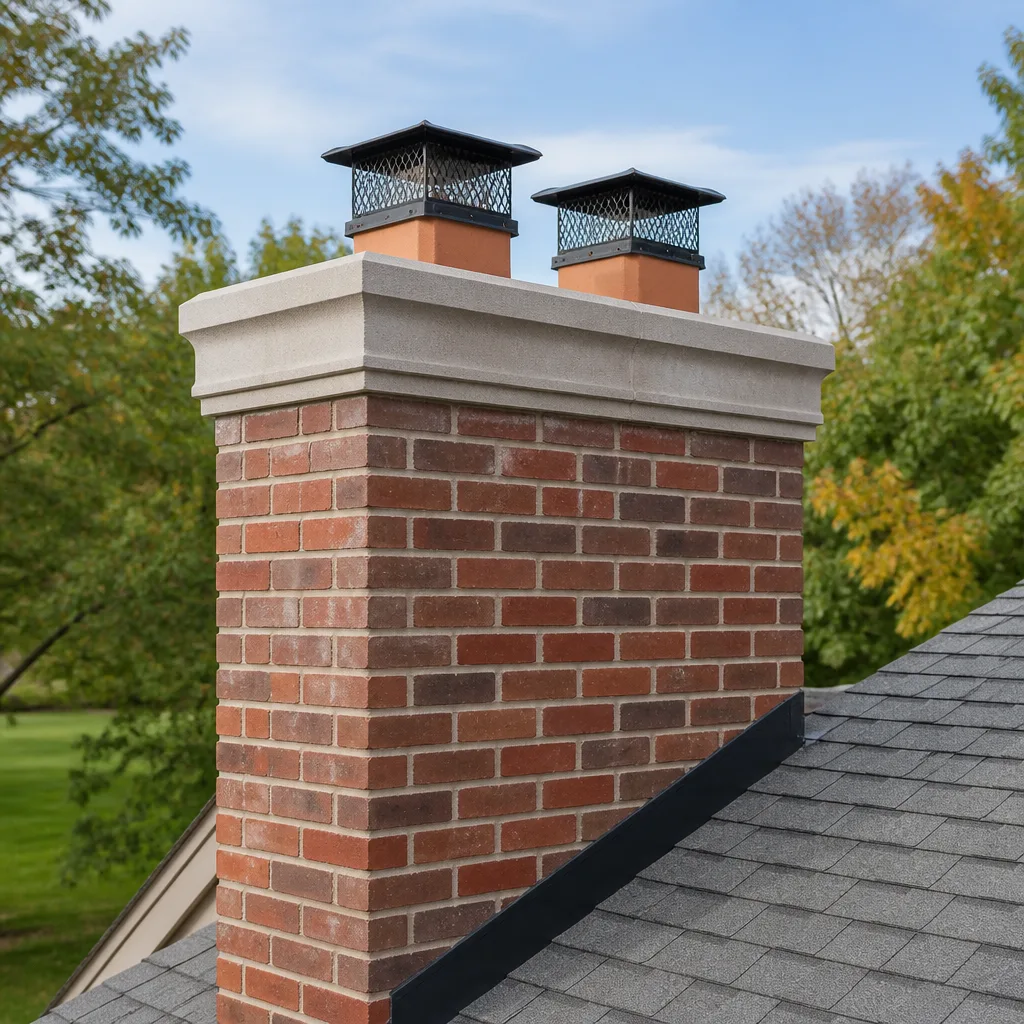
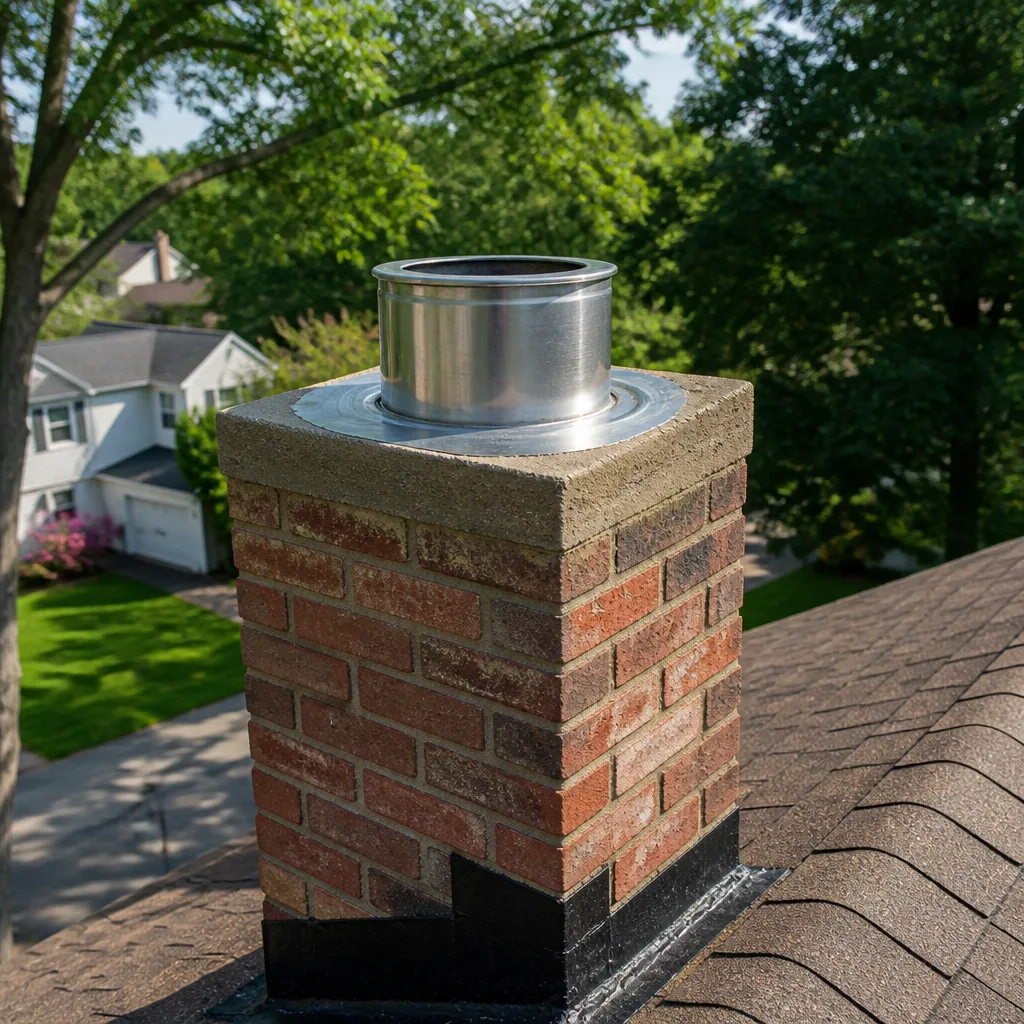
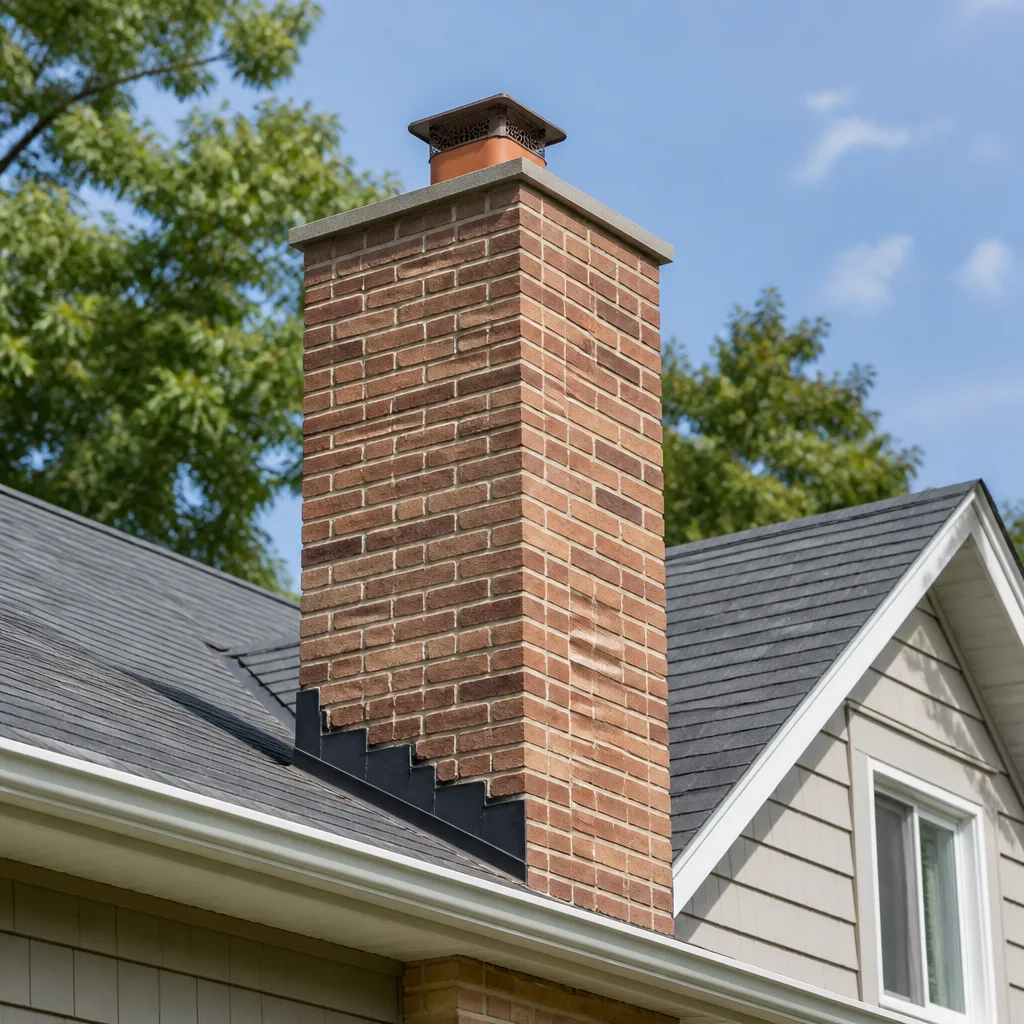
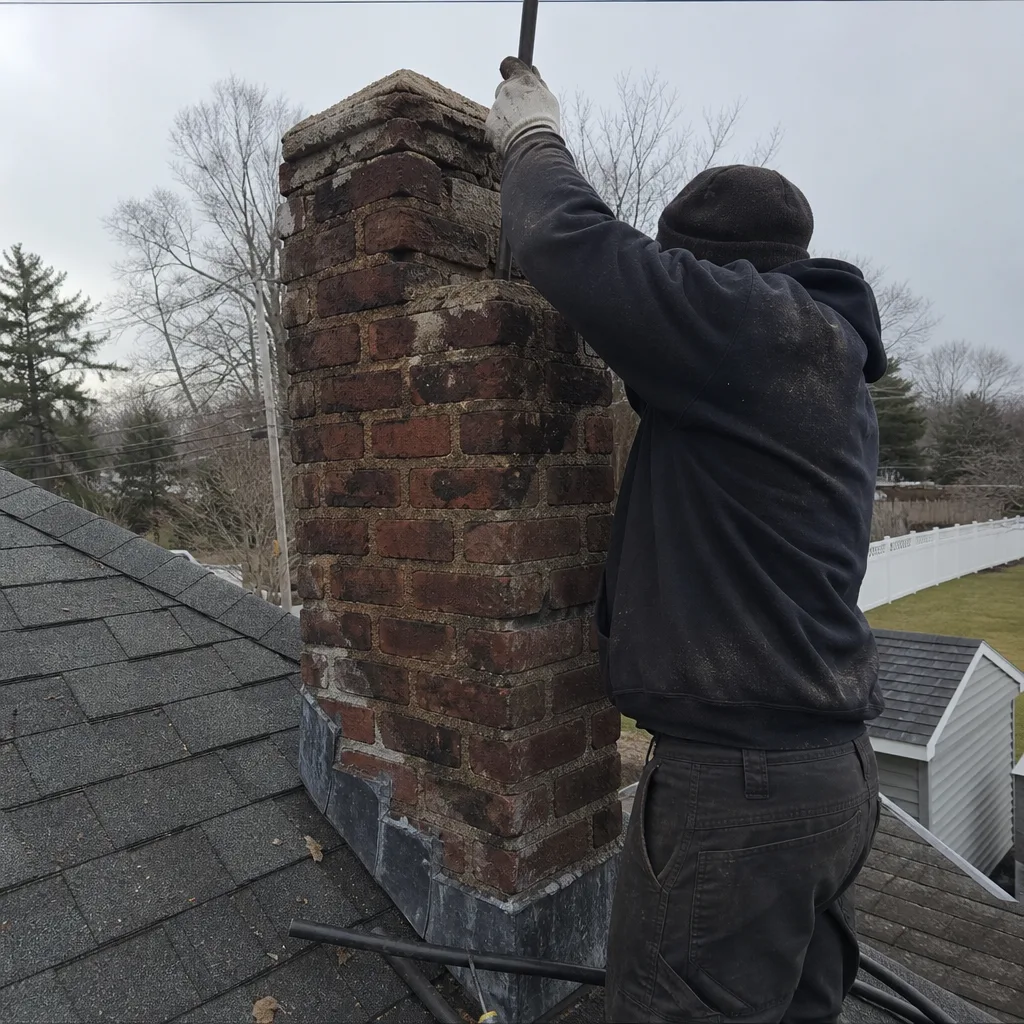 Before
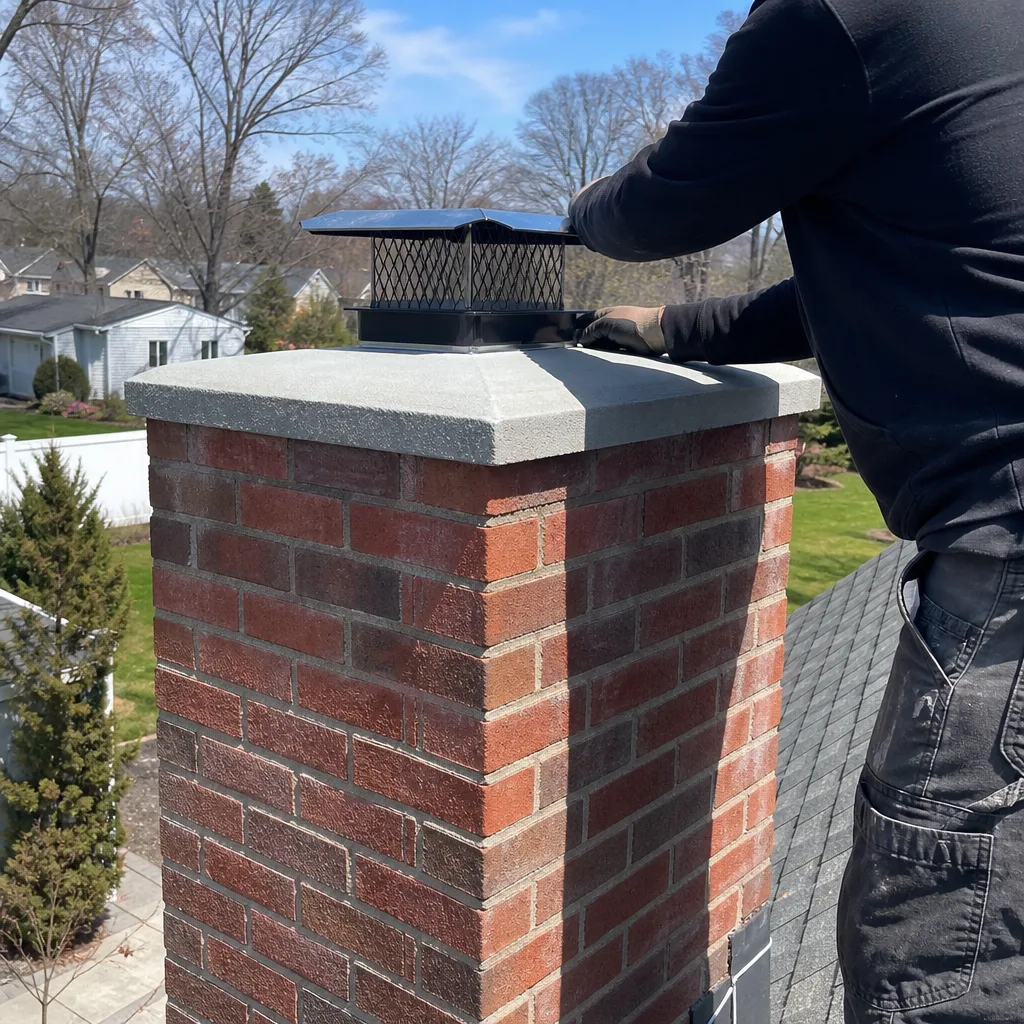 After
After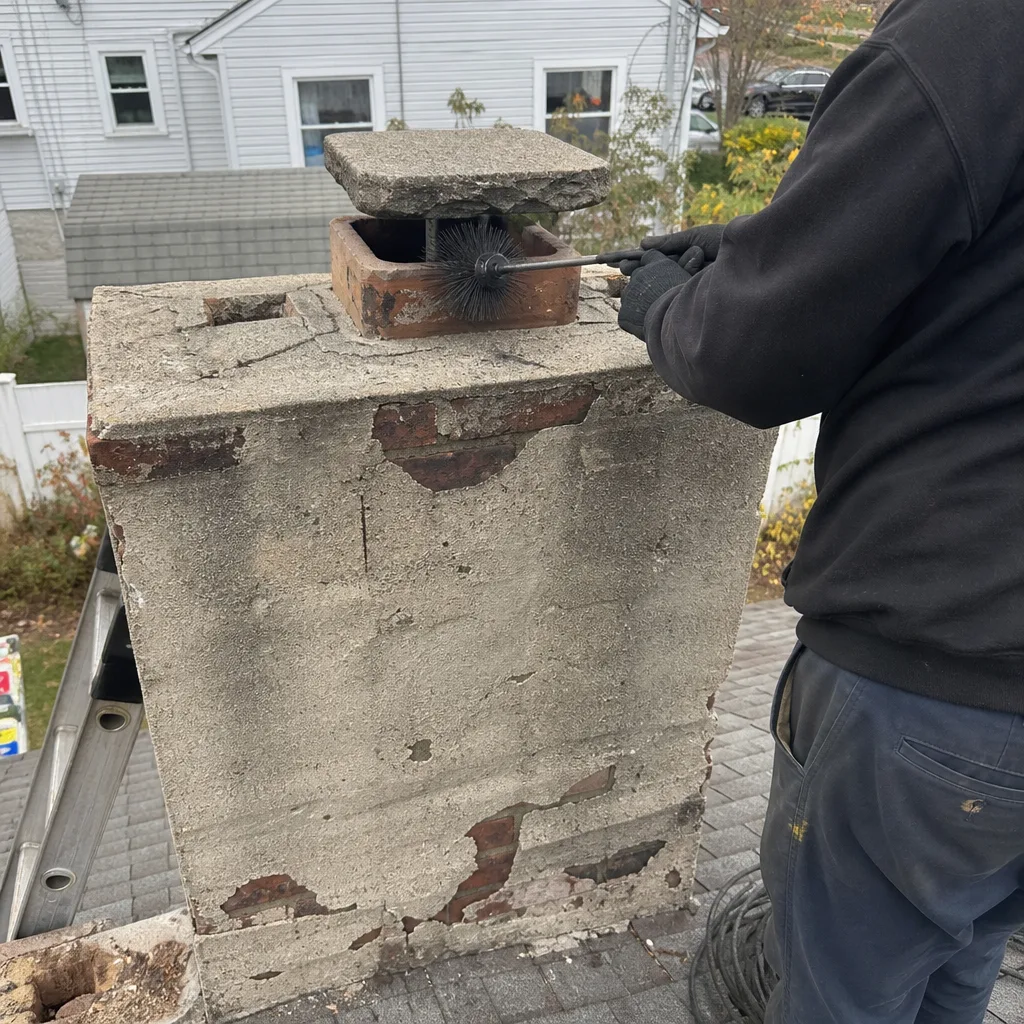 Before
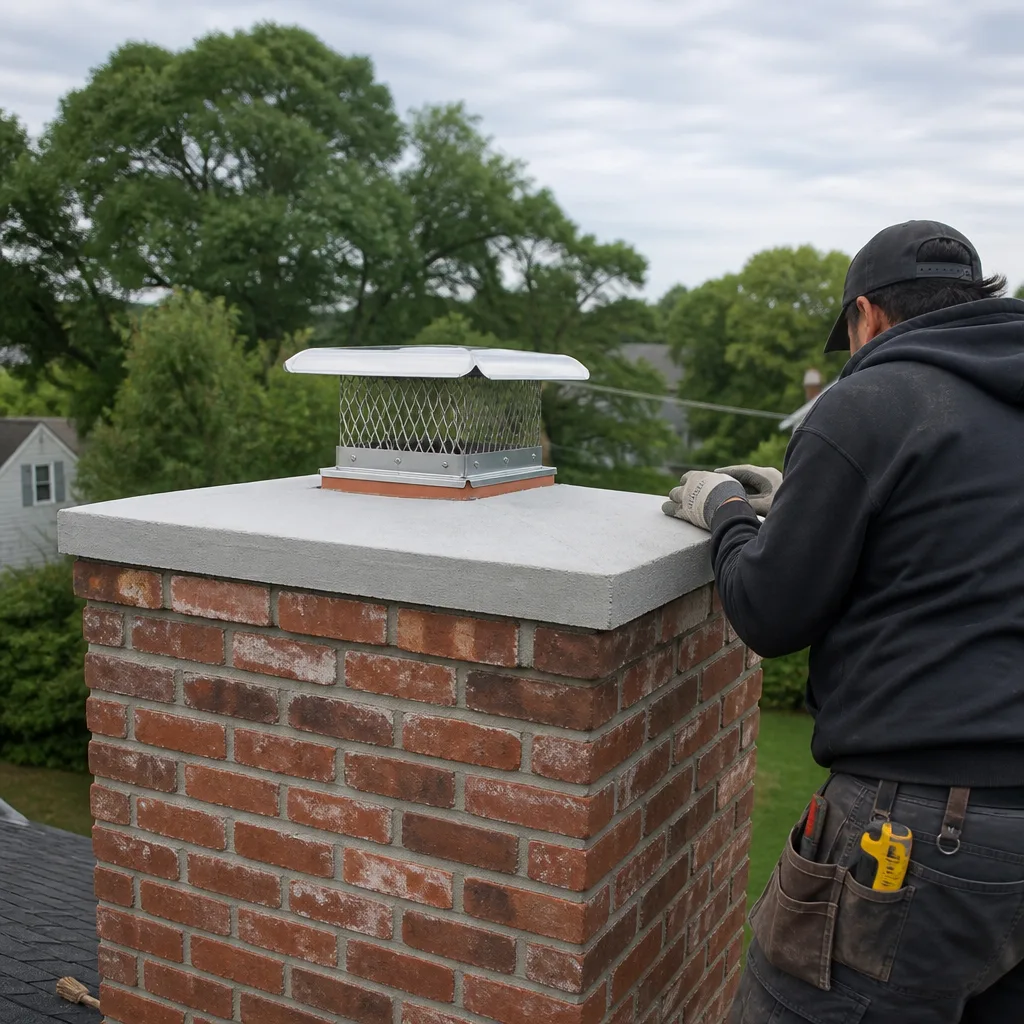 After
After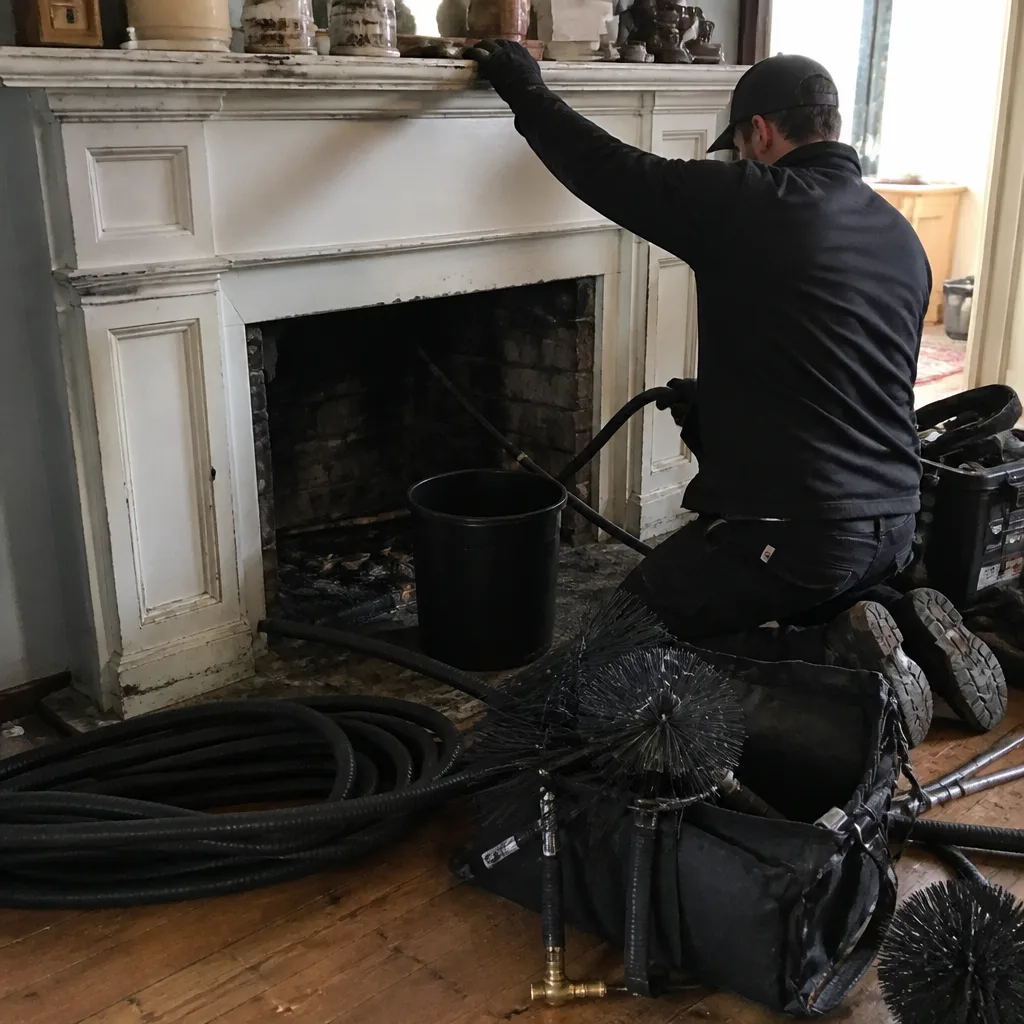 Before
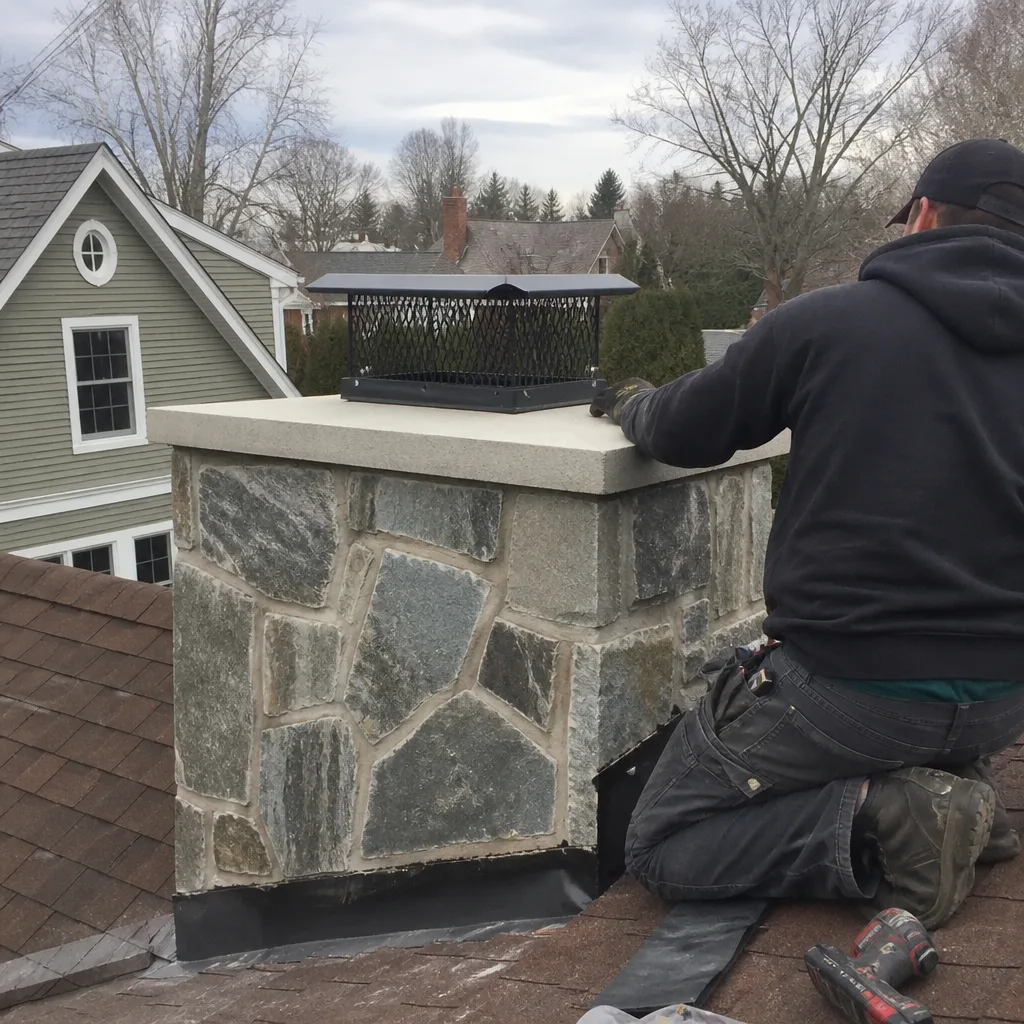 After
AfterSpalling Brick Repair in Long Island, NY
Spalling brick on a Long Island chimney is when the face of the brick starts to flake, chip, or break away – usually because water has worked its way into the masonry and freeze-thaw cycles have done the rest. It is one of the most common structural problems we see after a hard winter on the Island, and it gets worse every season you leave it. If you are seeing red powder or brick fragments on the roof or around the chimney base, that is your chimney telling you it needs attention now, not next fall.
Top Hat Chimney has been repairing spalling brick on Long Island chimneys since 1999. Wendell Pike runs every job personally – he will look at what you have, tell you exactly what needs to happen, and give you a price before anything comes off the truck. If you want a straight answer today, call (516) 968-5380. A live person picks up around the clock, and it may be Wendell himself. You can also read more about our full scope of work on our Chimney Repair in Long Island page.
Why Long Island Chimneys Spall So Often
The geography here matters more than most homeowners realize. Long Island sits in a humidity corridor between the Sound and the Atlantic, which means masonry stays damp longer than it does inland. That persistent moisture sets up the cycle that destroys brick faces: water soaks into the porous surface, temperatures drop below freezing – sometimes repeatedly in a single week during a Nassau or Suffolk January – and the expanding ice pries the outer face of the brick apart from the inside. Do that forty or fifty times over a winter and you start to lose material fast.
Salt air compounds the problem for chimneys in the South Shore communities, from Freeport down through Baldwin and Merrick to the barrier island towns. Salt deposits in the masonry draw additional moisture through capillary action, accelerating the spall cycle even in years when the freeze-thaw count is relatively low. We see it constantly, and it is why a waterproofing step is almost always part of a proper spalling repair here – not an optional upgrade, just the honest thing to do.
Older homes in the North Shore villages – the kind of 1940s and 1950s construction you find in Oyster Bay, Glen Cove, and Huntington – often used softer, lower-density bricks that were not manufactured to modern ASTM standards. Those bricks absorb water at a rate modern units do not, and by now they have had seven or eight decades of Long Island winters to work on them. If your home is in that era, do not be surprised if Wendell recommends replacing some courses rather than just tuckpointing over the damage.
When You Need Spalling Brick Repair
- Brick fragments or red powder collecting at the chimney base or on the roof flashing. This is the clearest early sign. The material falling is the face layer of your brick, and once it goes, the structural integrity of the course starts to follow.
- Visible pitting, scaling, or flaking on chimney bricks you can see from the ground. If you can spot it from the yard, the damage higher up – where you cannot see – is almost always more advanced. A camera inspection will confirm it.
- White staining (efflorescence) on the chimney face. That chalky white residue is mineral salts being pulled to the surface by water moving through the brick. It is a reliable early warning that moisture is active inside the masonry.
- Mortar joints that have recessed or crumbled between bricks. Failed mortar lets water in behind the brick face faster than almost anything else. Spalling often starts at a failed joint, not at the face, so what looks like a mortar problem may already be a brick problem on the next inspection cycle.
- Interior damp spots or staining on the wall near the firebox or chimney chase. Water tracking through a spalling chimney wall can travel further than you expect before it shows up on a ceiling or interior wall in the Smithtown or Babylon neighborhoods we work in regularly.
- A chimney that had repairs done but is already showing damage again within a few years. If previous work did not include waterproofing or did not address the source of moisture intrusion, the cycle will simply repeat. That is when Wendell will ask a few questions about what was done before and give you a real answer about what is actually needed.
Our Spalling Brick Repair Process
- Ground-level assessment and camera inspection. Before anyone touches a brick, Wendell or his crew does a visual inspection from the ground and roof line, supplemented by a camera look at the flue and upper chimney structure. The goal is to understand the full extent of the damage – not just what is visible – so the repair scope is accurate and nothing gets missed. You get the camera footage and a plain-English verdict, every time.
- Removal of damaged brick and deteriorated mortar. Spalled bricks that have lost structural integrity come out. Mortar joints that have failed get cut back to sound material – typically 3/4 to 1 inch minimum – so the new work has something solid to bond to. Cutting back shallow and mortaring over the top is how the discount outfits operate. We do not do that.
- Repointing and brick replacement using matched materials. New mortar is mixed to match the composition and hardness of the original as closely as possible. On older Long Island homes, that sometimes means using a softer Type N mortar rather than the harder Type S that is common today – harder mortar on a softer brick can actually cause more spalling, not less. Replacement bricks are sourced to match the original in size, color, and density where the inventory allows.
- Crown inspection and repair if needed. The chimney crown is the concrete cap that sits at the top of the masonry and sheds water away from the flue. A cracked crown is often the original entry point for the moisture that caused the spalling below. If the crown is damaged, repairing the bricks without addressing the crown is just buying yourself another repair in three years. We flag it and fix it as part of the same visit when it makes sense.
- Waterproofing with a vapor-permeable sealant. Once the masonry is solid and the mortar has cured, we apply a penetrating water repellent rated for chimney masonry. This is not a surface paint or a coating that traps moisture inside – it lets the masonry breathe while blocking water penetration from outside. On Long Island’s coastal and Sound-facing properties, this step is not optional if you want the repair to last.
- Final inspection and photo documentation. We do a walk-through of everything that was done, show you before-and-after photos, and go over the 90-Day Done Right Promise in plain terms: if anything we touched is not right, one call brings us back at no additional cost. That promise is in writing on the invoice – not a verbal assurance, an actual commitment.
Spalling Brick Repair Pricing in Long Island
Spalling brick repair costs in Long Island typically fall between $350 and $2,800, depending on how much of the chimney is affected, how accessible the area is, and whether additional work like crown repair or cap replacement is needed at the same time. For a detailed breakdown, see How Much Does Chimney Repair Cost? (2026 Price Guide) - Long Island, NY. Minor spalling caught early – a few damaged bricks on an accessible section – sits at the low end. Significant face loss on an upper course that requires scaffold or specialized lift access sits at the high end.
| Scope of Work | Typical Range (Long Island Market) |
|---|---|
| Minor spalling – up to 10 bricks, ground-floor accessible | $350 – $650 |
| Moderate spalling – 10-30 bricks, partial repointing | $650 – $1,200 |
| Significant damage – multiple courses, upper chimney | $1,200 – $2,200 |
| Extensive repair including crown work and waterproofing | $1,800 – $2,800+ |
| Waterproofing treatment (standalone or add-on) | $150 – $350 |
A few things that affect where your job lands in those ranges: how high up the damage is (roof pitch and chimney height determine whether we need a ladder, a standoff, or a lift), whether the original brick can be matched from current inventory, and whether the crown or cap needs work at the same time. Jobs over $200 automatically qualify for $40 off, and we offer a 10% senior and veteran discount on every job, every time – no asking required. There is no trip charge for calls inside our county.
Upfront pricing is not something we offer as a selling point – it is just how we operate. The number Wendell quotes you on the phone or on the driveway is the number on the invoice. Call (516) 968-5380 for a free estimate. If you have already gotten a written estimate from someone else, we will give you a free second opinion on it.
Key Takeaways
- Spalling is accelerated by Long Island’s humidity, salt air, and freeze-thaw cycles – catching it early costs significantly less than letting it progress.
- Repair without waterproofing on a Long Island chimney is almost always a short-term fix. A proper repair addresses the moisture entry point, not just the visible damage.
- Softer historic brick common in pre-1960 North Shore and South Shore homes requires different mortar formulation than modern brick – using the wrong mix causes more spalling.
- Every repair Top Hat Chimney completes is covered by the 90-Day Done Right Promise in writing.
- Free estimates, free second opinions on competing quotes, $40 off repairs over $200, and a 10% senior and veteran discount are all standing offers – no negotiating needed.
FAQs – Spalling Brick Repair
Is spalling just a cosmetic problem, or does it affect chimney safety?
Spalling is a structural problem, not a cosmetic one. When brick faces break away, the remaining masonry has less mass to resist water intrusion and physical stress. If the damage reaches the point where structural bricks in the chimney stack are compromised – or if water tracking through spalled areas reaches the flue liner – you can end up with a chimney that is no longer safe to use and may not pass a code inspection in Nassau or Suffolk County. The time to schedule our Chimney Repair services is before you are at that point, not after. Call (516) 968-5380 for a free assessment if you are not sure how far along the damage is.
How much does spalling brick repair cost in Long Island?
Spalling brick repair on Long Island typically runs $350 to $2,800 depending on the number of bricks affected, chimney height and access, and whether crown repair or waterproofing is needed at the same time. Minor jobs caught early sit closer to $350-$650. Repairs involving multiple courses on an upper chimney or requiring scaffold access move toward the $1,200-$2,200 range. Every job over $200 gets $40 off automatically. Call (516) 968-5380 for a free estimate – the number you hear is the number on the invoice.
Can spalling brick be repaired, or does the whole chimney need to be rebuilt?
Most spalling brick situations on Long Island homes can be repaired without a full rebuild. Damaged bricks are removed and replaced, deteriorated mortar joints are cut back and Mortar Repointing is performed, and the surface is sealed to stop the moisture cycle. A full rebuild is typically only necessary when the structural damage has spread through a large portion of the chimney stack, or when the underlying brick stock has degraded so far that piecemeal repair would not hold. Wendell will tell you honestly which situation you are in – if a repair will hold, he will say so; if it will not, he will explain why before any work begins.
How long does spalling brick repair last?
A properly done spalling repair – matched mortar, sound brick replacement, and vapor-permeable waterproofing – should hold for 15 to 25 years under normal Long Island conditions. The biggest predictor of longevity is whether the moisture source was actually addressed. Repairs that patch the surface without sealing the entry point tend to fail within three to five years, which is how some homeowners end up calling a second company to redo work that was not done right the first time. Our 90-Day Done Right Promise covers the work we do; our goal is that you never need to use it.
About Top Hat Chimney
Top Hat Chimney is a locally owned, owner-operated chimney service based on Long Island. Wendell Pike founded the company in 1999 and has been doing this work in the same communities – the same streets, the same homes, the same neighbors – ever since. The company is not a franchise. There is no national call center routing your call to whoever is nearest. When you call (516) 968-5380, a live person picks up, and that person knows who Wendell is and when he can be there.
Every job is backed by the 90-Day Done Right Promise: if the work is not right, one call brings Wendell’s crew back at no additional charge. That is not a verbal assurance – it is written on the invoice. For full details on the range of chimney work we do across the Island, visit our home page or read more about the broader scope of Chimney Repair in Long Island.
Written by Wendell Pike, Owner at Top Hat Chimney, serving Long Island since 1999.