
Last updated September 10, 2026
Level 1 sweep and inspection to the NFPA 211 annual standard - flue, crown, cap, and flashing checked and photographed
Chimney sweep logs do not sweep chimneys. They loosen some creosote - which then falls where a brush and vacuum still have to collect it.
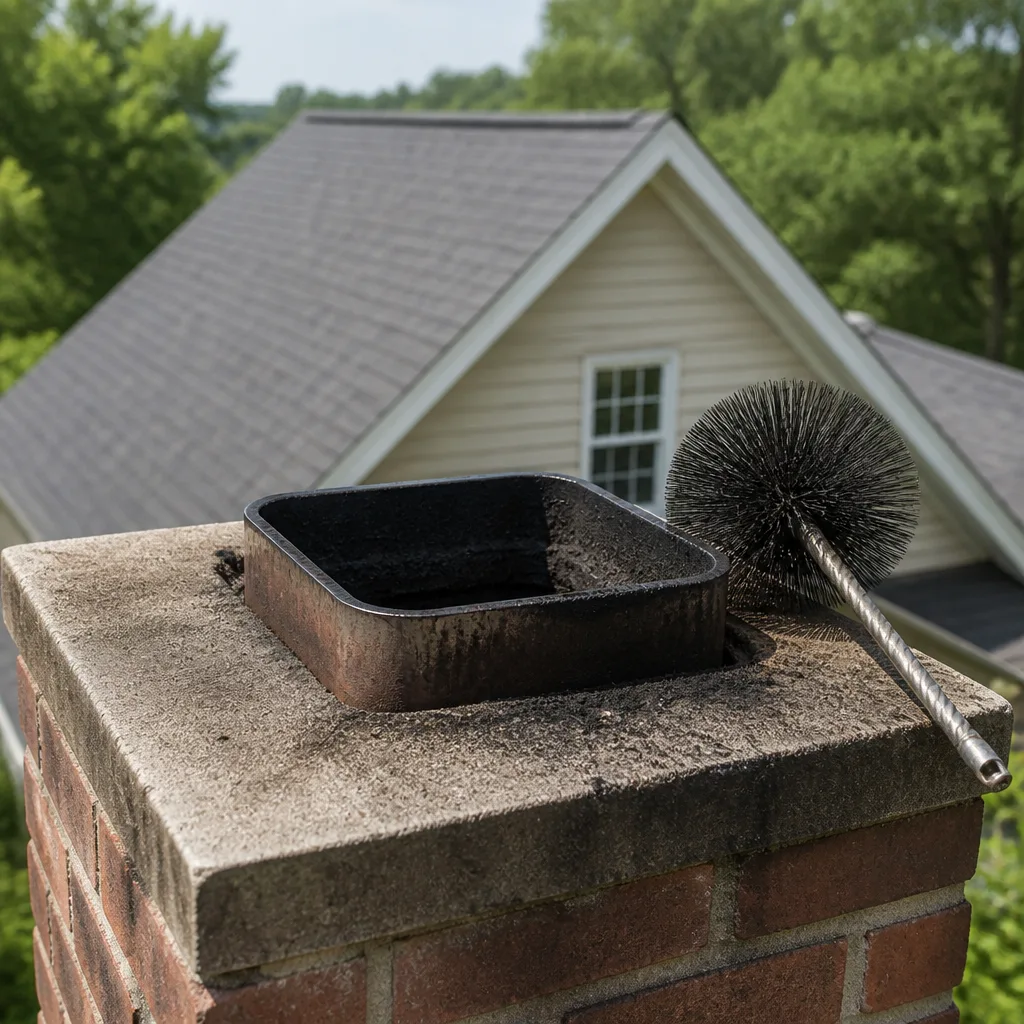
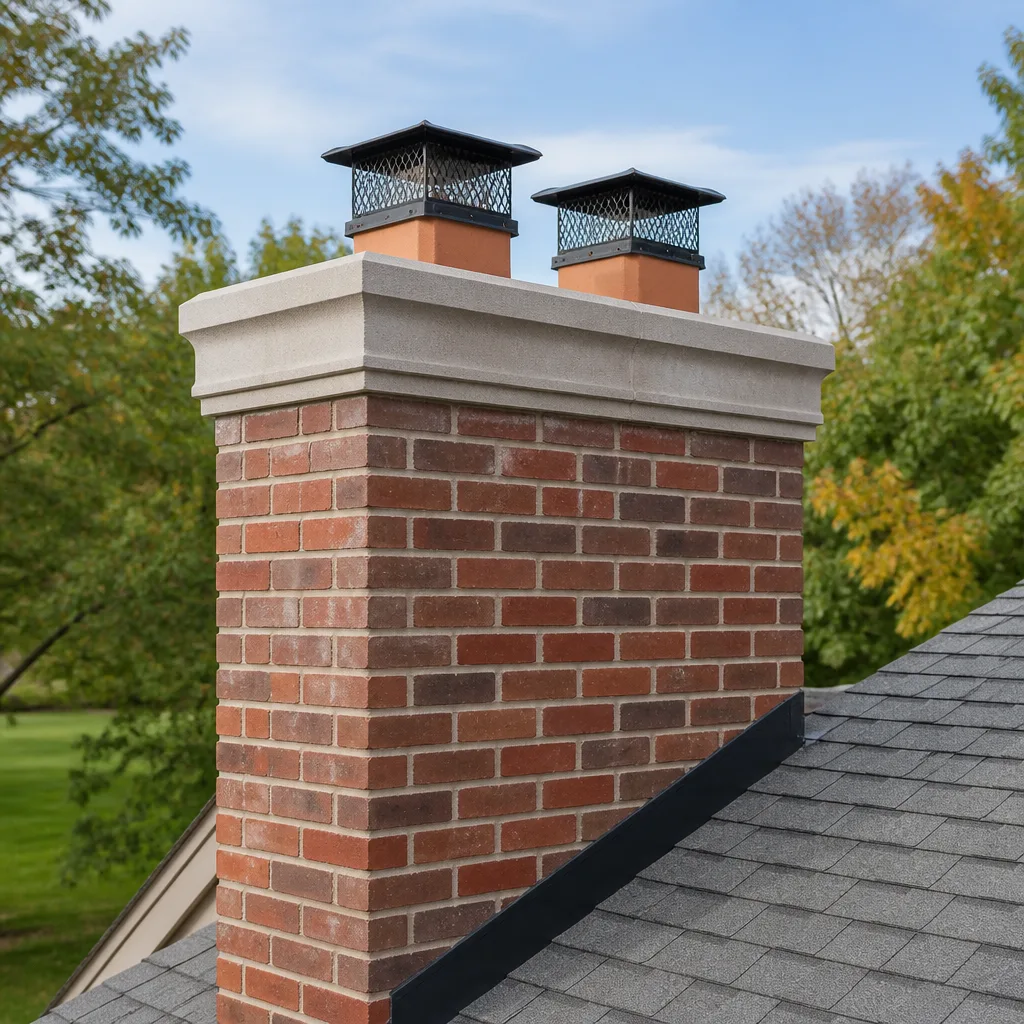
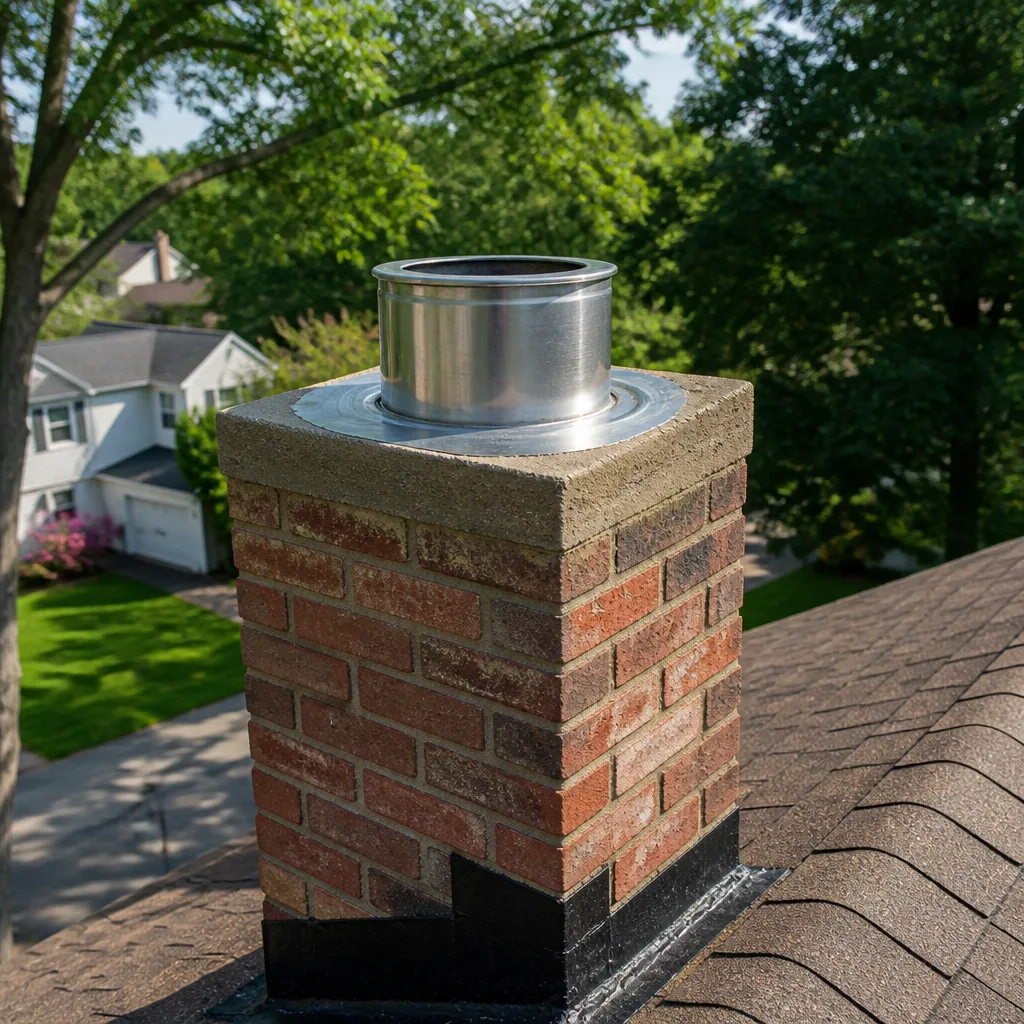
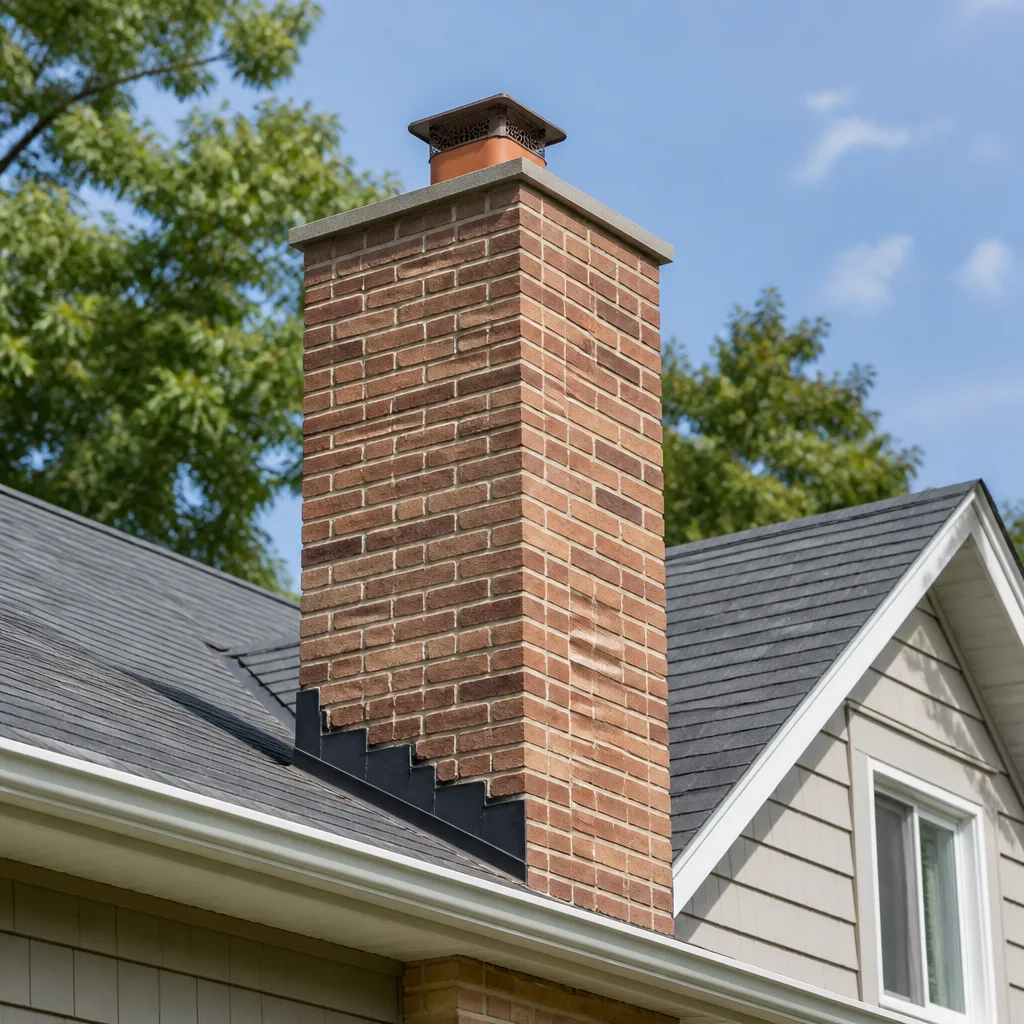
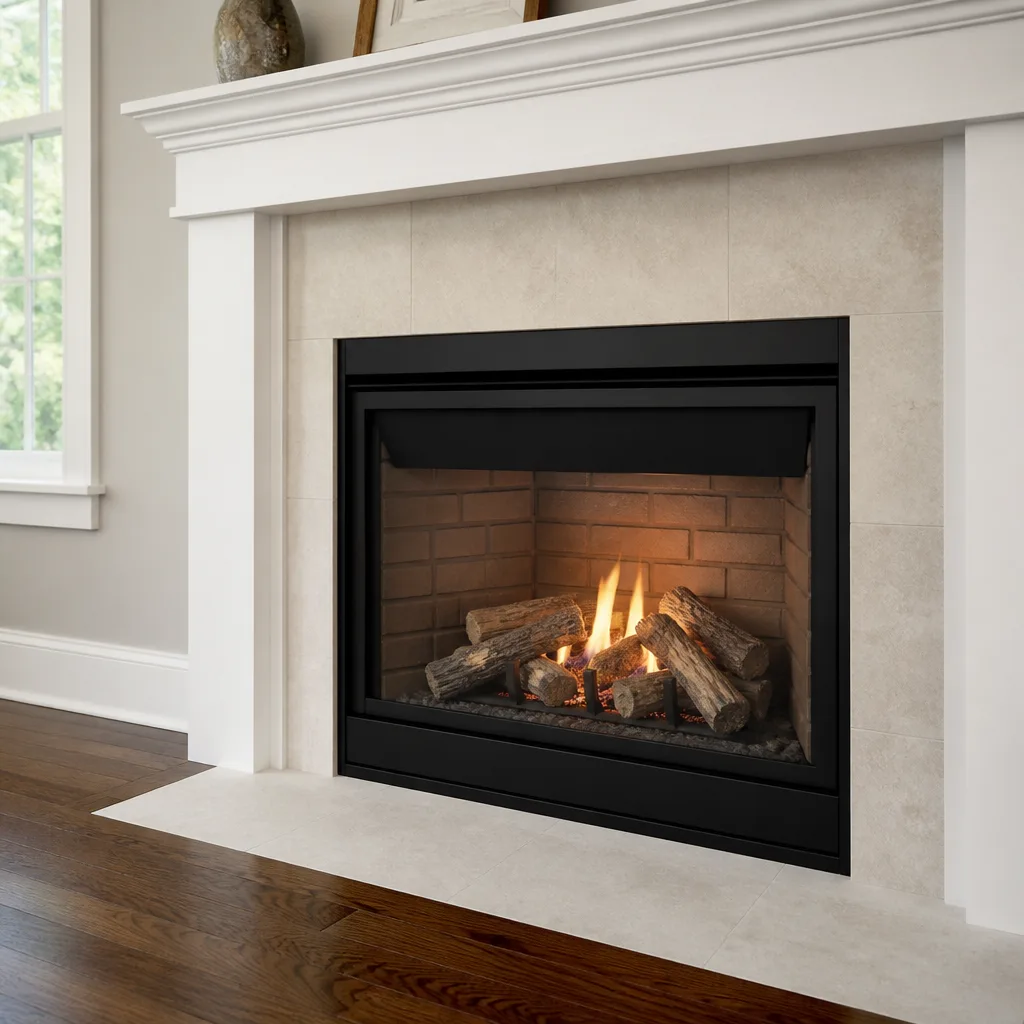
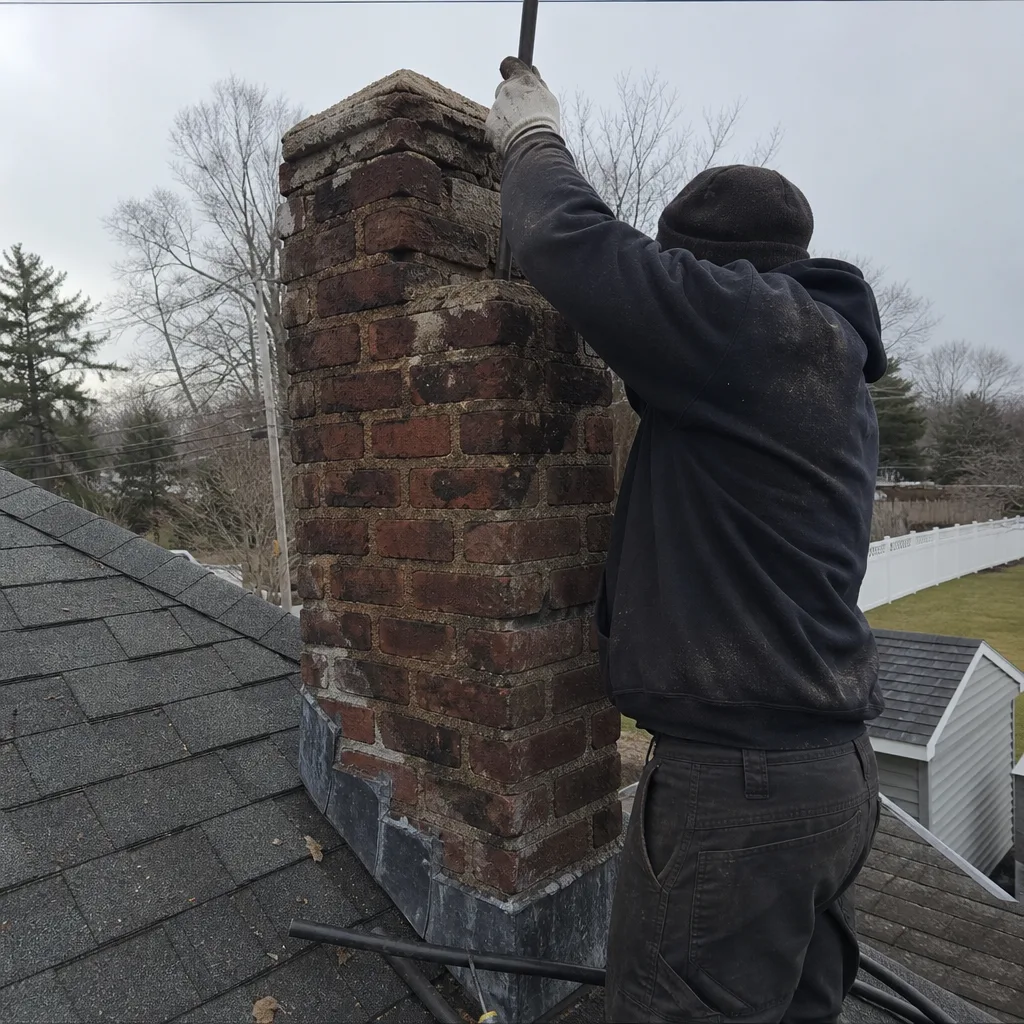 Before
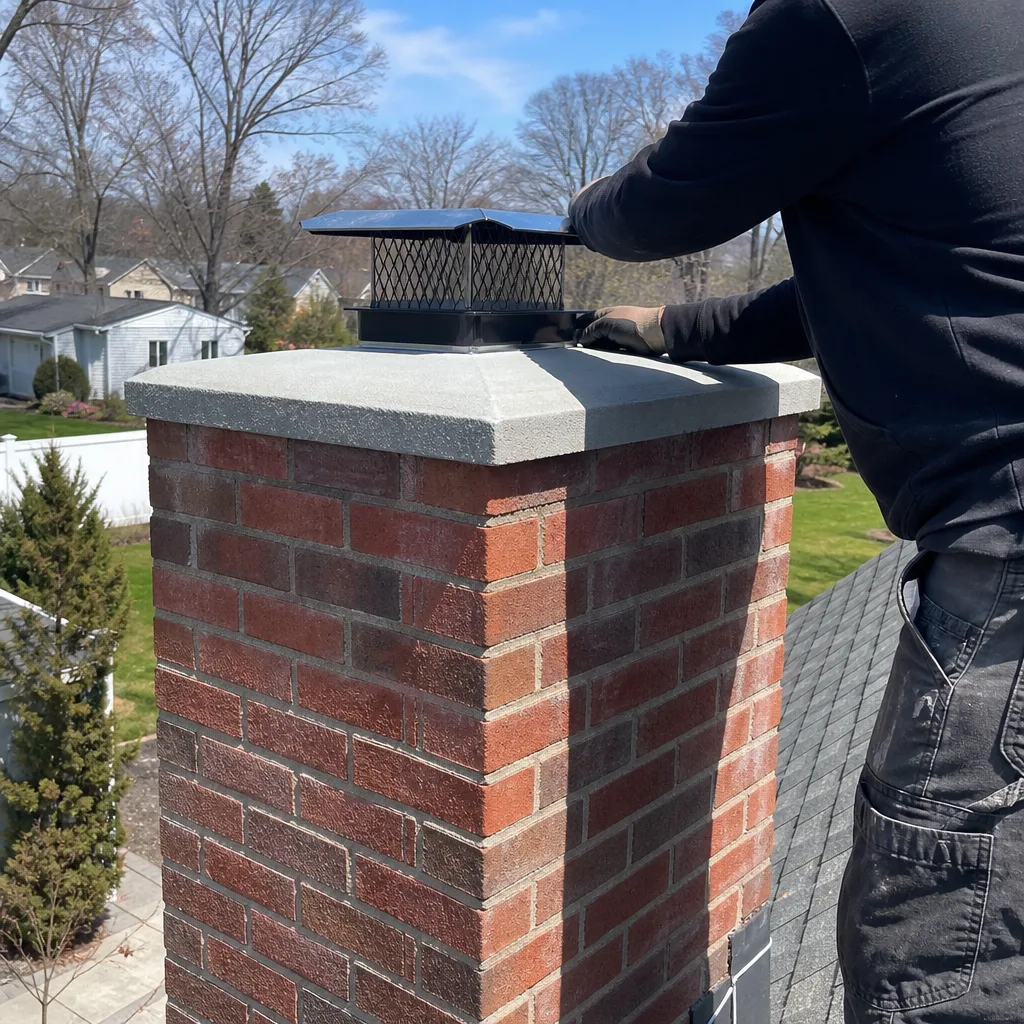 After
After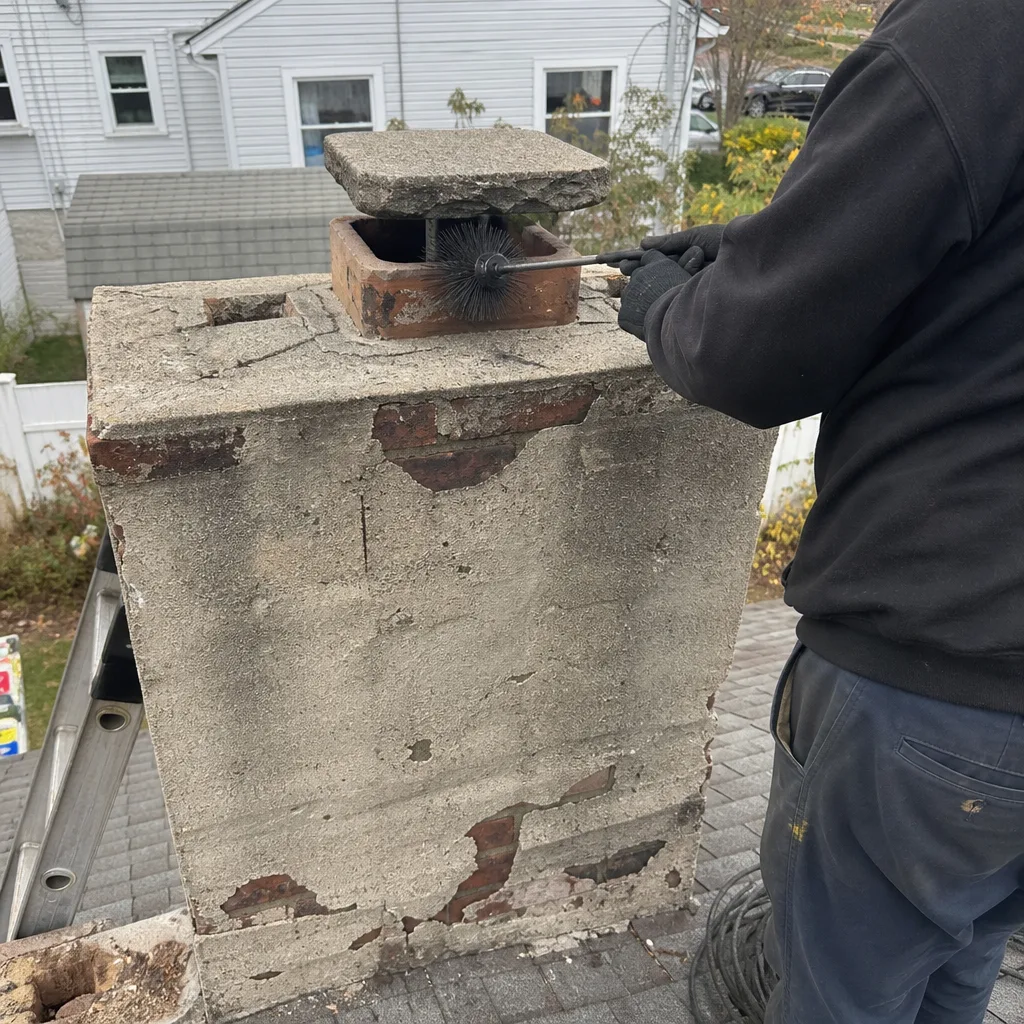 Before
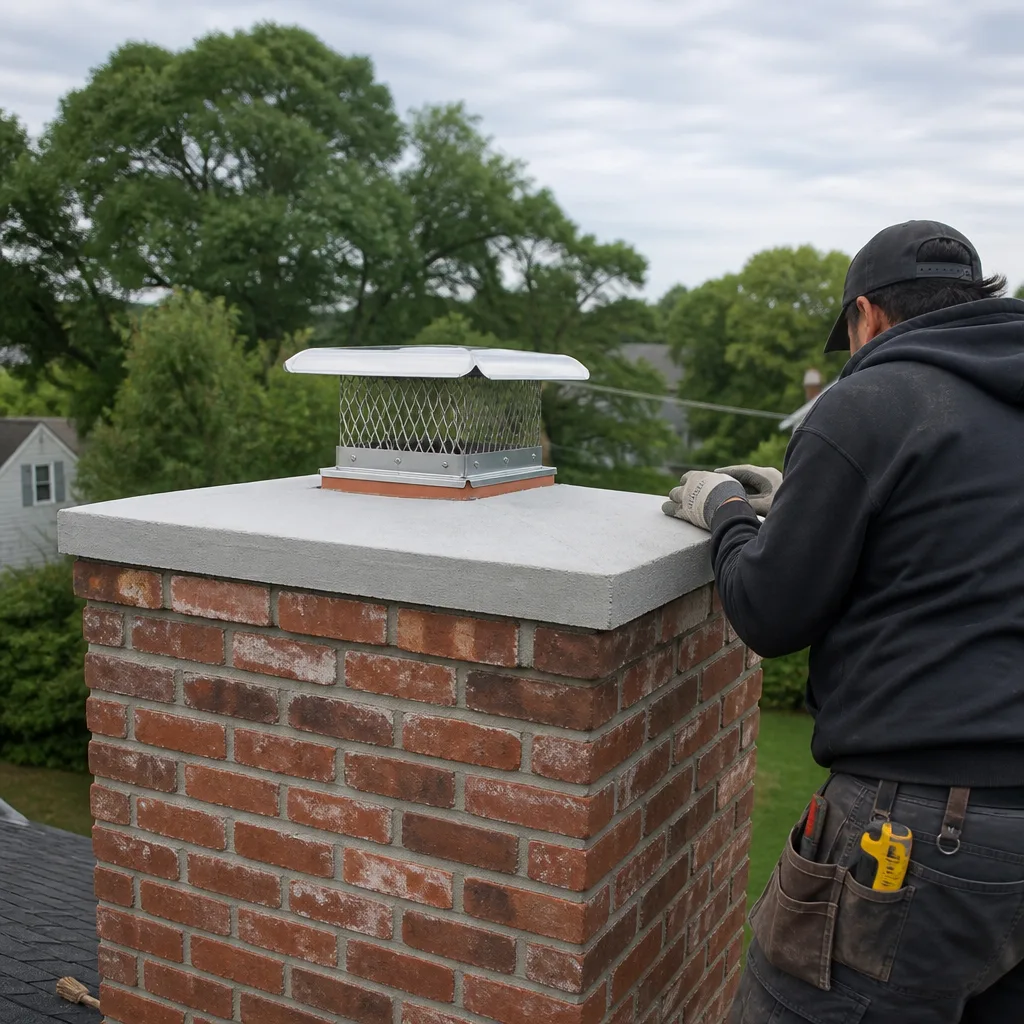 After
After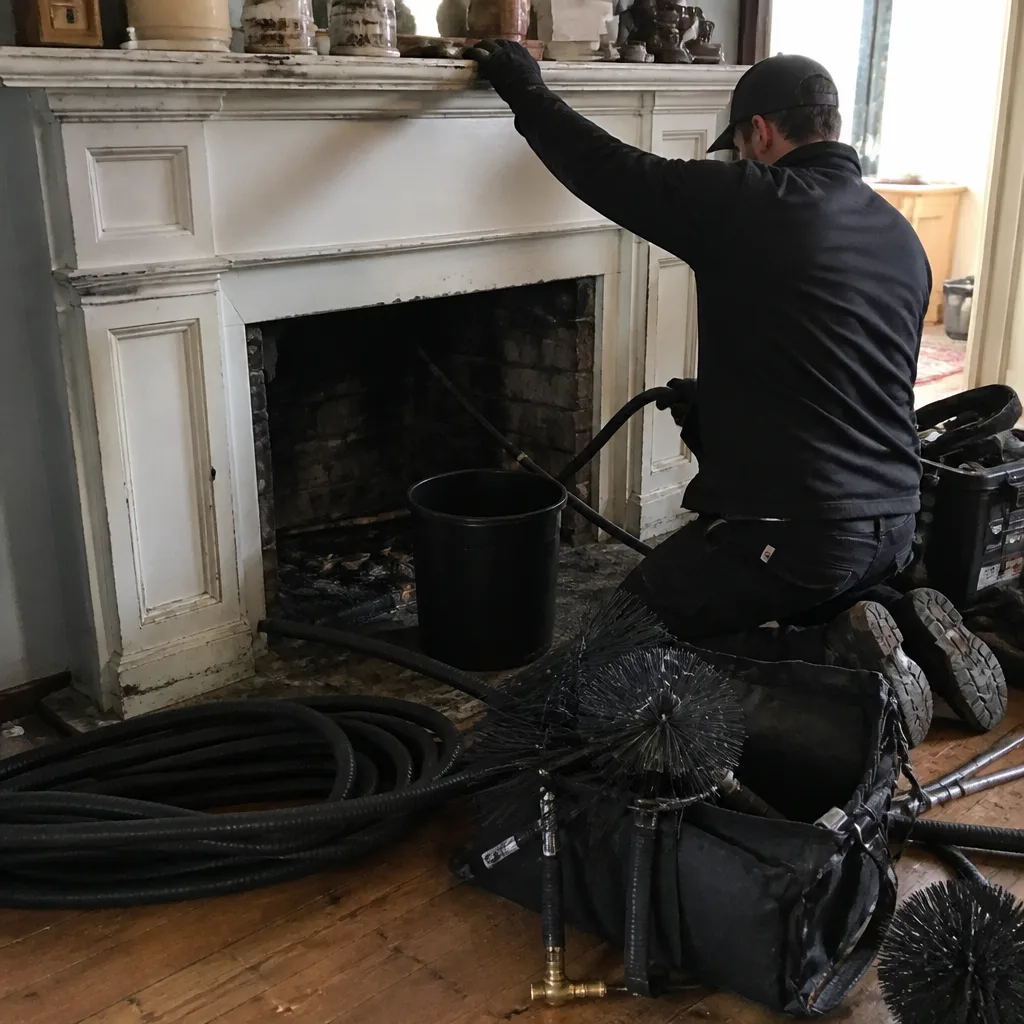 Before
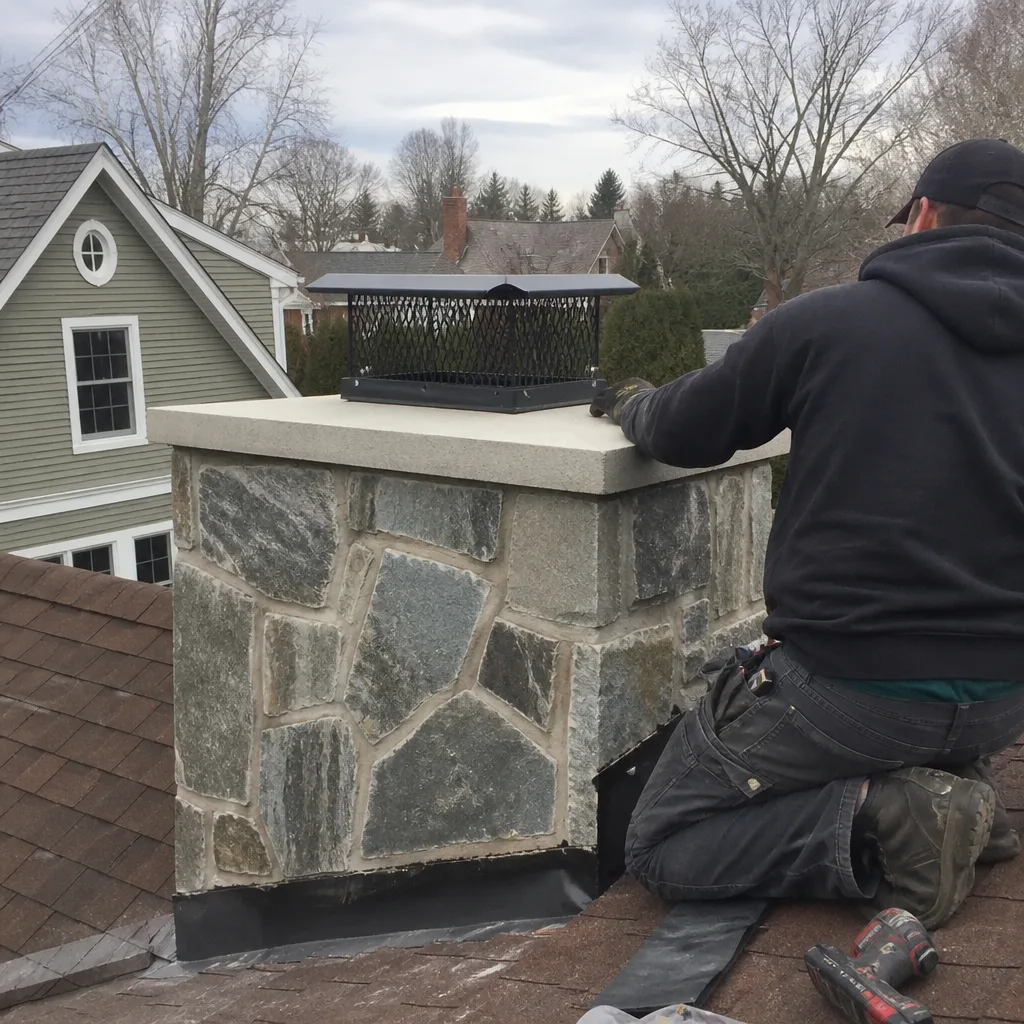 After
AfterHow to Hire a Chimney Cleaning Contractor in Long Island: A Step-by-Step Guide
Most homeowners on Long Island don’t realize that New York State does not require chimney sweeps to hold a contractor’s license before they knock on your door, hand you a business card, and take a deposit. That means the burden of verifying credentials, insurance, and experience falls entirely on you, and the vast majority of people don’t know the first question to ask. This guide walks you through the exact vetting process we’ve developed over 29 years of cleaning chimneys across Nassau and Suffolk counties, from where to check a license number to what a legitimate written estimate should contain. You’ll learn how to spot the seasonal outfits that vanish after the first cold snap and how to find a sweep who will still answer the phone in March.
Quick Answer
To hire a chimney cleaning contractor on Long Island, verify their New York license status in the official state database, confirm CSIA certification and liability insurance in writing, insist on a written estimate that itemizes the scope of work before any tools come off the truck, and ask for local references in your specific town. A legitimate sweep will put findings, scope, and price in writing, show up in a marked vehicle with a uniformed technician, and back the work with a written guarantee. Expect to pay between $189 and $350 for a standard chimney sweep and inspection in Nassau or Suffolk County.
Table of Contents
- Understanding the Risks of an Unregulated Industry
- How to Verify a New York Contractor’s License Number
- What CSIA Certification Means and How to Confirm It
- How the Bait-and-Switch Pricing Pattern Works
- Red Flags to Listen For in the First Phone Call
- What a Written Estimate Must Contain
- The 10 Questions to Ask Before Booking
- Common Mistakes to Avoid
- When to Call a Professional
- Frequently Asked Questions
- The Bottom Line
Understanding the Risks of an Unregulated Industry
Here’s the reality we deal with every week on Long Island: chimney sweeping is one of the least regulated home service trades in New York. A person can print cards at Staples, rent a pickup, buy a brush from a hardware store, and start charging homeowners $200 a visit without ever proving they know how a flue works. The New York State Department of Labor does not license chimney sweeps as a distinct trade, and many local municipalities have no specific chimney inspection requirement. What that means for homeowners in towns like Huntington, Smithtown, and Massapequa is simple: the person you hire is only as accountable as their own reputation and the paperwork they’re willing to put in front of you.
We’ve rebuilt enough botched jobs to know how this plays out. A homeowner hires a low-bid sweep, the crew shows up an hour late with no uniform and no marked vehicle, they spend twenty minutes running a brush up the flue, and then they announce the chimney needs $4,000 in liner work. The homeowner has no way to verify any of it because no camera footage was captured and nothing was written down beyond a generic invoice. The deposit gets paid, the crew disappears, and the phone number stops working. This exact scenario happens with seasonal outfits that target Long Island’s older housing stock, where original clay tile liners from the 1950s and 1960s are reaching the end of their service life and genuinely do need attention. The problem isn’t that the liner work is unnecessary, it’s that the person recommending it never proved it needed to be done.
Your chimney is part of your home’s exhaust system. It carries carbon monoxide and creosote out of the house, and when it fails, the failure is silent and invisible until something goes wrong. A flue that isn’t venting properly can fill a living room with carbon monoxide overnight. A creosote buildup that catches fire can crack the flue liner and spread into the attic framing. These are not hypothetical risks, they’re the reason chimney fires still happen on Long Island every winter, and they’re almost always preventable with a proper cleaning and a real inspection. Wendell Pike has been inside enough chimneys in Nassau and Suffolk to know that the single biggest predictor of a preventable chimney problem is a homeowner who hasn’t had the flue looked at in five years or more.
That’s why this guide exists. We’re not going to tell you to hire us, we’re going to tell you exactly how to vet anyone who wants to work on your chimney, including us. When you know the right questions to ask, the right databases to check, and the right kind of paperwork to demand, the trunk slammers eliminate themselves.
Start with the Top Hat Chimney home page if you want to see how a legitimate local operation presents its credentials, then keep reading for the step-by-step vetting process.
How to Verify a New York Contractor’s License Number
The first step when hiring any chimney contractor on Long Island is checking their license status in the official state database. Here’s the step-by-step process, exactly as we recommend it to every homeowner who calls us:
- Ask for the license number on the first phone call. Write it down. If the person hesitates, says they’ll get back to you, or claims they don’t need one, that’s the end of the conversation. A legitimate sweep knows their number by heart.
- Go to the New York State Department of State’s online license verification system. This is the same database used to check home improvement contractors, plumbers, and electricians across New York. Look up the business name and the license number.
- Confirm the name matches. The licensed entity should match the name on the estimate and the name on the invoice. If the estimate says “ABC Chimney” but the license belongs to a different legal entity, ask why.
- Check the license type. A valid home improvement contractor license covers chimney work when the company is performing repairs or installations. For a basic sweep, the business should still be a registered legal entity in New York, which you can verify through the state’s corporation and business entity database.
- Check for active status and any enforcement actions. The Department of State records disciplinary actions, license suspensions, and revocations. A suspended license tells you everything you need to know.
On Long Island, many towns also require local permits for certain chimney work, particularly liner installations and rebuilds. Nassau County and Suffolk County have different building department processes, and a legitimate contractor will know which town requires what. The town of Oyster Bay, for example, has building permit requirements that differ from the town of Babylon. If the person you’re talking to can’t speak to local permit requirements, they haven’t done enough work in your area.
We publish our license number on every estimate we hand out. That’s not a marketing tactic, it’s how the industry should work. A sweep who treats their license number like a state secret is one you don’t want anywhere near your flue.
What CSIA Certification Means and How to Confirm It
CSIA stands for Chimney Safety Institute of America, the industry’s only nationally recognized certification body for chimney sweeps. A CSIA-certified sweep has passed a written exam covering chimney construction, fire codes, creosote behavior, ventilation principles, and inspection standards, and they must recertify every three years through continuing education. It matters because it means the person has studied the physics and building science behind chimney function, not just how to run a brush up a flue.
But here’s the part most articles skip: CSIA certification is necessary but not sufficient. A certification proves knowledge, it doesn’t prove that the person shows up on time, honors their pricing, or stands behind their work. We’ve known CSIA-certified sweeps who took deposits and disappeared just like uncertified ones. Certification is your floor, not your ceiling.
To verify a CSIA credential, go to the CSIA website’s “Find a Pro” directory and search for the company name or the individual’s name. The directory lists current certification status. It takes sixty seconds. If the sweep claims to be certified but isn’t in the directory, either their certification lapsed or they never had one. Both are disqualifying.
Wendell Pike and the crew at Top Hat Chimney work with trusted industry brands like Gelco and Copperfield for liners and cap systems, which means the materials we install are the same products certified professionals use nationwide. But the certification that matters most on Long Island is the one you verify yourself, not the one printed on a flyer. Anyone can put “Certified” on a business card. Very few homeowners actually check.
After you’ve verified CSIA status, look for local affiliations that indicate roots in the community. Membership in the Long Island chapter of a trade organization, a physical address in a Nassau or Suffolk town rather than a P.O. box, and a business phone number that’s been active for more than a few years all signal a stable, accountable operation. Seasonal outfits that migrate to Long Island for the fall rush rarely have any of those.
How the Bait-and-Switch Pricing Pattern Works
The bait-and-switch is the most common complaint we hear about national chimney chains operating on Long Island, and once you understand the pattern, it’s easy to spot before you book. Here’s how it works:
Step 1: The low-ball phone quote. You call a national chain, and the person on the phone quotes $79 for a chimney sweep. No questions about your flue size, your liner type, your roof pitch, or your last cleaning date. Just $79. That number gets you on the schedule.
Step 2: The upsell at the door. A technician arrives, looks at your chimney, and suddenly the $79 sweep becomes $249 because of “additional flue length.” Then he finds a crack in the crown and recommends a $1,200 repair. Then he notices the damper is “worn” and recommends replacement. The ticket balloons to $2,500 before a single tool comes off the truck.
Step 3: The pressure close. The technician tells you the problem is urgent, that it’s unsafe to use the fireplace this winter, and that he can knock 10% off if you sign today. The homeowner, worried about carbon monoxide and tired of the back-and-forth, signs. The work might be done correctly or it might not. By spring, the national chain has rotated its technicians to another region and the homeowner can’t reach anyone who remembers their house.
The questions that expose this pattern before you book:
- “What’s included in the sweep price, exactly?” A legitimate sweep will itemize: the brush and vacuum work, the inspection, the camera report if applicable, and any minor adjustments. A bait-and-switcher will keep it vague.
- “Will I get a written estimate before work begins?” If the answer is anything other than yes, end the call. On Long Island, a verbal commitment on the phone followed by surprise charges at the door is how these outfits operate.
- “Can you tell me the name of the technician who will be at my house?” If the person on the phone can’t name a specific human being who will be showing up, you’re dealing with a call center, not a local contractor. That’s a red flag for accountability.
- “What’s your policy if the work doesn’t pass inspection after?” A legitimate sweep has an answer. A bait-and-switcher changes the subject.
At Top Hat Chimney, the price you get on the phone is the number on your invoice. We provide upfront pricing before a single tool comes off the truck because that’s how we’ve operated since 1999, and Wendell Pike has spent 29 years running into the same homeowners at the hardware store on Saturday. A bait-and-switch only works if you don’t have to face the person again.
Red Flags to Listen For in the First Phone Call
The first phone call is where most homeowners get their strongest signal about whether they’re dealing with a professional or a trunk slammer. Here’s what to listen for when you call a chimney cleaning company on Long Island:
- Vague pricing. “It depends” with no follow-up questions about your chimney is a bad sign. A legitimate sweep will ask about your home’s construction, your fireplace type, and your last cleaning date to give you a real number.
- No mention of a written estimate. If the person doesn’t volunteer that you’ll receive a written estimate before work begins, ask directly. Any hesitation ends the conversation.
- Pressure to book same-day. Same-day availability in the middle of October on Long Island is common because everyone schedules chimney work in the fall, but a sweep who pressures you to commit before you’ve had time to verify their credentials is hiding something. Legitimate operations are busy enough that they don’t need to pressure anyone.
- Inability to name the actual technician. “One of our crew will be there” tells you nothing. A local owner-operated business will tell you Wendell himself or a named crew member will be at your door.
- No physical address. Ask where their office is. If they can’t give you a street address in Nassau or Suffolk County, or if the address turns out to be a UPS store, that’s a seasonal operator.
- Refusal to discuss insurance. A legitimate sweep carries liability insurance and will tell you the carrier and limits if you ask. A trunk slammer will dodge the question.
One more note on that last point: liability insurance matters because chimney work happens on your roof, and a fall off a second-story roof on Long Island can generate six-figure medical bills and lawsuits. If the person on your roof isn’t insured, that liability can land on your homeowner’s policy. It’s not worth the $50 you might save on a cheaper quote.
What a Written Estimate Must Contain
A written estimate is the single most important document in the entire chimney hiring process. Here’s what it should contain, line by line:
- Company name, address, phone number, and license number. Not just a logo. The legal entity name, the physical street address, and the license number as registered with New York State.
- The technician’s name. The person who will actually be doing the work, not “one of our technicians.”
- Itemized scope of work. Every single task, broken out line by line. “Level 1 inspection, brush sweep, camera inspection of flue liner.” Not “chimney cleaning” as a catch-all.
- Materials specified by brand. If a liner is being recommended, the estimate should say Gelco or Copperfield or whatever product is actually being installed, with the exact size and model where applicable. Generic “new liner” tells you nothing.
- Total price, with taxes and any fees. The bottom-line number, not a range. If the sweep can’t give you an exact number before starting, don’t hire them.
- Warranty or guarantee terms. What happens if the work isn’t done right? What’s covered, for how long, and who to call? A written 90-Day Done Right Promise like the one we stamp on every job is the kind of commitment legitimate businesses make.
- Payment terms and schedule. When is payment due, what forms are accepted, and is a deposit required. A deposit over 50% on Long Island is a red flag.
- Estimated start and completion dates. For repairs and installations, you want dates in writing. For a standard sweep, you want an arrival window and a commitment to call if it slips.
Any contractor who won’t put findings and scope in writing before starting work is one to avoid. That’s the rule. It doesn’t matter how nice they are, how professional their truck looks, or how many references they give you. The written estimate is the boundary between a legitimate business and a person with a brush and a pickup truck. We see estimates from other companies constantly, because we offer a free second opinion on any competing written estimate, and the ones that come from the seasonal outfits are almost comically vague. “Chimney repair: $1,850.” Repair what? With what materials? For how long?
If you have an existing estimate from another Long Island chimney company that you’d like a second set of eyes on, we’ll review it at no charge. That’s part of how we’ve built trust in these communities since 1999.
The 10 Questions to Ask Before Booking
Here’s the full list of questions to ask any chimney cleaning contractor on Long Island before you book. Write them down and work through them on the phone:
- What’s your New York contractor license number, and can I verify it? The answer should be immediate and confident.
- Are you CSIA certified, and can I find you in the CSIA directory? Check the directory yourself, don’t take their word.
- Do you carry liability insurance, and who’s your carrier? Ask for the carrier name and verify with the insurance company directly if the job involves roof work.
- What’s the total price, in writing, before you start? If there’s any hemming and hawing, end the call.
- Who is the actual technician who will be at my house? A named person, not a crew.
- Will you provide camera inspection footage of the flue? A legitimate sweep will offer this. In our opinion, no recommendation for liner work should ever be made without camera evidence the homeowner can see for themselves.
- What’s your warranty or guarantee if the work isn’t done right? Get it in writing.
- How long have you been operating on Long Island? The right answer is years, not months. A company that opened last August and disappears in April is the exact risk you’re trying to avoid.
- Can you give me three local references in my town? Not references from another state. People in Huntington, Smithtown, Babylon, or your specific Long Island community.
- What’s your policy if I’m not satisfied with the work? The answer should be immediate and specific.
We answer every one of these questions on the first call, because the person answering the phone at Top Hat Chimney is a live person, around the clock, and it may well be Wendell Pike himself. That’s the difference between a local owner-operated company and a national outfit with a call center.
Common Mistakes to Avoid
- Hiring based on price alone. A $79 sweep on Long Island is a $79 sweep plus $1,500 in “unexpected” repairs once the technician is on your roof. The cheapest quote is almost never the cheapest final bill.
- Not verifying the license. Most homeowners never check the state database, which means a suspended or nonexistent license goes unnoticed until something goes wrong.
- Accepting a verbal estimate. Verbal quotes aren’t worth the breath they’re spoken with. If it’s not in writing before work begins, it doesn’t exist.
- Paying a large deposit upfront. A deposit of more than 50% upfront for chimney work on Long Island is a warning sign. Legitimate contractors carry the cost of materials and labor until work is complete.
- Skipping the camera inspection. If the sweep recommends liner work but can’t show you camera footage that proves it, don’t approve the work. You have a right to see the evidence.
- Ignoring red flags in the first call. Vague pricing, no written estimate promise, pressure to book immediately, and a nameless “technician” are four separate reasons to hang up. Together, they’re a complete picture of a trunk slammer.
- Falling for seasonal scarcity tactics. “We’re booked solid, but we can squeeze you in if you sign today” is a pressure tactic. Legitimate Long Island sweeps are busy in October, but they don’t run high-pressure close scripts.
When to Call a Professional
Call a professional chimney sweep if you haven’t had your chimney inspected in more than a year, if you’ve noticed a strong odor from the fireplace in damp weather, if you see dark staining on the chimney exterior, if your fire is producing excessive smoke, or if you’ve just purchased a home with an existing fireplace and no maintenance records. These are signs that creosote is building up or that the flue liner is deteriorating, and both are problems that get more expensive the longer you wait. If you’ve recently bought a home in Suffolk County with an original clay tile liner, it’s worth getting a camera inspection even if the fireplace hasn’t been used in years, because chimney problems develop in the off-season too. Once a year, burn or no burn.
If you’re seeing any of these signs or you’re simply overdue for a cleaning, Chimney Cleaning & Sweep in Long Island is what we do every day. Top Hat Chimney offers free estimates on Long Island, so call (516) 968-5380 and we’ll get you on the schedule.
Frequently Asked Questions
A standard chimney sweep and inspection on Long Island typically costs between $189 and $350, depending on flue size, roof pitch, and whether you have a wood-burning fireplace or an insert. That price should include the brush sweep, vacuum work, a Level 1 inspection, and a written report. Some companies charge extra for camera inspections, so ask whether that’s included before you book. Call (516) 968-5380 for an exact quote, estimates are free.
You should never accept a liner recommendation without seeing camera inspection footage that demonstrates the damage. In our experience, many Long Island homes with original clay tile liners genuinely do need liner work by the time they reach 40 or 50 years old, but the only way to know is to see the cracks, gaps, or missing tile sections yourself. If a sweep recommends a liner but won’t show you camera evidence, get a second opinion from a licensed local professional before spending thousands.
Once a year, burn or no burn. The National Fire Protection Association recommends annual inspection, and that recommendation exists because chimney problems, including animal nests and water damage, happen in the off-season just as often as during burning season. Families on Long Island who burn wood regularly through the winter should schedule their sweep in early fall before the first fire.
Creosote builds up inside the flue, and creosote is combustible. A hot fire can ignite it, causing a chimney fire that reaches temperatures high enough to crack the flue liner and spread fire into the attic. Even short of a chimney fire, a dirty flue reduces draft efficiency, causing smoke to backdraft into your living room and potentially exposing your family to carbon monoxide. In Long Island’s older homes, a neglected chimney is one of the most preventable fire and safety hazards on the property. Call (516) 968-5380 to get it done right.
A Level 1 inspection is the standard visual and hands-on assessment of the readily accessible portions of the chimney, including the flue interior from the roof or the firebox. It’s typically bundled with a standard sweep and includes checking the flue liner condition, the damper function, the chimney cap, and the exterior masonry. If you’ve made no changes to your system and had it swept regularly, a Level 1 is usually sufficient. If you’re buying a home or switching fuel types, you may need a Level 2 inspection, which includes camera work and attic/basement access points.
Yes, and you probably should. Most homeowners call in September and October, which means the good local sweeps book out weeks in advance during fall. But chimney work happens year-round, and scheduling your sweep in spring or summer often gets you more flexible appointment windows and the same quality of work. Wendell Pike has been cleaning chimneys on Long Island all twelve months of the year since 1999. Chimneys break in the off-season too, and the maintenance schedule doesn’t care what month the calendar says. For Chimney Repair in Long Island or a full Fireplace Services in Long Island visit, call anytime.
The Bottom Line
Hiring a chimney cleaning contractor on Long Island comes down to verification and paperwork. Verify the New York license, verify the CSIA certification, verify the insurance, and insist on a written estimate that itemizes the work and names real materials before anything starts. If the first phone call includes vague pricing, pressure, or an unnamed “technician,” you’re not talking to a local professional, you’re talking to a seasonal operator. Long Island has too many good, established chimney companies to settle for one that won’t stand behind its work in writing. Take your time, check the databases, ask the questions, and get the camera footage. A chimney is part of your home’s safety system, and a properly maintained flue will serve you for decades.
Written by Wendell Pike, Owner at Top Hat Chimney, serving Long Island since 1999.