
Last updated September 10, 2026
Level 1 sweep and inspection to the NFPA 211 annual standard - flue, crown, cap, and flashing checked and photographed
Chimney sweep logs do not sweep chimneys. They loosen some creosote - which then falls where a brush and vacuum still have to collect it.
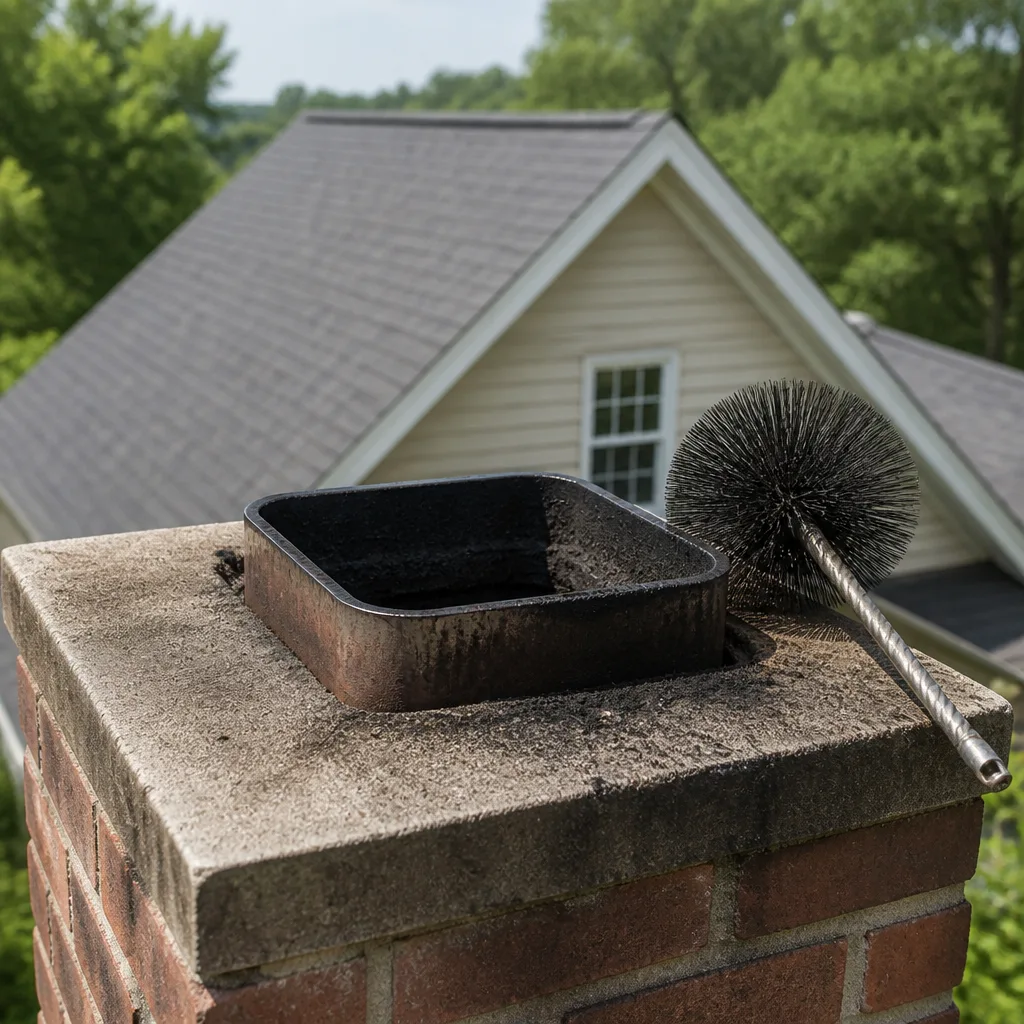
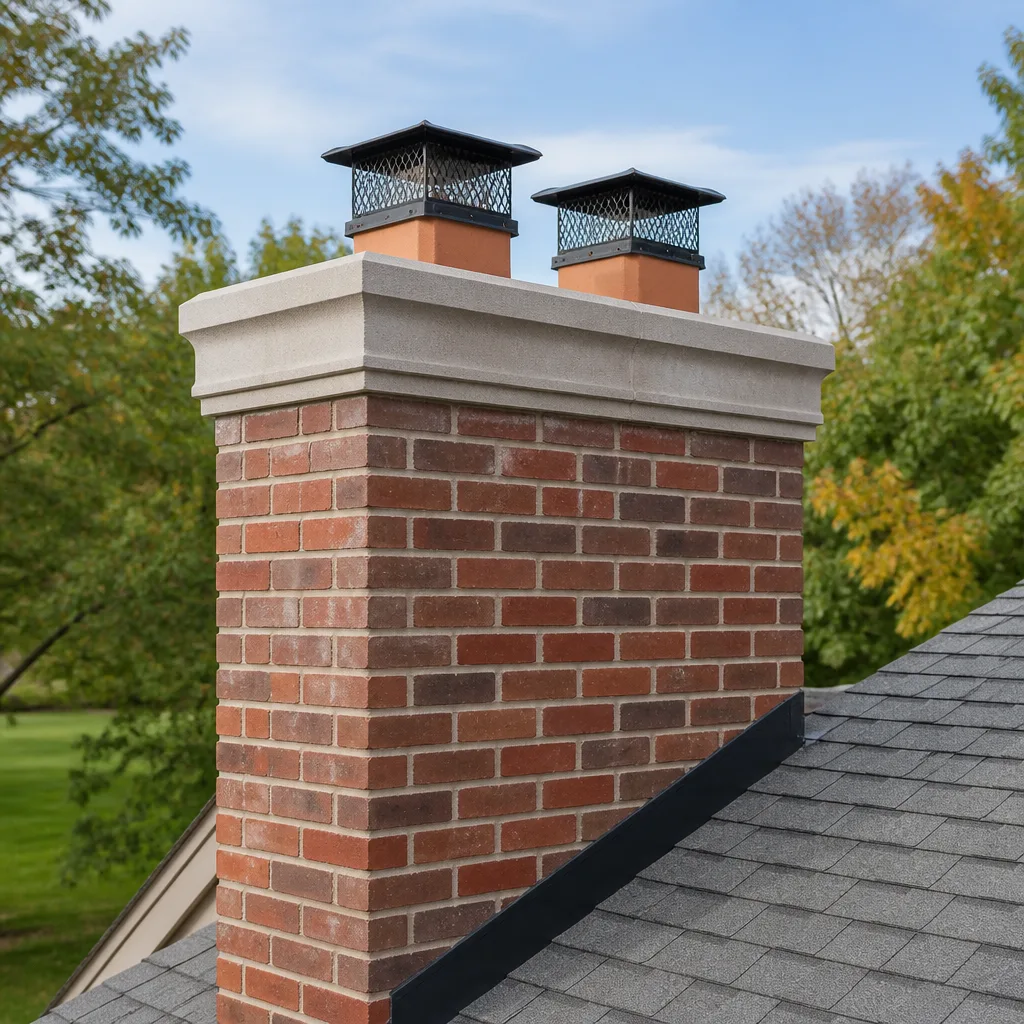
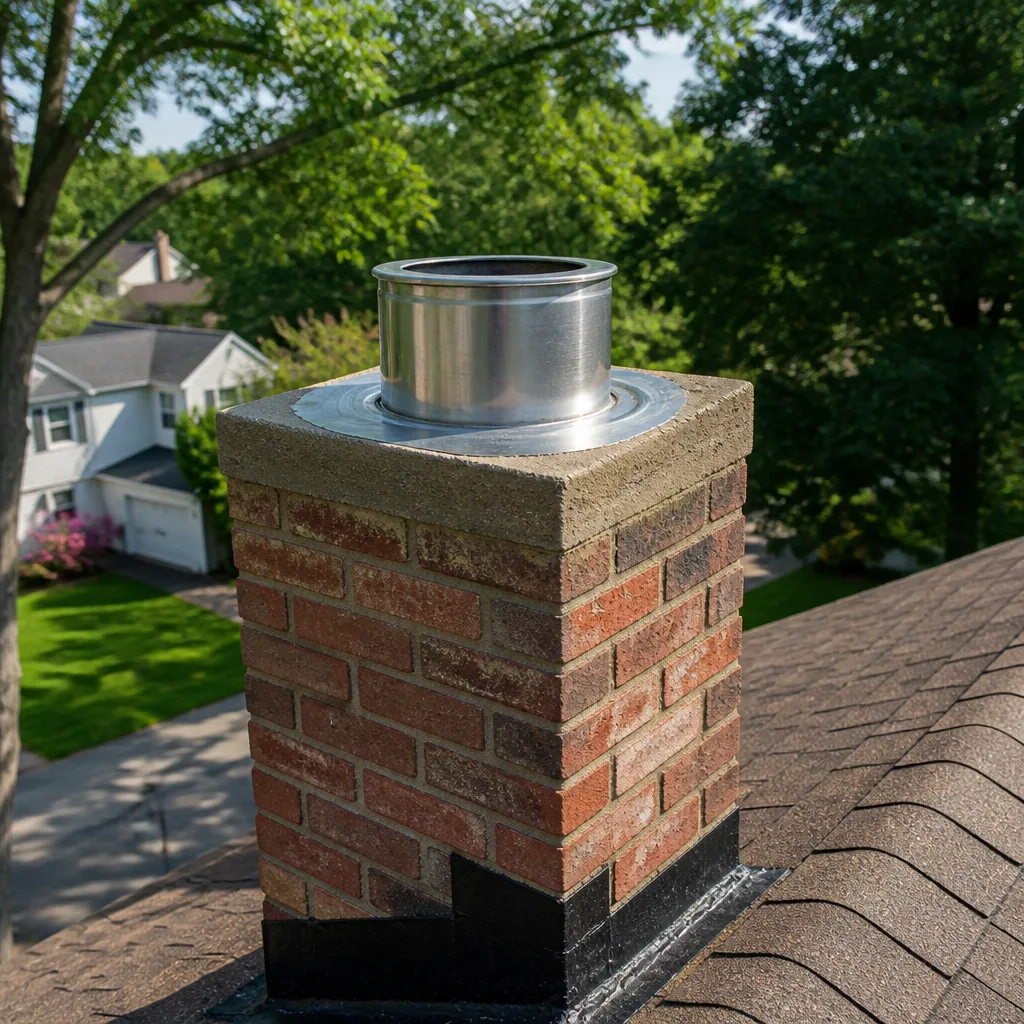
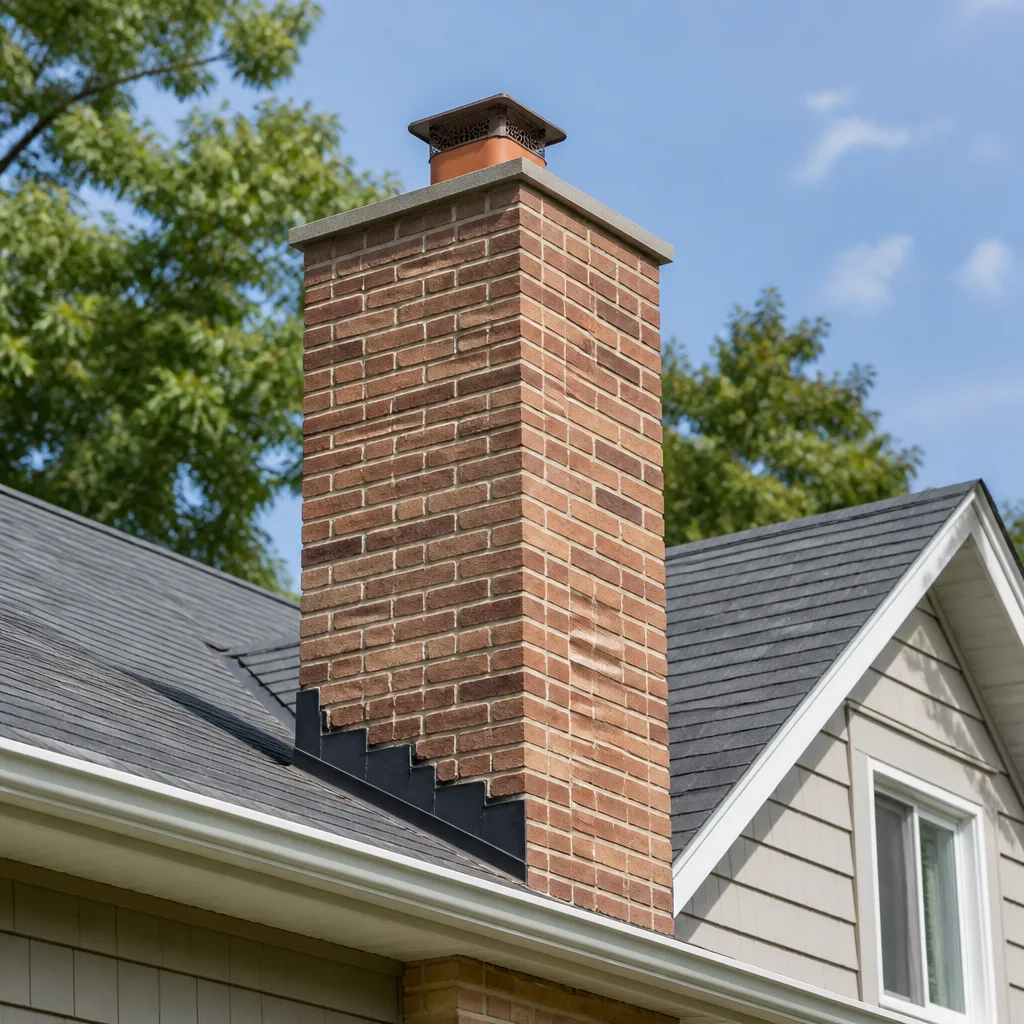
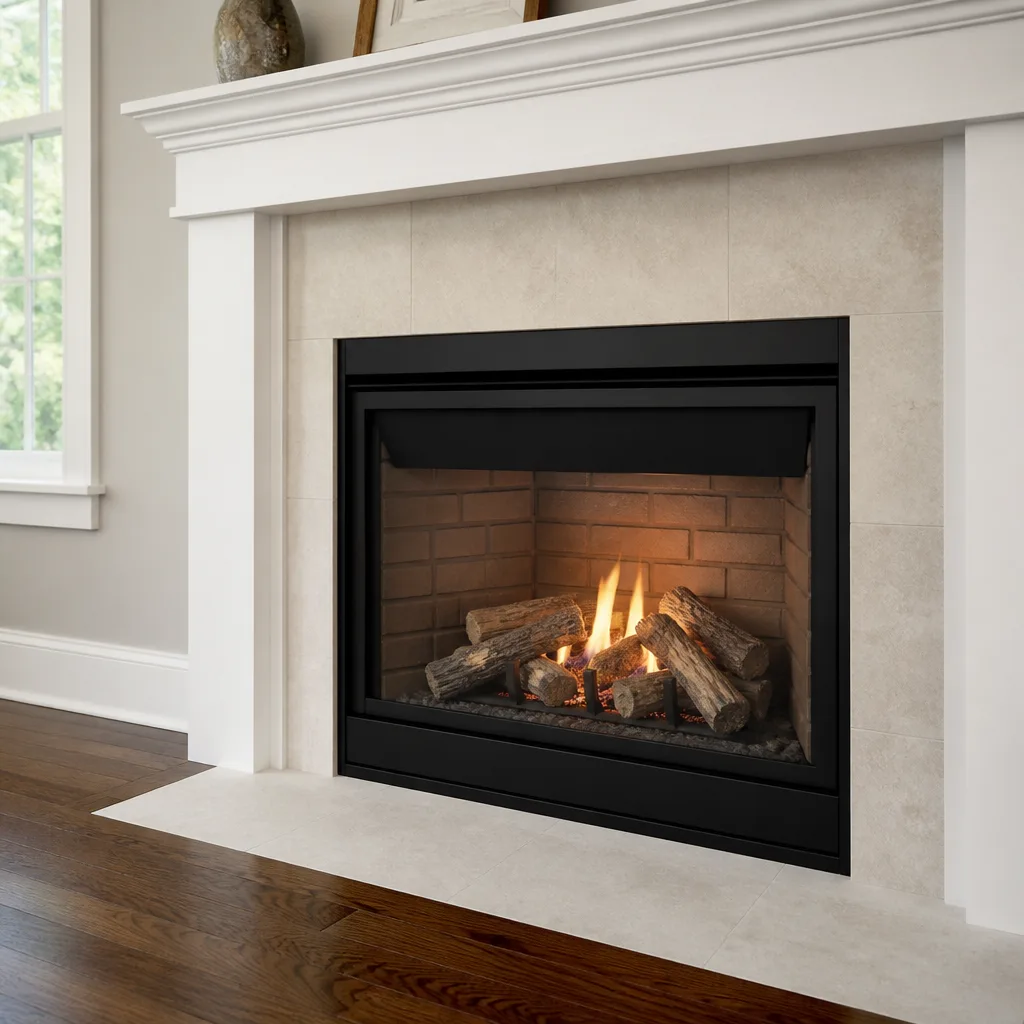
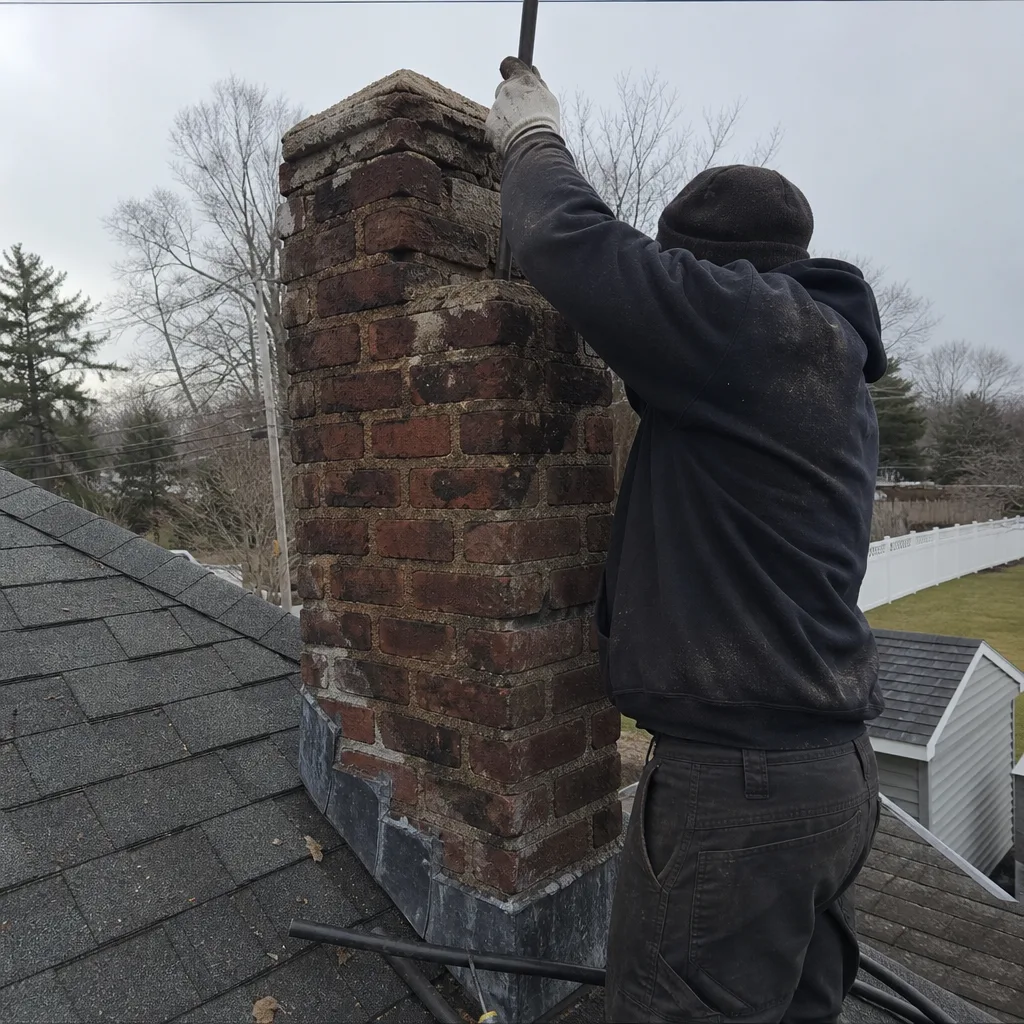 Before
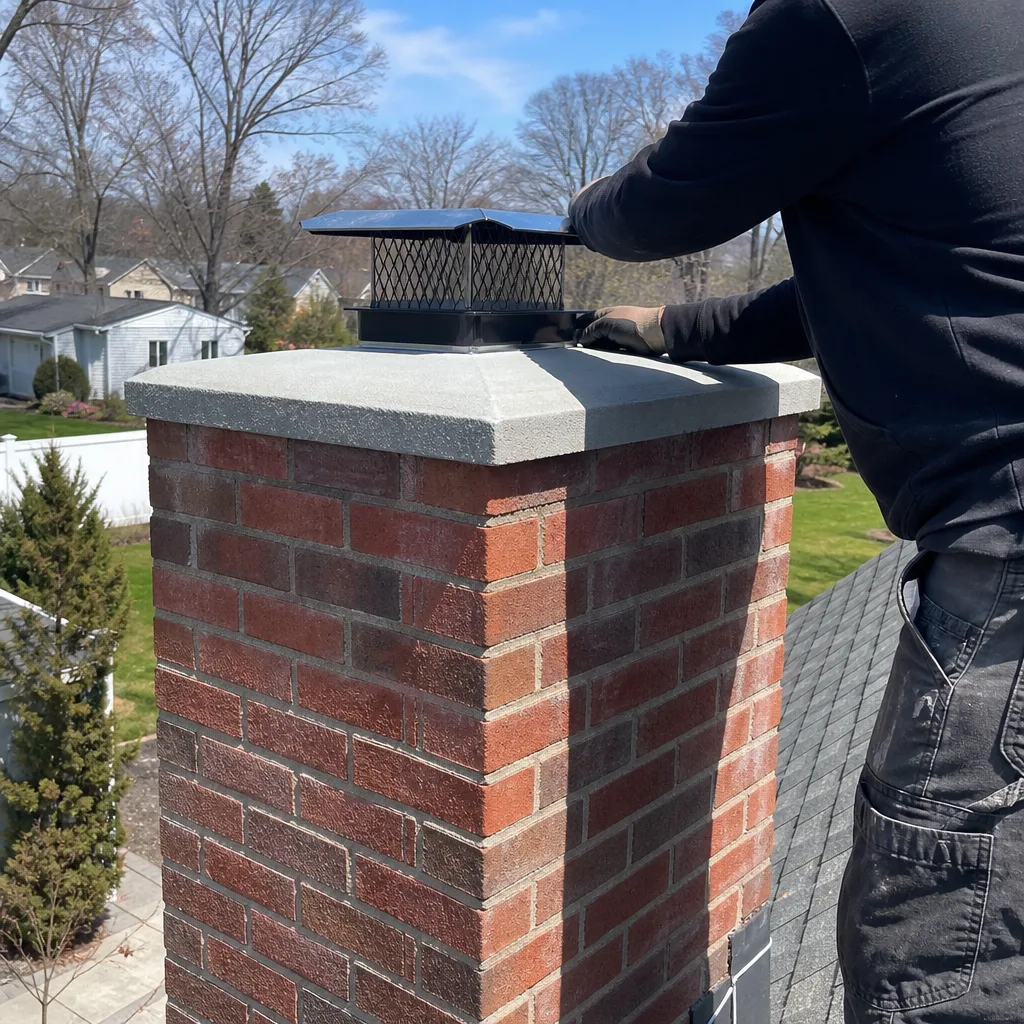 After
After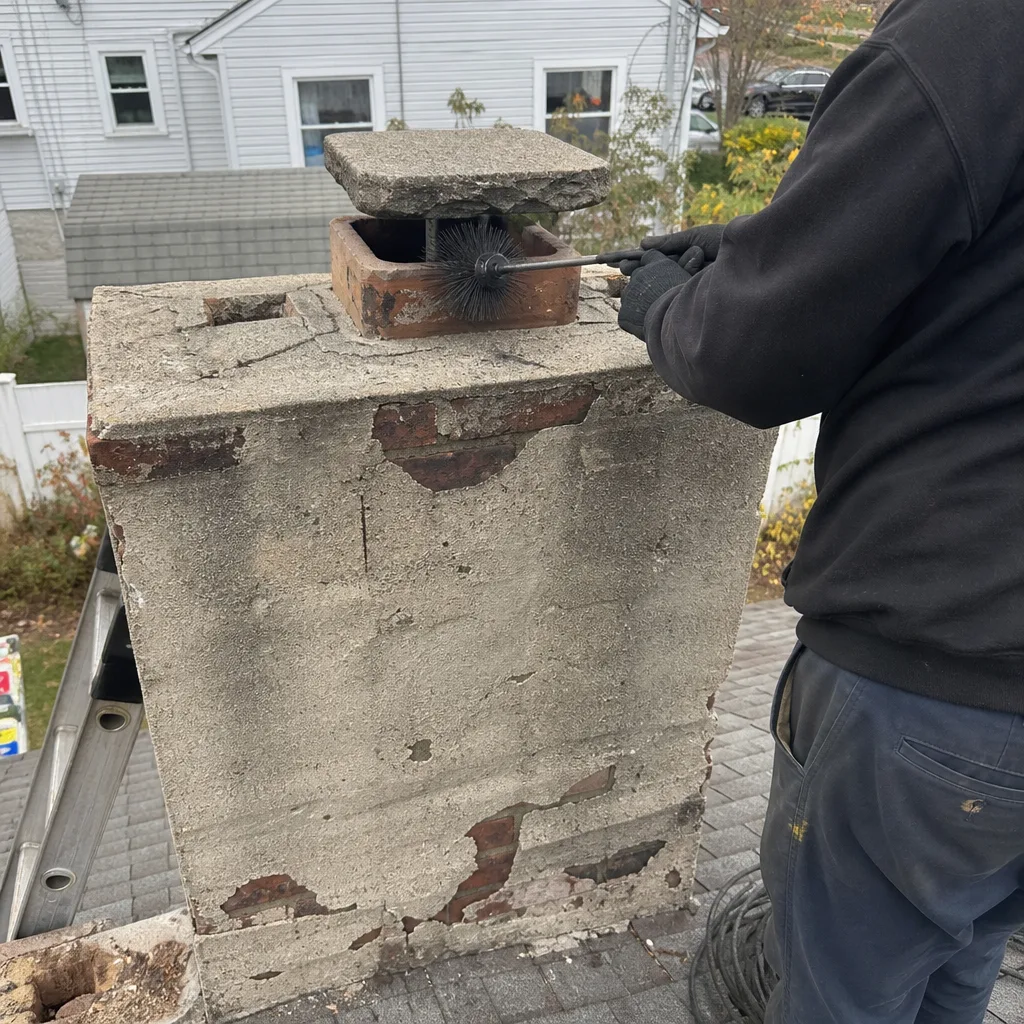 Before
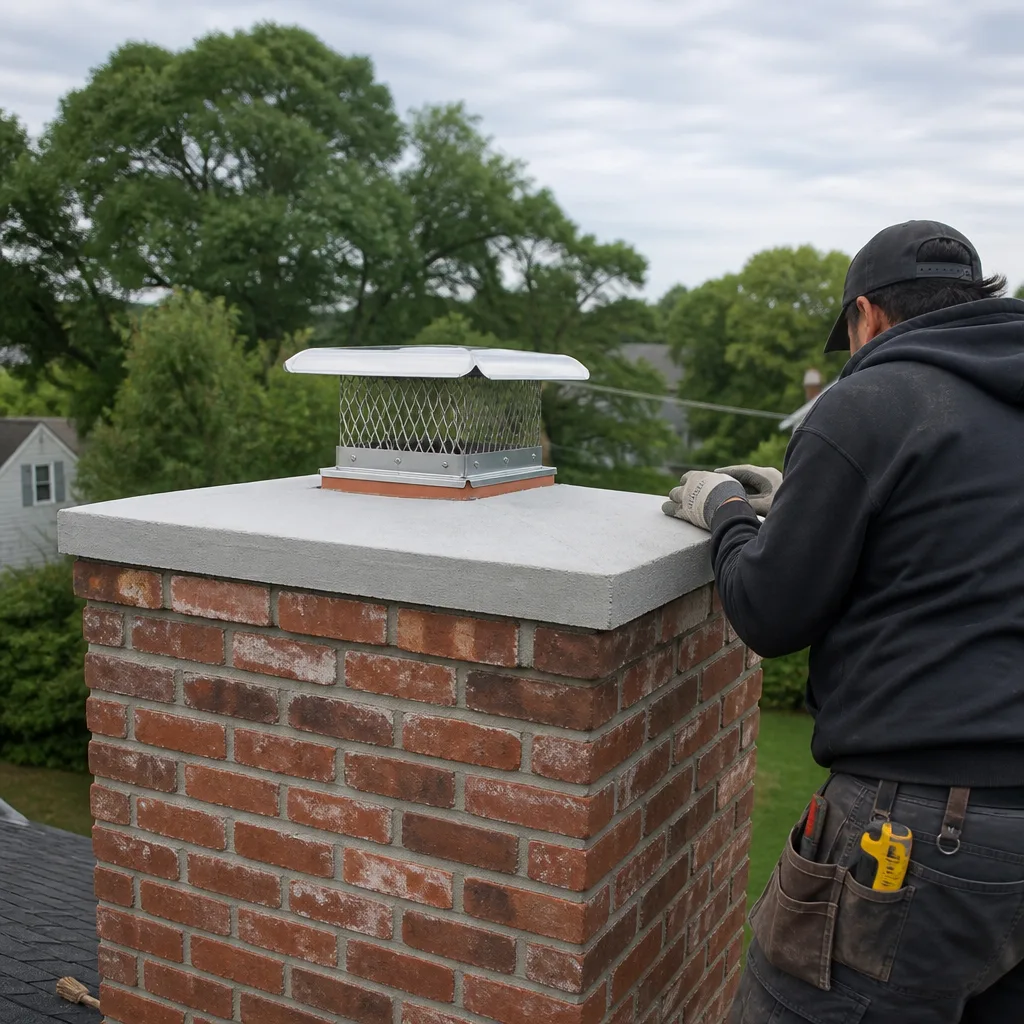 After
After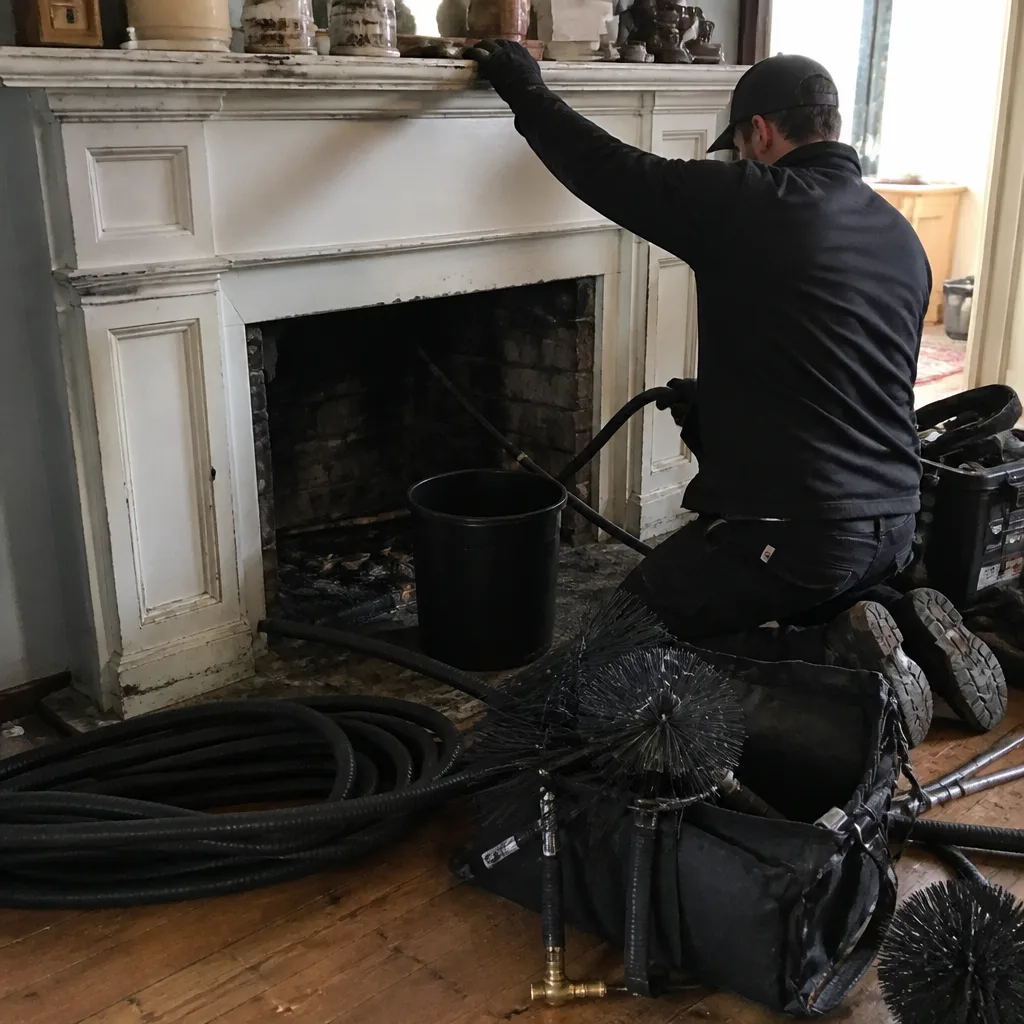 Before
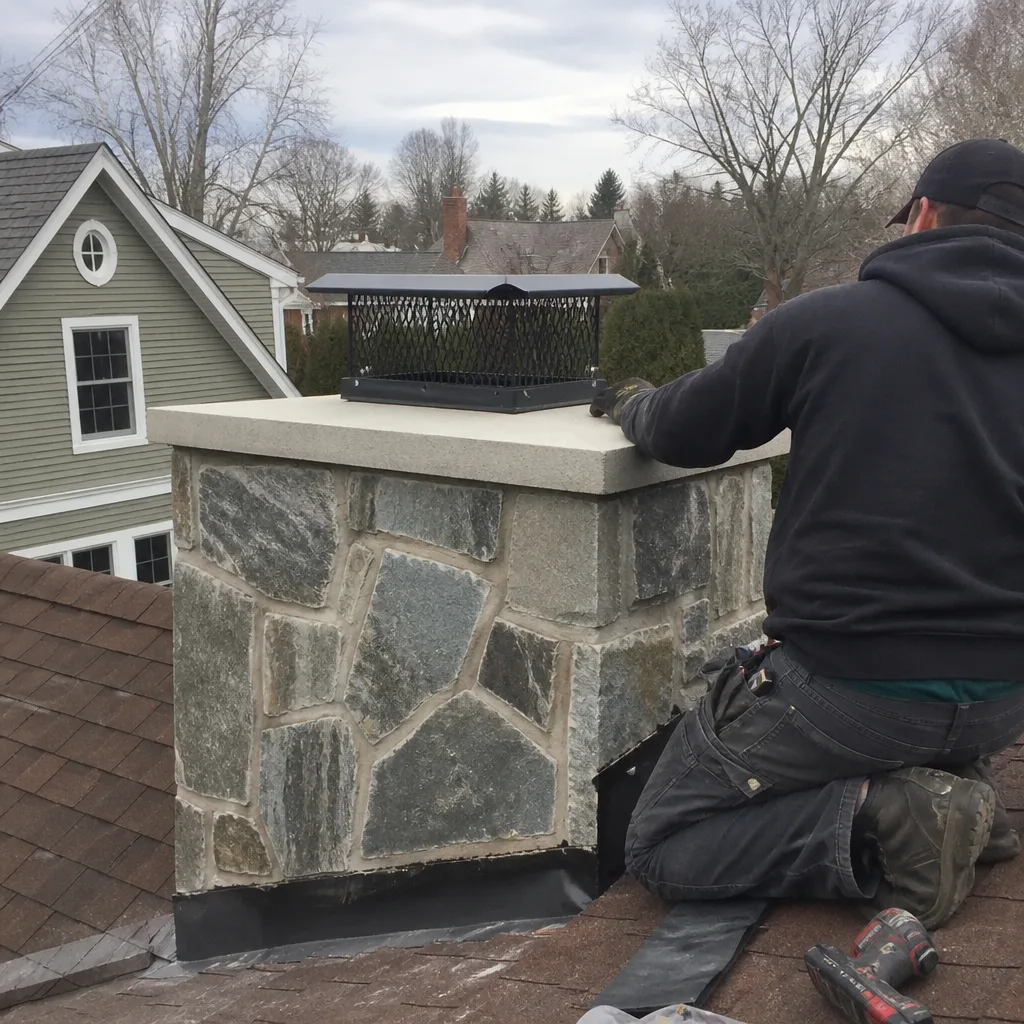 After
AfterThe Complete Guide to Chimney Cleaning in Long Island
Long Island’s coastal humidity doesn’t just rust your gutters. It accelerates mortar erosion and liner deterioration in ways that make the national “clean once a year” advice too vague to be useful for half the homes out here. A fireplace in Massapequa does not age the same way as one in Huntington, and a chimney burning seasoned oak in Sayville faces an entirely different set of problems than one converted from an oil burner in Port Washington. This guide tells you what actually happens inside your specific chimney, why it happens faster on Long Island than 60 miles inland, and how to know whether a cleaning was done properly or just performed.
Quick Answer
Chimney cleaning on Long Island typically costs between $180 and $350 for a standard sweep of a regularly maintained fireplace. But the real answer is that Long Island homes need cleaning on a different schedule than inland New York homes because the salt air, humidity swings, and conversion history of our housing stock change how quickly creosote builds up and how fast liners deteriorate. You need to know your fuel source, your liner material, and your home’s exposure to the water.
Table of Contents
- Why Long Island Chimneys Age Faster Than Inland Chimneys
- What a Chimney Cleaning Actually Reveals
- Level 1, Level 2, Level 3: What Each Inspection Tells You
- How Your Fuel Source Changes Everything
- Liner Material and Why It Matters More Than the Calendar
- What a Legitimate Sweep Does, Step by Step
- The One Question to Ask Before a Sweep Leaves Your House
- Common Mistakes to Avoid
- When to Call a Professional
- Frequently Asked Questions
- The Bottom Line
Why Long Island Chimneys Age Faster Than Inland Chimneys
Put two identical chimneys side by side, one in Levittown and one in Albany, and after fifteen years the Levittown chimney will show measurably more deterioration. The reason is salt. Long Island sits in a marine environment where airborne salt from both Long Island Sound and the Atlantic Ocean settles on every exposed surface, including your chimney crown, your mortar joints, and the above-roofline masonry. Salt is hygroscopic, which means it pulls moisture out of the air and holds it against the brick and mortar. That moisture expands and contracts through our freeze-thaw cycles from November to March.
We see it constantly. Homes in Freeport, Merrick, and anywhere within two or three miles of the water show accelerated spalling on chimney crowns, crumbling mortar joints at the top of the chimney, and faster rust on damper assemblies. Homes further inland in places like Garden City or Smithtown deal with less salt but more seasonal rainfall, which carries its own set of staining and saturation issues. None of this shows up in a national chimney guide because national guides don’t know what the South Shore breeze does to a clay flue liner.
The practical takeaway is this: on Long Island, the condition of your chimney’s exterior masonry matters as much as the creosote inside the flue. A cleaning that ignores the crown, the wash, and the top courses of brick is only doing half the job. Salt air does not build up creosote faster, but it degrades the structure that a dirty chimney sits inside, and that structure is what keeps water out of your living room ceiling.
What a Chimney Cleaning Actually Reveals
A chimney cleaning and sweeping in Long Island is not just about removing black stuff from a pipe. The brush work is the easy part. What matters is what you learn once the flue is clean enough to see. Creosote hides cracks. It coats smoke chambers and damper housings and the inside of flue liners, and you cannot evaluate what you cannot see. A proper cleaning removes enough of that coating to allow a real inspection of the surfaces behind it.
Here is what we are looking for when we clean:
- Creosote type and thickness. First-degree creosote is a brush job. Third-degree is a glaze. The difference determines whether you schedule a routine sweep or a more involved removal.
- Liner cracks or gaps. Clay tile liners crack from chimney fires, water damage, and age. A hairline crack behind a layer of creosote is invisible until the creosote comes off.
- Smoke chamber condition. The area above the damper where the flue widens. On Long Island, this is where we most often find parging falling apart in older hearths.
- Water entry evidence. Rusted dampers, efflorescence on the firebox walls, staining in the throat. Salt air accelerates all of it.
- Animal activity. Raccoons, squirrels, birds. They love a warm chimney in a Long Island winter and their nests block draft and burn.
Your flue doesn’t care how the fire looks. It cares how it breathes. A chimney can produce a beautiful fire and still be moving smoke into your attic through a cracked liner. The only way to know is to get the surfaces clean and look at them.
Level 1, Level 2, Level 3: What Each Inspection Tells You
Chimney inspections come in three levels defined by the National Fire Protection Association. Most sweep companies quote them, but few homeowners understand what they are paying for. Here is the plain version.
Level 1: A visual check of the readily accessible parts of the chimney, inside and out, plus the flue interior with a flashlight. This is what gets done during a standard cleaning. It tells you if the flue is blocked, if the liner is visibly damaged, and if the exterior shows obvious problems. A Level 1 is appropriate when nothing has changed about your chimney since the last inspection.
Level 2: Everything in Level 1 plus a camera scan of the entire flue, from the firebox to the top of the chimney. A camera catches hairline cracks, hidden gaps at mortar joints, and damage behind accumulated debris that a flashlight can miss. You need a Level 2 if you have bought a new home, converted your fuel source, experienced a chimney fire, had the chimney struck by lightning, or changed anything about your venting setup. If your Long Island home is one of the thousands converted from oil heat to gas and the chimney was adapted rather than rebuilt, a Level 2 camera scan is not optional. It is the only way to verify that an old flue liner is safe for the different exhaust gases produced by a new appliance.
Level 3: A destructive or partially destructive inspection that opens up portions of the chimney structure to examine concealed areas. This gets ordered when a Level 2 reveals damage that cannot be fully evaluated without removing masonry. Level 3 inspections are rare, expensive, and never something you should agree to without seeing the Level 2 camera footage first.
The practical rule on Long Island: if your chimney was built before 1980 and has not had a camera scan in the last five years, ask for a Level 2. The salt air has been working on your masonry for decades.
How Your Fuel Source Changes Everything
Here is a fact most guides skate past. The fuel you burn dictates what ends up on your flue walls, how fast it accumulates, and what kind of cleaning you need. Three fuels dominate Long Island fireplaces, and they are not interchangeable.
Seasoned hardwoods (oak, maple, hickory). When burned properly at high temperature, these produce relatively low creosote levels, mostly fine, flaky, first-degree deposits that brush off easily. But if your wood is unseasoned, or if you run a smoldering fire with the damper choked down to extend burn time, you generate the heavy, tar-like creosote that causes the problems you read about. We see more third-degree creosote from damp wood and closed dampers than from any other cause.
Gas logs or gas inserts. Gas produces almost no creosote, which leads homeowners to believe their chimney never needs cleaning. That belief is dangerous. Gas exhaust contains acidic water vapor that condenses inside the flue and erodes mortar joints from the inside out. Gas chimneys need less frequent sweeping but more frequent structural inspection because the damage is chemical and invisible. On Long Island, we see corroded gas flue liners in houses that have not had a sweep in a decade because the owners thought gas meant no maintenance.
Pellets. Pellet stoves vent differently than wood fireplaces and typically use their own stainless steel flue systems. The accumulation in pellet vents is fine ash and soot, often glue-like when it gets damp. Pellet vents need their own cleaning routine and specific brushes.
Your chimney does not know what calendar month it is. It knows what you burned in it last winter. Once a year, burn or no burn. Chimneys break in the off-season too, when condensation, rain, and salt air sit undisturbed in a cool flue for months.
Liner Material and Why It Matters More Than the Calendar
The material lining your flue determines how often it needs professional attention more than any date on a schedule. On Long Island, the typical housing stock gives us three liner types, and each has its own clock.
Clay tile liners. These are original to most chimneys built before the 1980s and remain common in Levitt houses and similar mid-century construction. Clay tiles crack from thermal shock when a chimney fire hits them, and once cracked they allow heat and gases to reach the chimney structure. We recommend camera inspection of clay tile liners in Long Island homes every two years at minimum because salt-driven moisture works its way into hairline cracks and worsens them through freeze-thaw action. A clay tile chimney that gets swept once a year and inspected with a camera is a safe chimney. A clay tile chimney that goes three or four years between sweeps is a gamble.
Stainless steel liners. Installed either as original equipment in newer construction or retrofitted into older chimneys to replace failed clay tiles. Stainless performs differently depending on the alloy and the installation quality. We install and service liners from Olympia Chimney, Famco, and Copperfield because we know their product lines and we trust what goes into a Long Island flue. A properly installed stainless liner handles moisture better than clay tile, but it still needs cleaning because creosote accumulates on steel just as readily as on clay. The difference is that steel liners tend to fail at the seams or the tee connection rather than crumble, so the warning signs are different.
Cast-in-place liners. These are poured into an existing chimney to create a seamless, insulated flue. They perform well in Long Island’s climate because they resist moisture penetration and add structural strength to aging masonry. But they have a critical installation variable: if the old flue tiles were not properly cleaned before the pour, the liner will not bond and will fail within a few years. This is why the prep work matters and why an unverified pour is one of the most expensive chimney repairs we get called in to fix.
The bottom line on liner material: a stainless liner in a well-built chase will probably go longer between cleanings than a clay tile system in a 1960s masonry chimney three blocks from the bay. The material, not the month, sets the pace.
What a Legitimate Sweep Does, Step by Step
You should know what a proper chimney cleaning looks like so you can tell whether the person at your door did it correctly. Wendell and his crew have been doing this work on Long Island since 1999, and the process has not changed much because it works. Here is the full sequence.
- Site protection. Drop cloths in front of the fireplace, around the hearth, and along the path to the truck. Your floors, your rugs, your furniture get covered before any equipment comes through the door.
- Initial inspection. A visual look at the firebox, the damper, the smoke chamber, and the exterior chimney. This identifies obvious blockages, animal activity, or structural issues before the brush goes in.
- Flue brushing. A wire or poly brush sized to your flue runs from top to bottom or bottom to top, depending on the job. The brush dislodges first-degree and second-degree creosote, soot, and debris. This is the core of the sweep.
- Vacuuming throughout. A HEPA-filtered vacuum runs continuously during the brushing. You should never see a cloud of soot rolling into your living room. If dust is escaping, the containment is wrong.
- Smoke chamber and damper cleaning. This is the part cheap sweeps skip. The smoke chamber collects creosote and debris, and if it is not cleaned, the job is not done. A brush through the flue alone misses the area above the damper where most chimney fires originate.
- Firebox cleanup. Ash and debris removed from the firebox floor. The area left clean and tidy.
- Final inspection with documentation. This is where Top Hat Chimney has always been different. The camera footage and a plain-English verdict, every time, no exceptions. You see what the inside of your flue looks like after the brush has run. You see the specific areas of concern, if any. You keep the footage.
- Report and recommendation. You get a written summary of what was found, what was done, and what if anything needs attention. No pressure, no surprise costs. The price quoted on the phone was the price on the invoice, and if a repair is genuinely needed, you see the evidence before you hear the number.
Compare that list to what you actually got the last time you hired a chimney sweep. If step five or step seven did not happen, you paid for a partial job.
The One Question to Ask Before a Sweep Leaves Your House
There is a single question that tells you whether a chimney cleaning was executed completely or shortcut. Ask this before the sweeper packs up and pulls away:
“Can you show me the camera footage of my flue, right now, from this visit?”
Any legitimate sweep who did a thorough job can show you that footage on the spot. It does not need to be edited or enhanced. It is simply a video recording from the camera run through your flue during the final inspection. If the answer is a vague “everything looks fine” without footage, you have no way to verify that the top of the flue was reached, that the smoke chamber was cleaned, or that a crack was not simply covered over by residual creosote.
At Top Hat Chimney, the camera footage is not an upsell. It is standard procedure on every cleaning. You get the plain-English verdict while you stand at the fireplace and ask questions. No mystery, no trust fall.
Common Mistakes to Avoid
- Trusting the “clean once a year” rule without checking your fuel and liner. A gas fireplace in a stainless steel liner has different needs than a wood burner in a 1960s clay tile flue in Massapequa. Know your chimney, not just the category.
- Skipping the exterior inspection. Salt air on the South Shore and the North Shore erodes crowns and mortar caps even when the flue interior is clean. A sweep that only looks inside is missing half the chimney.
- Paying for a Level 2 inspection without seeing the footage. A camera scan is only useful if you see the result and get a plain-English explanation. If the footage is not shown to you, ask why.
- Letting a national franchise quote a price on the phone and another at the door. We hear this story weekly from homeowners in Long Island towns like Hicksville, Levittown, and Wantagh. The number you hear first should be the number you pay.
- Converting from oil to gas and doing nothing to the original flue. The venting requirements change, and the old liner may not be safe for the new exhaust profile. This is one of the most common sources of hidden chimney damage we find.
- Ignoring a rusted damper. A damper that will not fully open or close is not just an annoyance. It changes how your chimney drafts, and on Long Island it usually means moisture has been getting in for a while.
When to Call a Professional
You should schedule a professional chimney cleaning when you notice a campfire smell inside the house even without a fire burning, when smoke rolls back into the room when you light a fire, when you see black soot staining the walls around the fireplace, or when you hear animals in the chimney-our How to Hire a Chimney Cleaning Contractor in Long Island: A Step-by-Step Guide can help you choose the right company. You should also have a camera inspection after any chimney fire, no matter how small.
You should not wait for a visible problem. The entire point of regular cleaning is that the problems that matter are invisible until a professional with a camera looks for them. Chimney cleaning and sweeping in Long Island is not emergency work. It is the work that prevents the emergency. Top Hat Chimney offers free estimates in Long Island. Call (516) 968-5380 and a live person answers.
Frequently Asked Questions
A standard chimney cleaning in Long Island runs between $180 and $350 for a typical wood-burning fireplace with a clean, accessible flue. The price varies with the height of the chimney, the degree of creosote accumulation, and whether you have a standard clay tile liner or a stainless system. Avoid any company that quotes under $100, because a low price usually means the smoke chamber and final camera inspection were left out. Call (516) 968-5380 for an exact quote. Estimates are free, and the price you hear on the phone is the price on the invoice.
Wood-burning fireplaces in Long Island should be swept annually, with a camera inspection every two years. Gas fireplaces can go longer between cleanings but need structural inspection just as often because acidic exhaust erodes mortar. Homes within three miles of the water on the South Shore or North Shore should have the exterior masonry checked every year regardless of fuel type. The salt air does not wait for your schedule.
You can remove loose ash from the firebox with a shovel and bucket. You cannot safely clean a flue from inside the house without professional equipment, containment, and training. Creosote is flammable, carcinogenic in concentrated contact, and stubborn. More importantly, a DIY cleaning gives you no camera documentation of what the flue walls look like afterward. You are cleaning blind.
A sweep removes the deposits from the flue, smoke chamber, and firebox. An inspection evaluates the condition of the chimney structure, liner, and all connected components. The two should happen together because a clean flue is the only flue you can actually inspect. Top Hat Chimney does both on every visit because one without the other either leaves you dirty or leaves you blind.
Yes. Gas fireplaces produce almost no creosote but they produce acidic water vapor that condenses on flue walls and eats mortar from the inside. A gas flue also attracts birds and small animals because it is warm and relatively clean. An annual check and a cleaning every two to three years is appropriate for most Long Island gas fireplaces.
After a chimney fire, the flue liner will usually show hairline cracks, missing mortar joints, or flaking tile surfaces. You may also see creosote residue that has baked into a hard glaze on the flue walls. If you had a chimney fire, do not light another fire until a Level 2 camera inspection confirms the liner is intact. Call (516) 968-5380 for a free estimate and we will scan the entire system before you burn again.
The Bottom Line
Long Island chimneys live in a salt-air, freeze-thaw climate that punishes masonry faster than most of the country. Your chimney has a specific set of needs based on your fuel source, your liner material, and your distance from the water. The national guides will tell you to clean once a year and move on. That advice leaves out the camera inspection, the smoke chamber cleaning, the exterior crown check, and everything else that actually prevents chimney fires and water damage.
Once a year, burn or no burn. Know what is inside your flue, verify it with footage, and work with a local sweep who puts his name on the job. For chimney repair in Long Island or questions about fireplace services, call (516) 968-5380 and ask for Wendell. A live person answers, every time.
Written by Wendell Pike, Owner at Top Hat Chimney, serving Long Island since 1999.